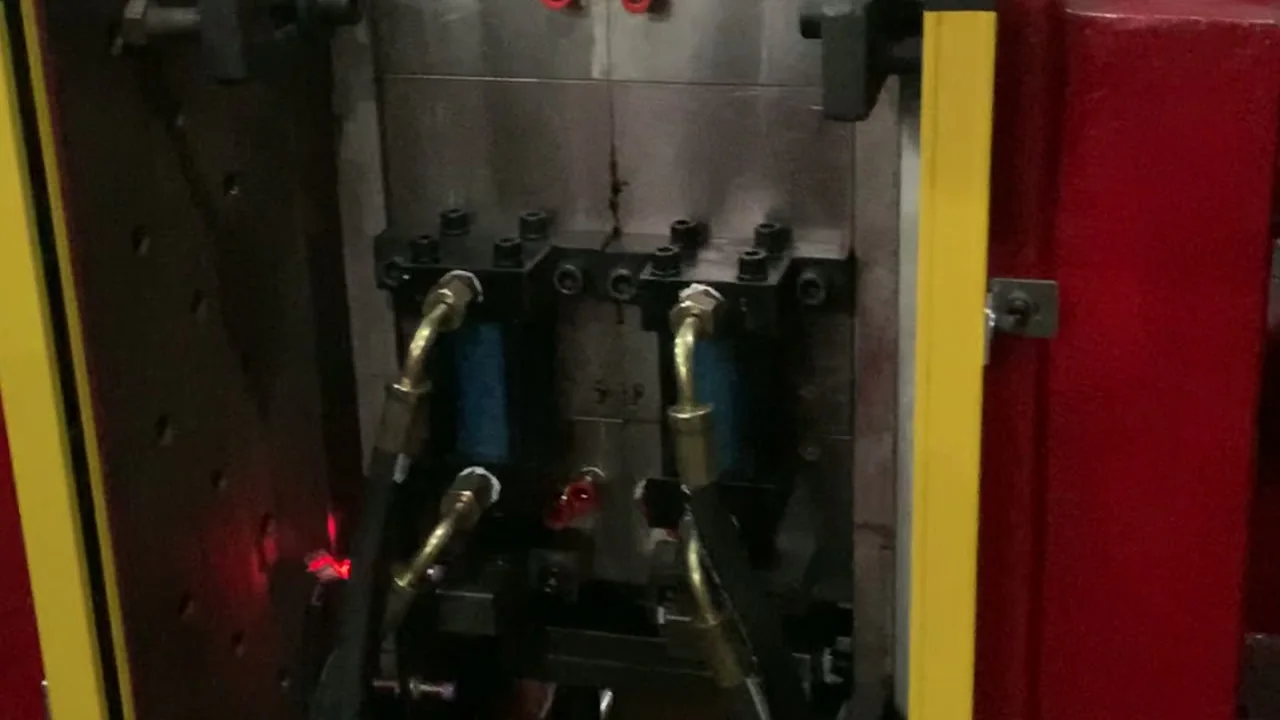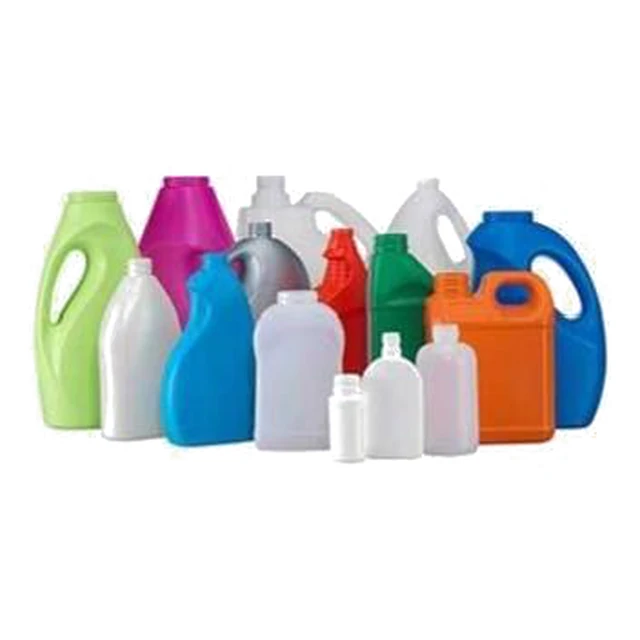
A shampoo bottle that comes out of the mold with dull patches, visible flow lines or a neck that will not hold a pump is a lost order, not a seconds item. Most of these problems are decided before the first bottle is blown: the polymer, the machine platform that runs it, and how the mold cavity is polished and cooled. This guide compares the two routes buyers ask about most, HDPE and PETG, and lists what to confirm before a mold is approved.
Can shampoo bottles be extrusion blow molded in HDPE and PETG?
Yes. Both HDPE and PETG run on extrusion blow molding equipment, but not on the same line. HDPE suits squeezable, opaque 250–1000 ml bottles on the 0.1–16 L single- or double-station platform. PETG suits clear, high-gloss bottles on the PETG double-station machine, 0.1–15 L and 1–4 cavities. Confirm the neck drawing before choosing.
The HDPE route is the volume route. A single-station ES-5LS is rated for 5 L with 100 kN clamp force, 320 × 380 mm platens, a 60–65 mm screw and 65–80 kg/h output; the ES-10LS moves to 110 kN, 450 × 480 mm platens, a 70–75 mm screw and 80–100 kg/h. A 300–500 ml shampoo bottle uses only part of that capacity, so the real decision is cavities per cycle, not the litres on the nameplate. Double-station ES-5LD and ES-10LD raise output, but the extruder plasticizing capacity remains the ceiling.
The PETG route is the clarity route. The PETG double-station machine covers 0.1–15 L with 1–4 cavities and project-specific layer configuration. No numbered model table is published for this series, so clamp force and output have to be confirmed against your mold and a test run. In this size range PETG is processed by extrusion blow molding, and mold temperature and cooling decide whether the bottle reads clear or hazy.
28/410 is a common neck finish in personal care, not a rule every mold must follow. Send the neck drawing together with the pump or cap you intend to use. Thread start, neck height, sealing land and ovality all matter, and a neck that measures correctly on paper can still leak if the blow pin is off centre or cooling is uneven.
HDPE vs PETG: the decision table
| Decision | HDPE | PETG |
|---|---|---|
| Bottle look and feel | Opaque, squeezable, softer wall | Clear, rigid, high-gloss wall |
| Machine platform | Single- or double-station, 0.1–16 L | PETG double-station, 0.1–15 L |
| Reference models | ES-5LS: 100 kN, 65–80 kg/h; ES-10LS: 110 kN, 80–100 kg/h | No numbered models published; confirm by mold |
| Cavities | 1–6, set by the output target | 1–4, set by mold and cooling |
| Gloss driver | Resin, die lines, cavity polish, cooling | Cavity polish, melt temperature, drying, mold temperature |
| Typical use | Shampoo, body wash, conditioner at volume | Premium clear shampoo, gel, serum |
Swipe the table to see all columns →
Why a glossy bottle is a mold and temperature problem
Flow lines and dull bands on a clear or coloured bottle usually trace back to four places. Work through them in this order before changing machine settings at random.
- Cavity polish: write the polish grade and polish direction on the mold drawing. A draw mark in the cavity becomes a visible line on every bottle.
- Melt temperature: too cold leaves gel and dull bands; too hot produces parison sag and heavy walls. Keep the setpoint that produced the approved sample.
- Drying: PETG must be dried to the resin supplier's specification. Confirm dew point and residence time, and confirm whether your HDPE grade needs drying at all.
- Mold temperature and cooling: uneven cooling pulls gloss down and shows up as neck ovality and wall-thickness variation.
- Parison control: set the die-gap profile with a parison programmer, then check die centering. Off-centre dies and parison swing read as stripes down one side.
Approve the surface on a sample, not on a photo. Run at least one hour at the intended cycle, take bottles from the first, middle and last third of the run, and inspect them under the same light the customer will use. Cut two bottles lengthwise and measure wall thickness at four points around the body and two at the neck. Fit the actual pump and check for leakage and wobble, then squeeze the body and compare recovery with the brief. Record the settings that produced that sample; they become the setup sheet for production.
The machines described here are thesingle-station 0.1–16 L seriesand thedouble-station 0.1–16 L series. For smaller bottles read1–2 L small bottle production, and for line start-up readoperator training.
What to send for a quotation
- Bottle drawing in 2D and 3D, with the neck finish marked (28/410 or your own thread) and the sealing surface dimensioned.
- Nominal capacity in ml, full-bottle weight target, and the squeeze or stiffness feel you want.
- Resin and colour: HDPE, PETG or another material, clear or opaque, virgin or with regrind.
- Target output in bottles per hour or per shift, and the cavity count you have in mind.
- Decoration and downstream steps: screen print, label, hot stamp, filling line, cartoning.
- Destination, voltage and control language, plus any documentation your market requires.
Source: E-SHION product data. Specifications are subject to change without notice; customization is available.
This guide is written for production and procurement decisions. It uses published figures where available and avoids unverified performance claims.