
1. Fix the container first
Maximum volume alone is not enough. Confirm body diameter, height, neck, handle and wall-thickness target, because they determine mold size and parison requirements.
Product center
Four catalog platforms: single-station small containers, double-station small containers, single-station 20–50 L containers, and a PETG double-station configuration. Ten model pages carry the complete catalog specification tables.
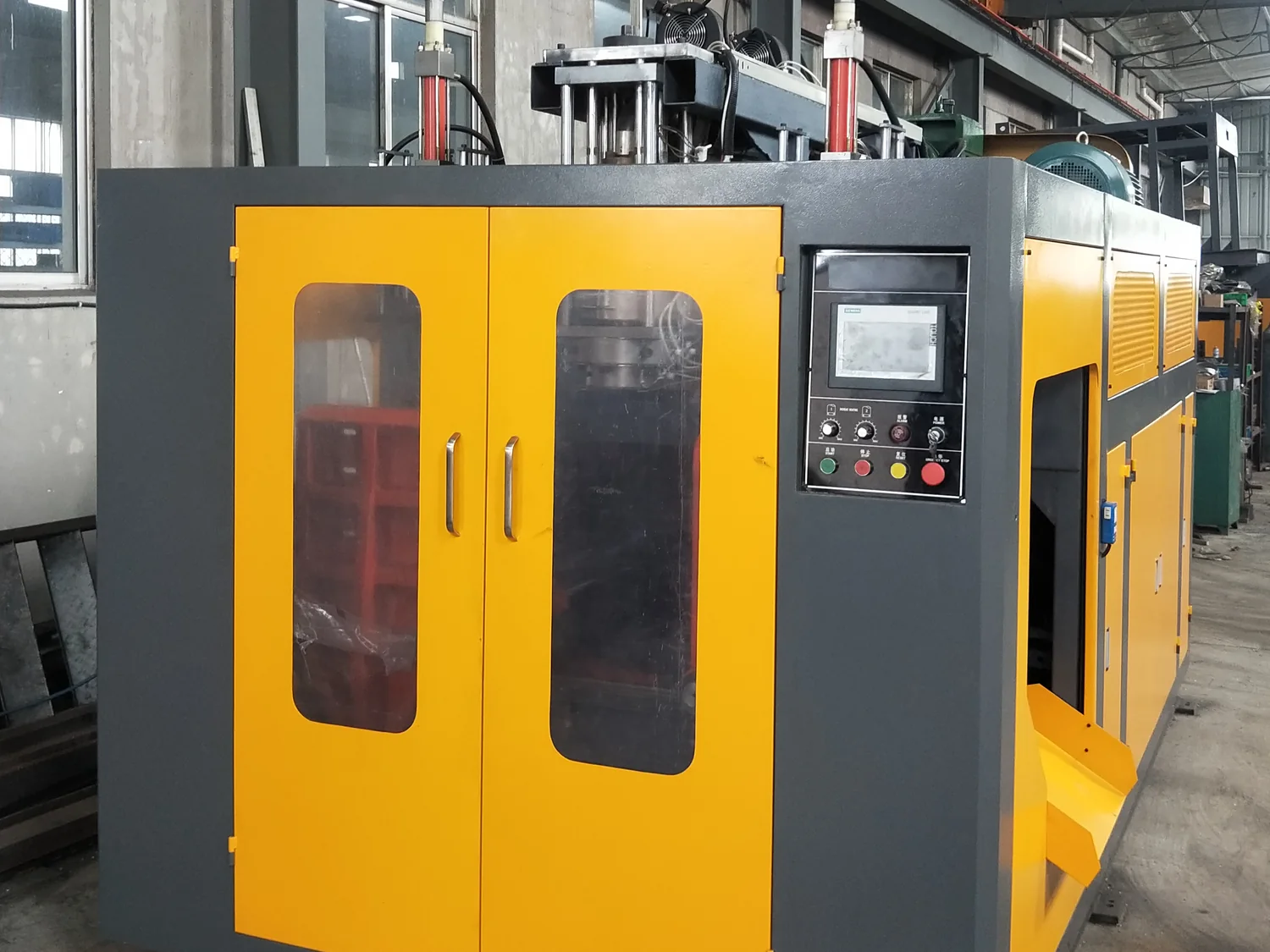 Single-station · 0.1–16 L
A compact single-station platform for 0.1–16 L bottles, jars and small containers. Catalog models cover 2, 5, 10 and 16 L volumes with one to six cavities.
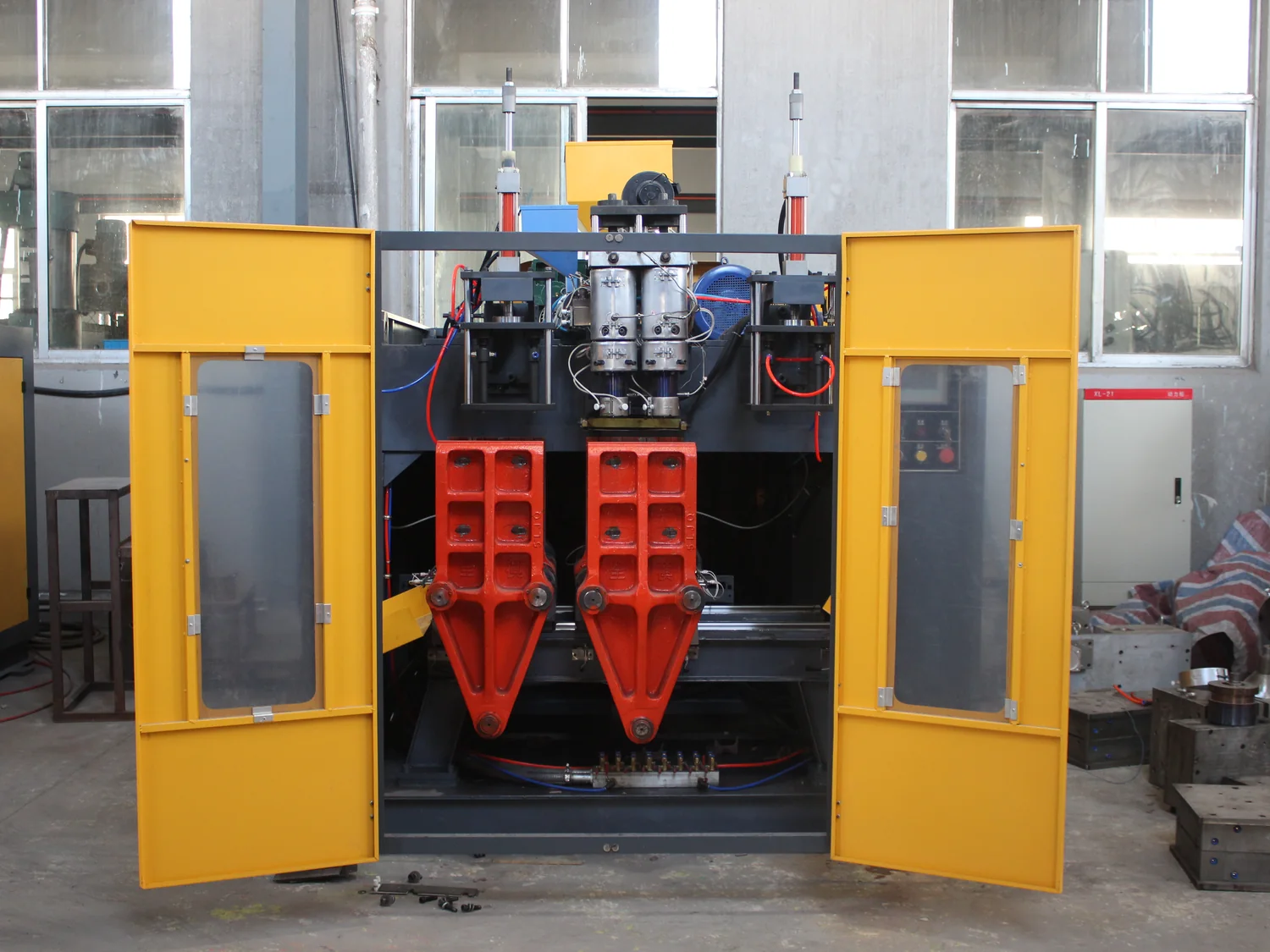 Double-station · 0.1–16 L
A double-station platform for higher output per cycle across 0.1–16 L containers. Catalog models cover 2, 5, 10 and 16 L maximum product volumes.
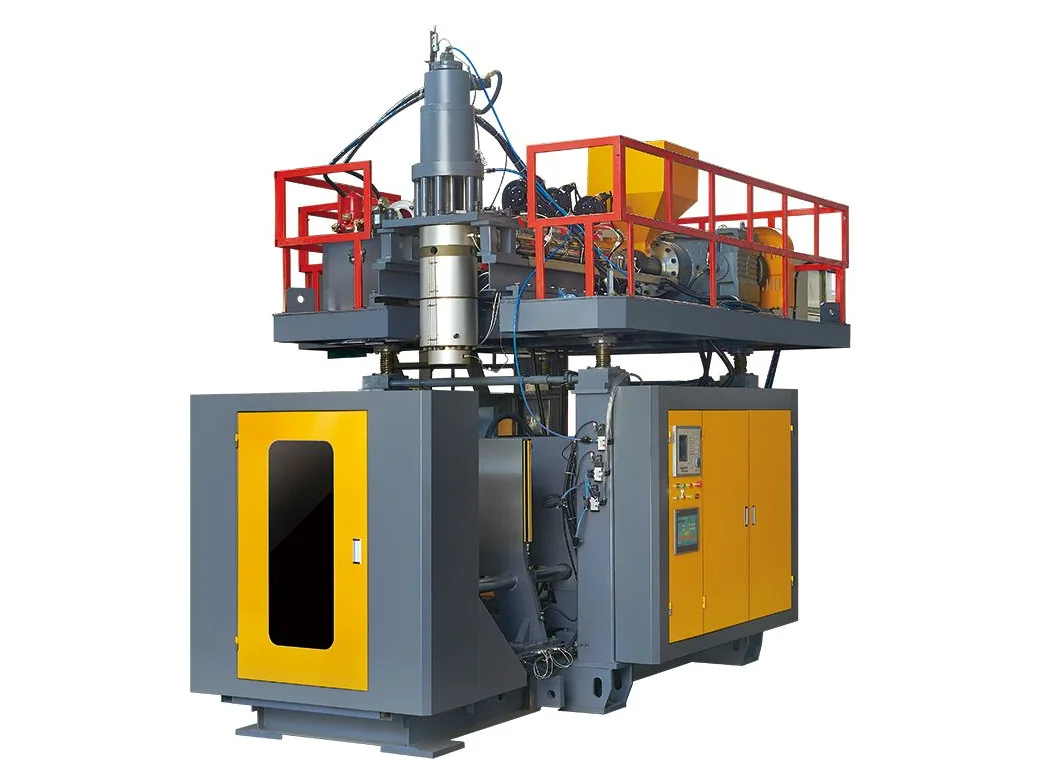 Single-station · 20–50 L
A single-station platform for 20–50 L jerrycans, drums and industrial containers. The catalog lists QQ-30L and QQ-50L at 215 kN and 260 kN clamping force.
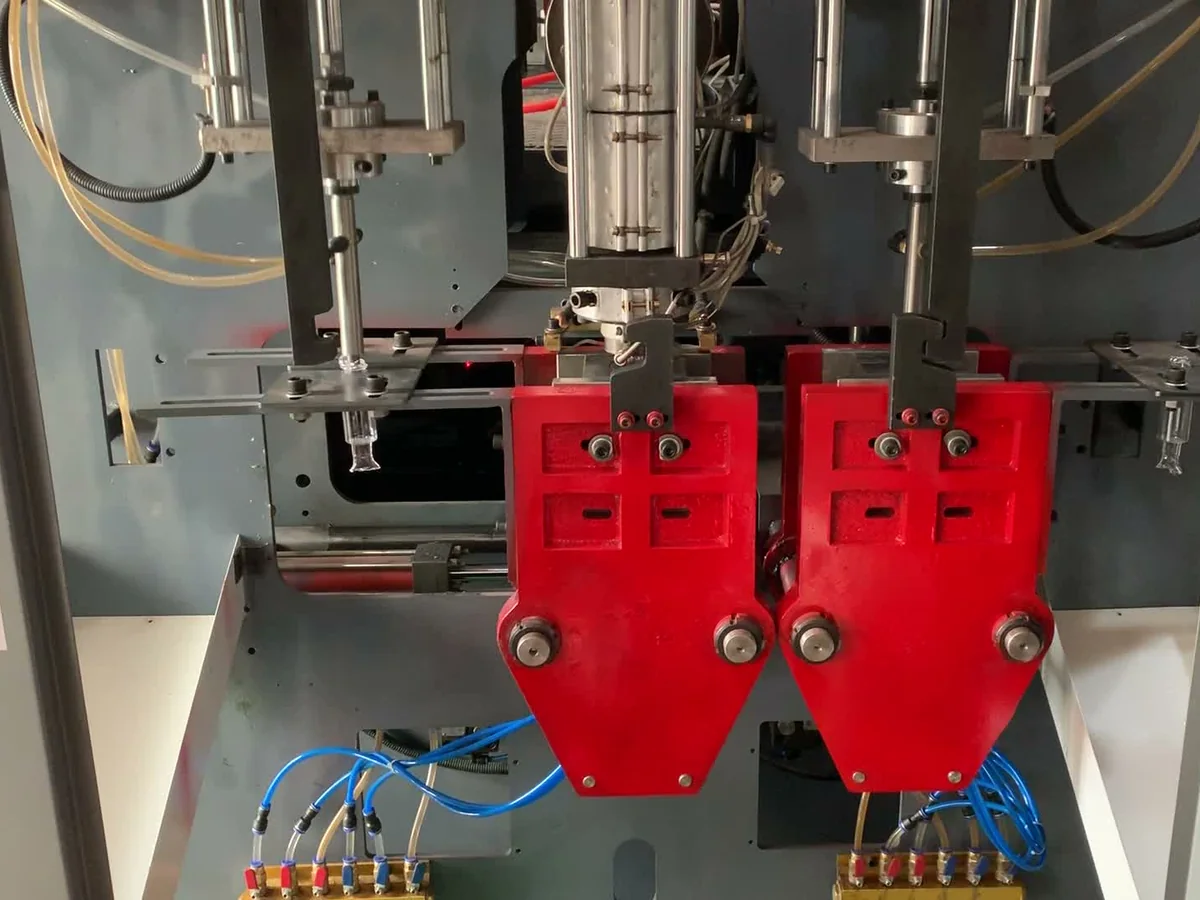 PETG · 0.1–15 L
A double-station PETG configuration for 0.1–15 L transparent bottles, jars and shaped containers. The catalog lists 1–4 cavities and PETG as the raw material.
Selection logic
Four checks narrow the platform before the quotation. Each one uses information the buyer already has — or can obtain from the container drawing.
Read guideMaximum volume alone is not enough. Confirm body diameter, height, neck, handle and wall-thickness target, because they determine mold size and parison requirements.
Single station suits a compact line and straightforward changeovers. Double station is aimed at higher output per cycle and a more intensive use of the extruder.
Calculate good parts per hour using measured cycle time. More cavities increase output but also increase mold cost, clamp load and start-up complexity.
Voltage, air supply, chilling, take-out automation, material handling and spare-parts scope belong in the quotation, not after delivery.
Catalog data
Values are catalog reference data. The model page for each machine shows the complete table, including die-head heating, screw heating and air requirements.
| Model | Series | Capacity | Clamping force | Extruding capacity | Installed power | Weight | View |
|---|---|---|---|---|---|---|---|
| QQ-2LS | Single-Station Extrusion Blow Molding Machine | 2 L | 100 kN | 50–55 kg/hr | 24–32 kW | 3.5 t | View |
| QQ-5LS | Single-Station Extrusion Blow Molding Machine | 5 L | 100 kN | 65–80 kg/hr | 32–42 kW | 4.5 t | View |
| QQ-10LS | Single-Station Extrusion Blow Molding Machine | 10 L | 110 kN | 80–100 kg/hr | 38–48 kW | 6.5 t | View |
| QQ-16LS | Single-Station Extrusion Blow Molding Machine | 16 L | 155 kN | 100–120 kg/hr | 48–55 kW | 7 t | View |
| QQ-2LD | Double-Station Extrusion Blow Molding Machine | 2 L | 100 kN | 60–80 kg/hr | 26–35 kW | 4.5 t | View |
| QQ-5LD | Double-Station Extrusion Blow Molding Machine | 5 L | 100 kN | 100–120 kg/hr | 34–45 kW | 6 t | View |
| QQ-10LD | Double-Station Extrusion Blow Molding Machine | 10 L | 110 kN | 130–160 kg/hr | 45–55 kW | 8 t | View |
| QQ-16LD | Double-Station Extrusion Blow Molding Machine | 16 L | 155 kN | 130–160 kg/hr | 50–65 kW | 10 t | View |
| QQ-30L | Single-Station Extrusion Blow Molding Machine 20–50 L | 30 L | 215 kN | 100–120 kg/hr | 100–110 kW | 10 t | View |
| QQ-50L | Single-Station Extrusion Blow Molding Machine 20–50 L | 50 L | 260 kN | 110–160 kg/hr | 105–120 kW | 13 t | View |
Source: E-SHION product catalog, pages 05–10. Specifications are subject to change without notice; customization is available.
Next step
Send the container drawing, material and target output. The first reply narrows the platform and cavity plan.