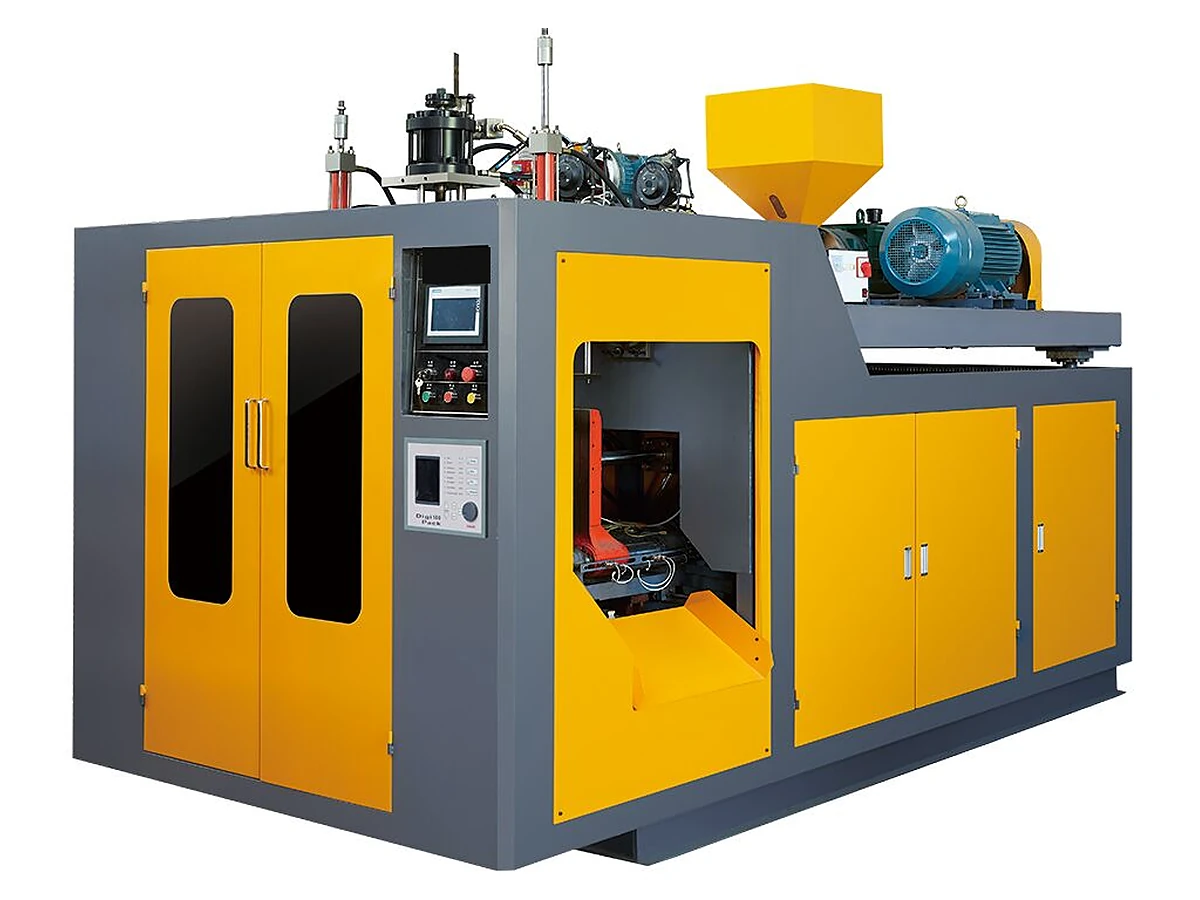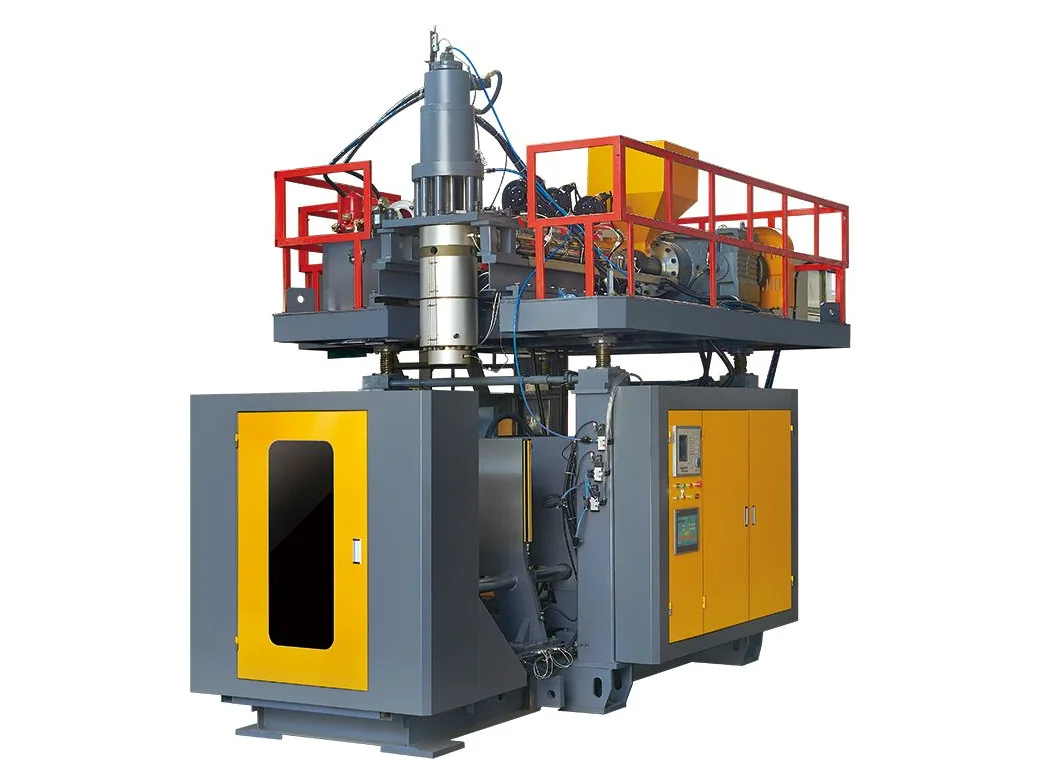
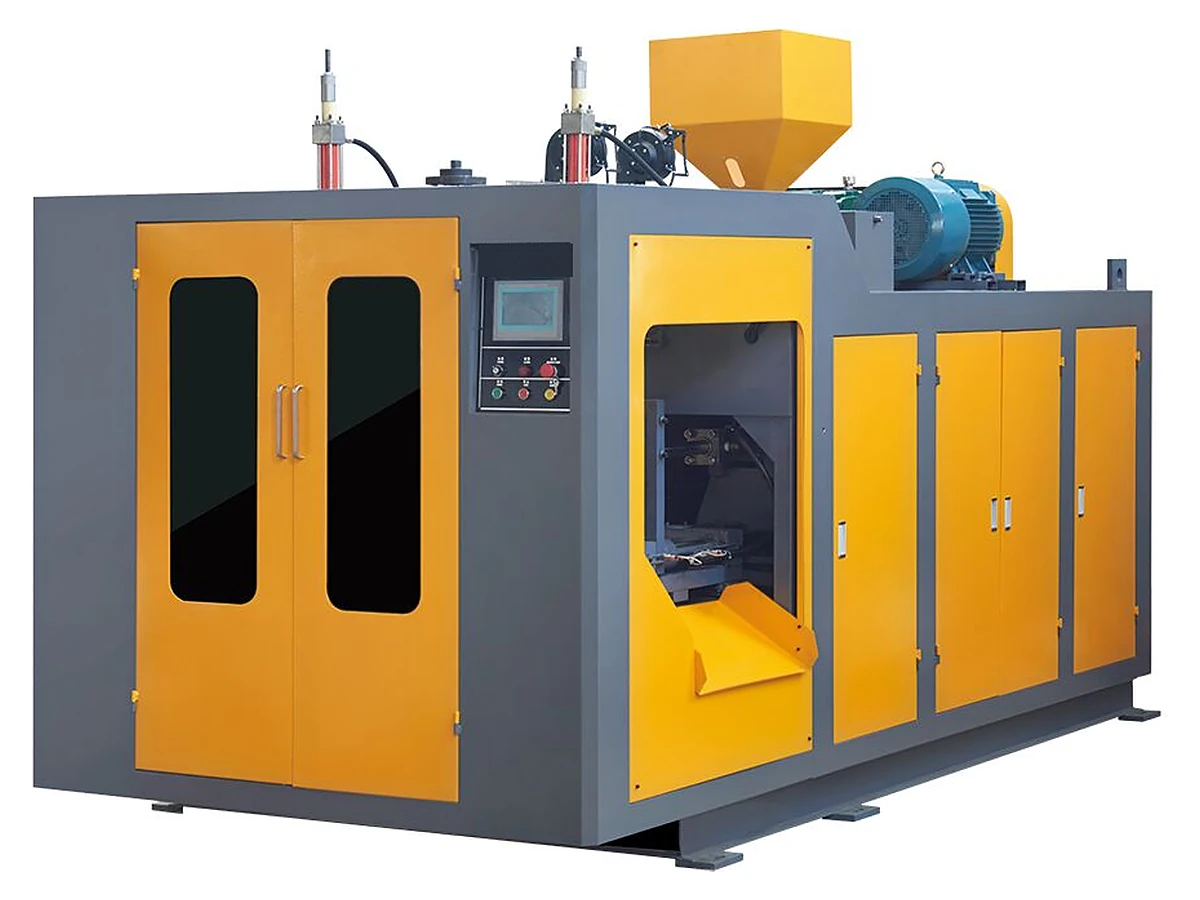
The word manual causes most of the confusion. In extrusion blow molding it usually means the machine clamps and blows automatically, while an operator removes the part and trims it. The process is still machine-blown. The real question is whether manual take-out fits your volume, labour and quality target. A manual line also depends on the trim fixture and the packing table; if the operator has to walk the part to another station, the cycle stretches. Put them beside the take-out position.
The short answer: low volume, frequent changes, available labour
A manual or semi-automatic machine fits low annual volume, frequent colour or SKU changes, and a plant that can staff the take-out position. It is a poor fit for high-volume production, a line that must run unattended, or a container whose neck and wall need the repeatability of a robot. The machine price is only one line; labour, scrap and changeover decide the total.
Manual, semi-automatic and automatic: what changes
The table separates the three configurations by what the operator does and what the line can sustain. The boundaries are project-specific; a stable low-volume part can run on a semi-automatic machine, while a high-volume part usually needs automatic take-out.
| Configuration | Operator role | Best fit | What to check |
|---|---|---|---|
| Manual / semi-automatic | Loads, starts, removes and trims the part | Low volume, many colours, trial production | Cycle consistency, operator safety, takt time |
| Automatic take-out | Supervises the line and packs | Stable medium-to-high volume | Gripper, conveyor, trim and reject handling |
| Fully automatic with downstream | Monitors and maintains | High volume, few SKUs | Line integration, uptime, spare parts |
Swipe the table to see all columns →
The cost structure behind the decision
Changeover is the hidden cost in a manual line. A colour change means purging the barrel, cleaning the die head and sometimes changing the parison cutter; a SKU change adds a mold change and a new first-article check. If the plant runs four colours a week, the manual line may spend more hours changing over than blowing. Measure the changeover time on a similar line, then multiply by the weekly changes. If the number is large, a quick-change mold and a second die head may matter more than the machine price. Labour is the other variable: two operators on a three-shift pattern is a different project from one operator on a day shift. Put the staffing model in the quotation and compare the annual labour line, not the hourly rate alone. Safety guarding and take-out access also change with the staffing model; confirm them on the layout drawing.
Manual take-out trades capital for labour. The machine and mold cost less, but every shift needs an operator at the take-out position, and the cycle can drift with fatigue. Add the cost of rejects, the trim fixture, the conveyor and the training time. If the annual volume is low and the labour is already on site, the manual route can be the lower total cost. If the volume is high, the labour line grows faster than the machine price falls.
The selection sequence is inchoosing an extrusion blow molding machine. For the extrusion type, readaccumulator vs continuous extrusion.
What to send for a quotation
A manual machine quotation is only comparable when the take-out scope is explicit. Send these with the enquiry:
- Container drawing, weight and annual volume.
- Shift pattern and the number of operators available.
- Colour and SKU changes per week, and the changeover time target.
- Take-out preference: manual, swing arm, robot or conveyor.
- Available floor space and the packing interface.
- Labour cost per hour and the local safety requirements.
- Whether the line must run unattended at any time.
Compare the0.1–16 L single-station rangeanddouble-station range, then send the drawing through thecontact page.
Source: E-SHION product data. Specifications are subject to change without notice; customization is available.
This guide is written for production and procurement decisions. It uses published figures where available and avoids unverified performance claims.