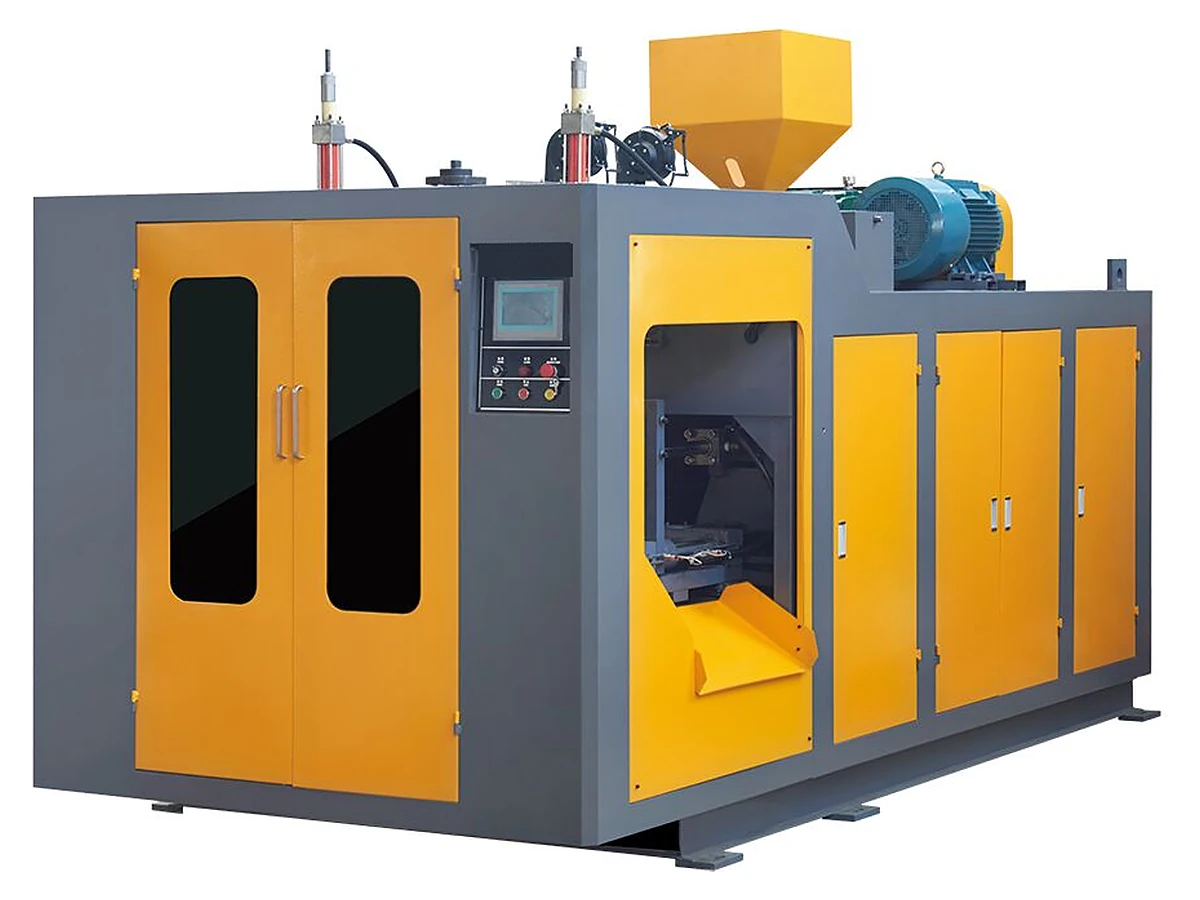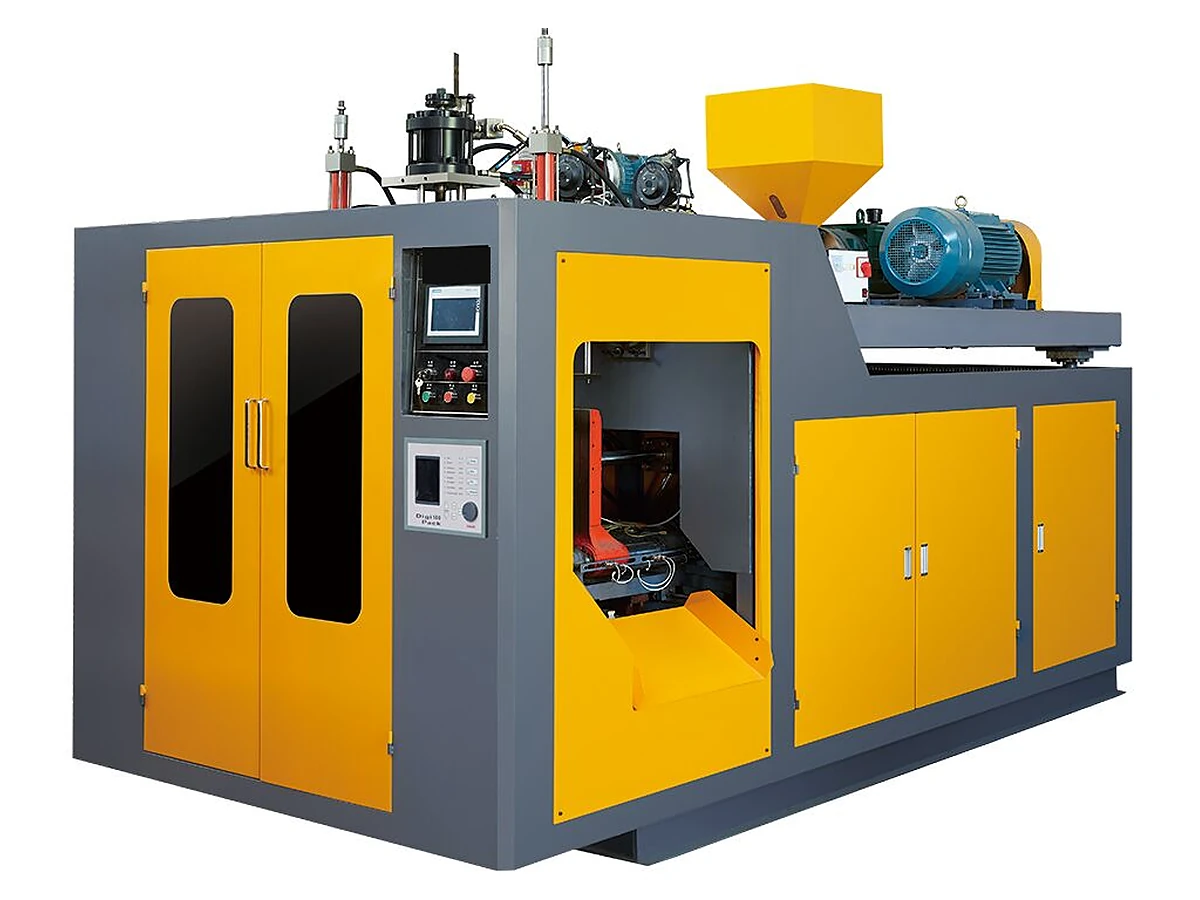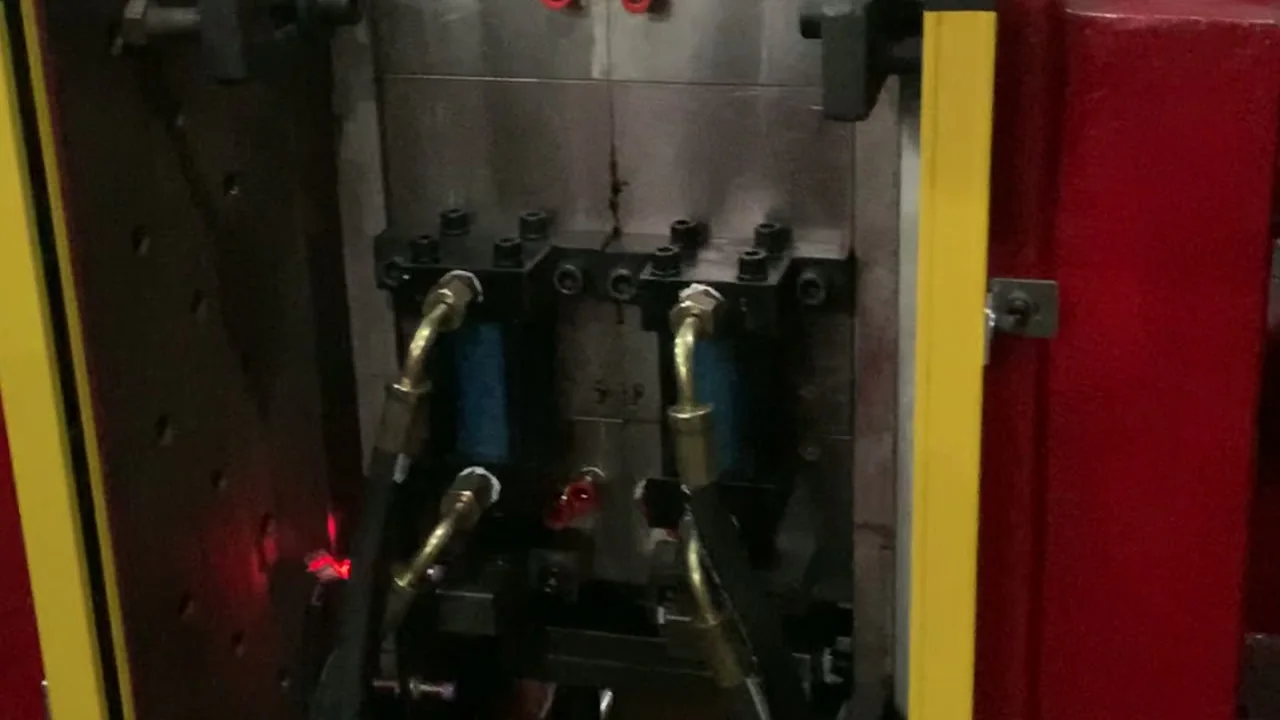

On a hot afternoon in July, a machine that held clamp pressure all winter starts flashing at the mold parting line, and the operator's instinct is to raise the clamp pressure. The reading to take first is not clamp force but oil temperature. A clamp that loses pressure only after two or three hours of running is usually reporting hot oil, not a worn cylinder.
The short answer: hot oil, not a hot clamp
Hot oil is a fault, not a summer norm. Above the viscosity band on the oil supplier's data sheet, the oil thins, internal leakage in the pump, valves and cylinders rises, and clamp pressure drifts down at an unchanged gauge setting. Work through cooler water flow, relief-valve setting and oil grade before you touch clamp control.
Where the heat comes from
Most machines in this range run a fixed-speed pump: 7.5 kW on the ES-2LS, 11 kW on the ES-5LS, ES-10LS and ES-16LS, 11–15 kW on the ES-10LD and ES-16LD, and 22 kW on the ES-30L and ES-50L. At idle the pump keeps circulating oil across the relief valve, so much of that motor input becomes heat in the tank before a bottle is blown. If the cooler cannot reject it, tank temperature climbs all shift and does not recover overnight.
Before you touch clamp control, work down this list in order.
- Cooling water: confirm flow, inlet temperature and that the valve is fully open under load. A half-closed valve is the most common summer finding.
- Oil level and grade: check the grade against the oil supplier's data sheet, including its viscosity band and recommended range.
- Relief valve: confirm the setting against the hydraulic drawing. A low setting raises idle heating and weakens clamp pressure together.
- Filters and suction strainer: a restricted filter raises oil temperature and pump noise together.
- Ambient: check that the tank is not boxed into a closed corner of the shop.
Oil temperature check sheet
Log these five readings on the same load, at the same time of day, for one week. The trend matters more than any single number.
| Reading | Where to take it | What it tells you |
|---|---|---|
| Oil temperature at start-up | Tank gauge, before the first cycle | Baseline. Warm at start-up points to the cooler or the ambient, not the load. |
| Oil temperature after two hours under load | Same point, same load | The rise above baseline — compare the rise, not the absolute value. |
| Cooler water flow and in/out temperature | Flow meter or bucket test, thermometer on each line | A small in/out difference with hot oil means the water side is not removing heat. |
| Clamp pressure at hold | Gauge on the clamp line, after the clamp closes | Pressure that follows oil temperature is hydraulic, not mechanical. |
| Pump motor current | Clamp meter, idle and under load | Current that climbs with temperature points to internal leakage. |
Swipe the table to see all columns →
Work the numbers before you touch the clamp
An 11 kW pump motor delivers almost all of its input to the oil as heat once the oil crosses the relief valve at idle. If the cooler's water side is scaled or the valve is half closed, the tank cannot reject that heat and the temperature climbs shift after shift. The clamp then behaves like a worn clamp: hold pressure sags, flash appears at the parting line, and the operator raises the setting to compensate, which adds more heat. The loop is hydraulic and it closes on itself.
The same logic runs at the other end: a 22 kW pump motor on an ES-30L or ES-50L feeds proportionally more heat into the tank, and a 215–260 kN clamp makes the drift easier to see on a large container.
If clamp pressure still drifts with oil temperature in band, check clamping force against mold projection area and blowing pressure — seeclamping force for blow molding. For pump motors and clamp ratings across the range, comparesingle-station 0–16 L machinesanddouble-station 0–16 L machines.
What to send for a quotation
A quotation that fits your line needs the container and the conditions, not only a model number. Send these:
- Container drawing or sample: volume, neck finish, wall thickness and material grade.
- Cavity layout and the output you need per shift.
- Shop conditions: summer ambient, cooling water source and temperature, and whether a chiller is available.
- The hydraulic oil grade you plan to run, with the supplier's data sheet if you have it.
- Destination port, voltage and control language.
Source: E-SHION product data. Specifications are subject to change without notice; customization is available.
This guide is written for production and procurement decisions. It uses published figures where available and avoids unverified performance claims.