A machine that looks smooth in a video can still arrive with the wrong clamp force for your mold, the wrong screw for your resin, or a take-off that does not fit the line behind it. The cheapest place to find that out is not after the container leaves the port. It is two days in the factory, with your own resin, your own caps and your own bottle on the bench.
Is a factory visit worth the trip?
Yes, if you are ordering several molds, a 10 L container or larger, or a full line. Two days on site let you run your own resin, measure output, weight and wall thickness, and meet the people who will handle after-sales. For one standard small machine, a measured trial video may be enough.
E-SHION is in Huangyan, Taizhou, Zhejiang, on China's east coast. Most buyers fly into Taizhou, or into Wenzhou or Ningbo and continue by high-speed rail or car. Transfer time depends on the flight and traffic, so ask us to confirm the current figure before you book a tight connection.
If the container is a 5–10 L jerrycan, compare5 L vs 10 L jerrycan machinebefore booking; for 20 L and up, start from20–50 L container production.
How do you arrange the visa and the itinerary?
Start with the invitation letter. A Chinese company can issue a stamped letter stating the factory address and your visit dates, and most business-visa applications expect one. The consulate decides the visa, not the factory, so apply early and keep the letter, the flight booking and the hotel booking consistent. Send your passport name exactly as printed, your company name and the dates you want.
Keep two full working days on site, not one. Day one is usually the machine and mold review, the material discussion and a walk through the assembly area; day two is the trial run and the sign-off. Add a third day if you also want to see a mold shop or a second supplier in the region.
Bring the operator who will run the machine if you can. An operator notices what a purchasing manager does not: how the parison hangs, how the take-off grips, how loud the clamp is.
What should you bring, and what does the visit cover?
The most useful things in your bag are the resin and the bottle, not paperwork.
| Item | What to prepare | Why it matters |
|---|---|---|
| Resin | A sample of the exact grade you will run, with its datasheet | Shows plasticizing, parison behaviour and colour on your material, not a general-purpose grade |
| Caps and handle | The cap, pump or handle you will actually use | Neck fit and take-off are checked against the real component |
| Mold drawing | 2D drawing with neck, body and base dimensions | Clamp force is checked against mold projection area and blowing pressure, not container volume |
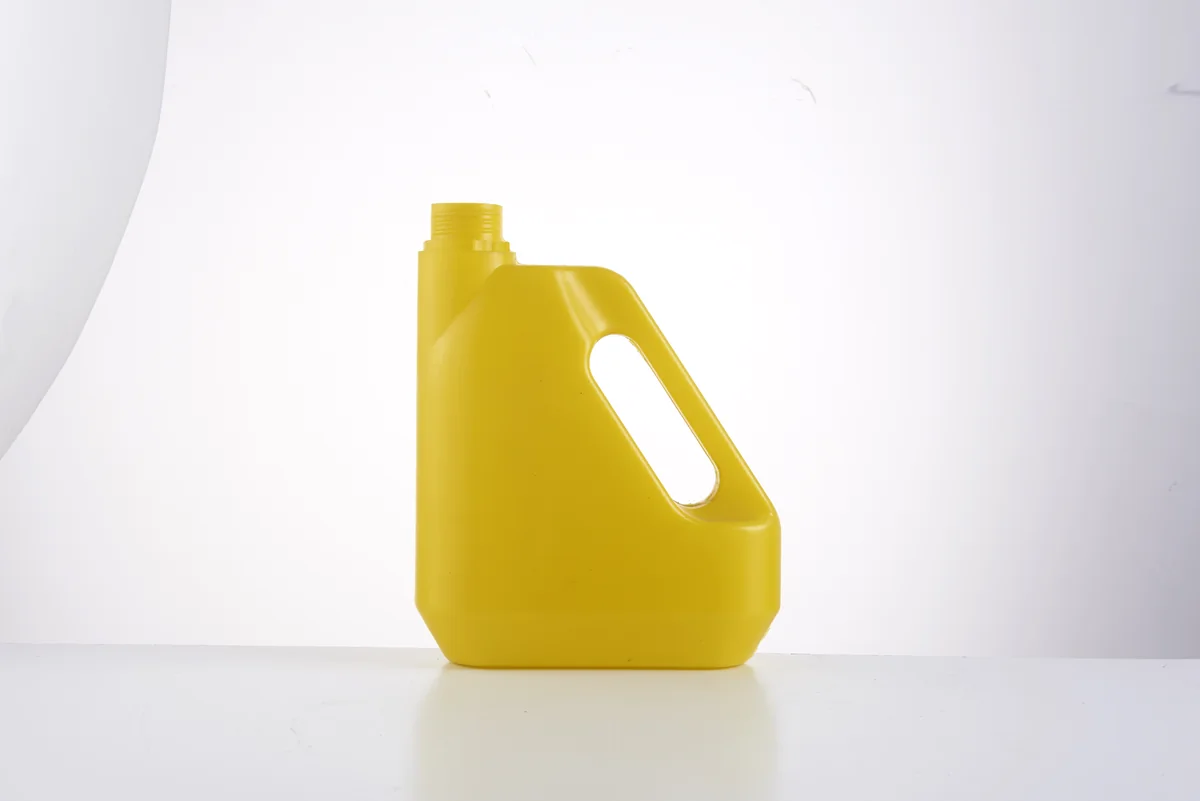
| Sample bottle | A finished container you accept today, cut in half if you can | Gives the trial a weight and wall-thickness target |
| Acceptance sheet | Printed sheet with output, weight, wall thickness and leak-test columns | Turns the visit into numbers you can sign |
Swipe the table to see all columns →
How is the trial run measured and signed off?
Output is not a number on a page. It is cavities × good parts per cavity per cycle × cycles per hour, and cycles per hour is 3600 divided by the measured cycle time. Fill the sheet with the cycle you watched, not the one in the offer.
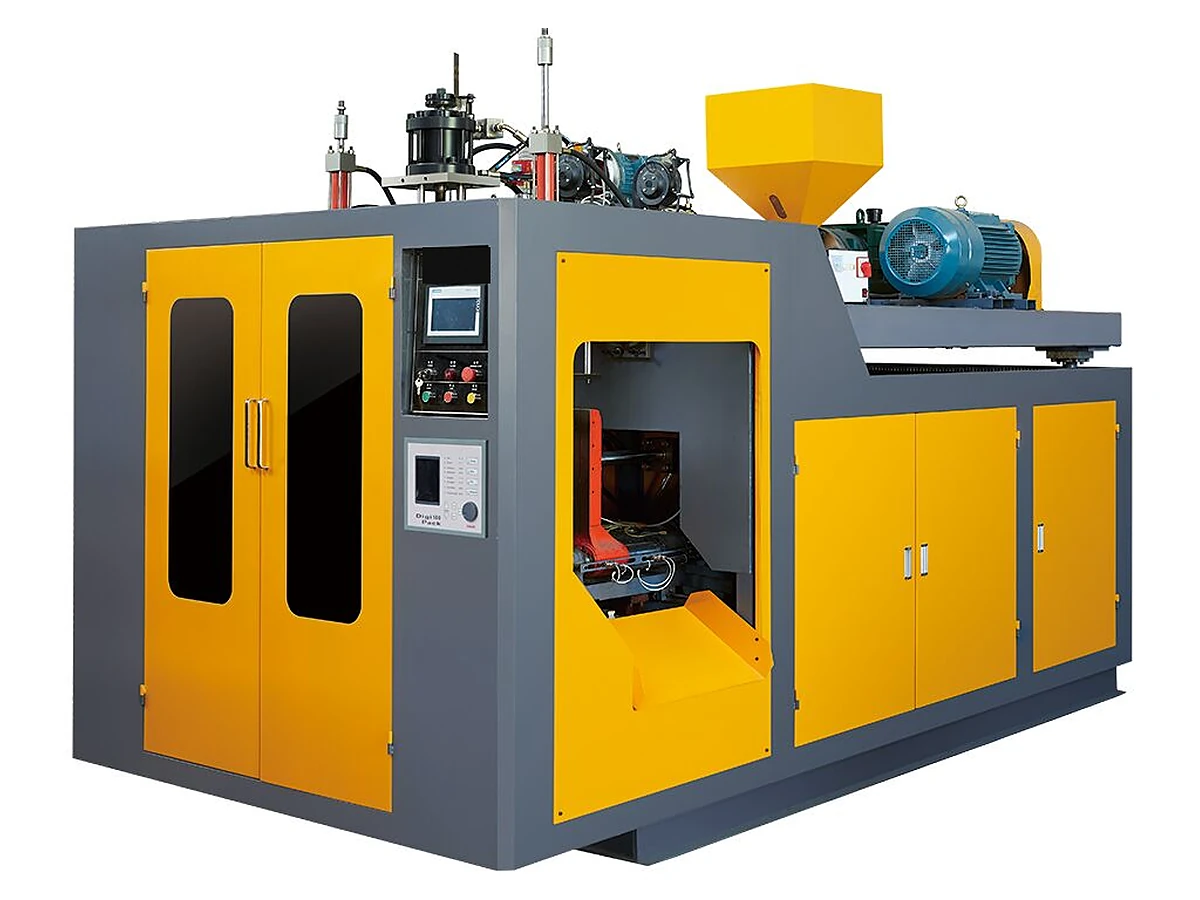
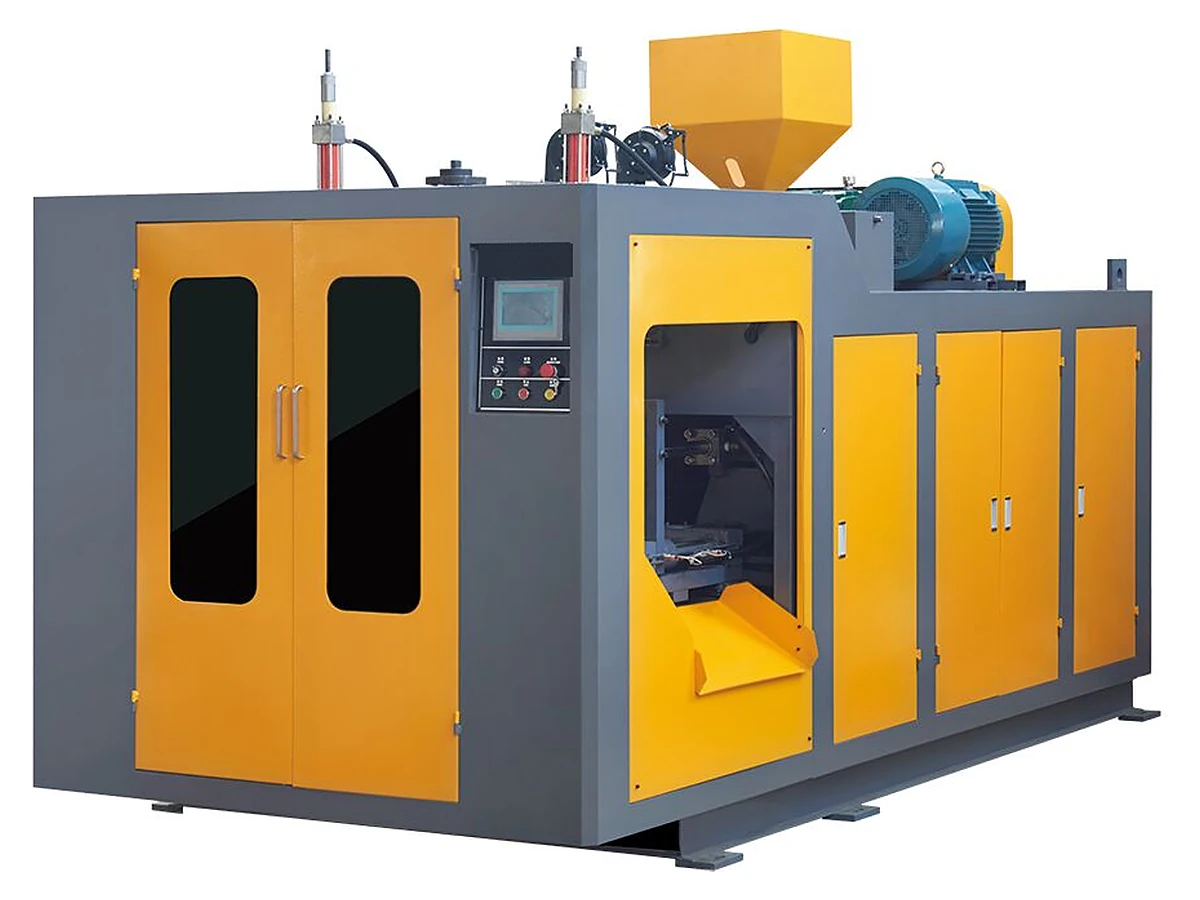
On the ES-10LS, the published figures are 110 kN clamp force, a 450 × 480 mm platen, a 70–75 mm screw and 80–100 kg/h output. Whether that suits your 10 L container depends on the mold projection area and your blowing pressure, which is why the mold drawing should be on the table during the run.
The sample room is worth an hour: containers on the shelf show what the machine does across shapes, and you can compare wall feel against your own bottle.
The second afternoon is for sign-off. Go through the sheet with the technician, photograph the screen and the containers, and write down what will change before shipment: screw, die head, take-off, control parameters, or nothing.
If you cannot travel, ask for a live video tour: the assembly area, the sample room and the exact machine you are buying, on a call rather than a pre-recorded clip. Then ask for a measured trial video: cycle timed on camera, containers weighed, wall thickness measured at marked points, leak test shown. For a larger order, a third-party inspection before shipment closes the gap.
What to send for a quotation
Machine pages list clamp force, platen size and output per model:single-station 0–16 Landdouble-station 0–16 L. If your dates are fixed,contact usand we will hold a slot.
- Container drawing (2D or 3D) with neck finish, volume and target weight
- Resin grade, virgin or regrind, and whether multi-layer is required
- Target output per hour and the shifts you run
- Mold status: new tool or existing mold, and the cavity count
- Destination port, plant voltage and compressed-air supply
Source: E-SHION product data. Specifications are subject to change without notice; customization is available.
This guide is written for production and procurement decisions. It uses published figures where available and avoids unverified performance claims.