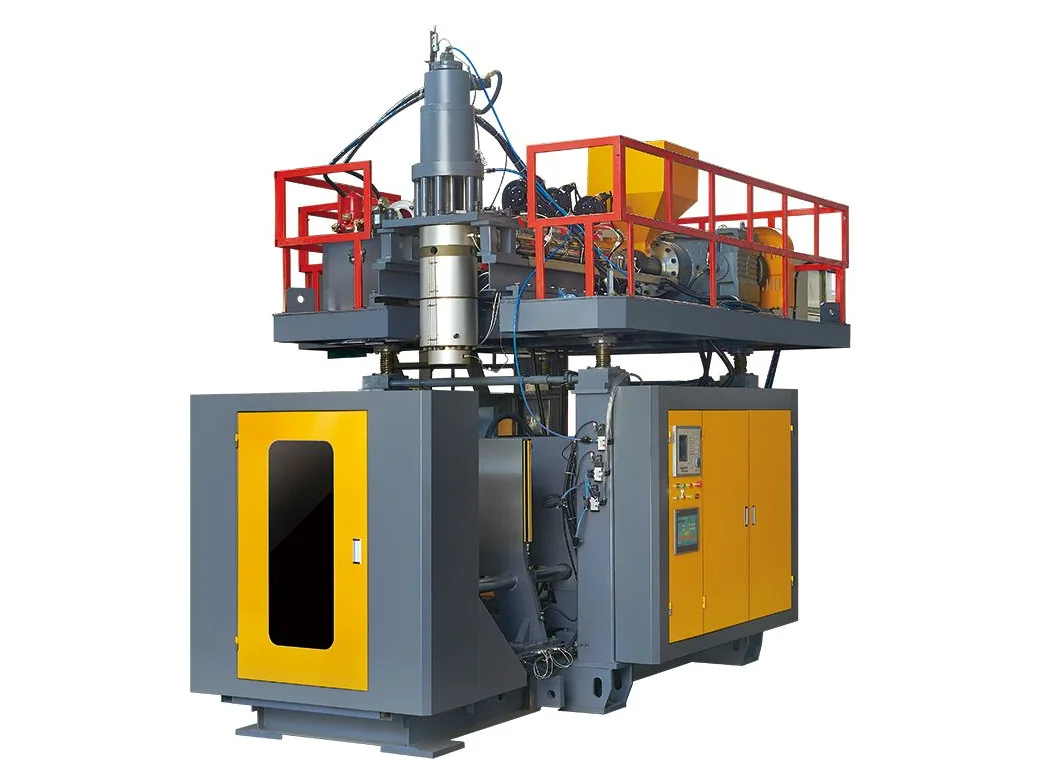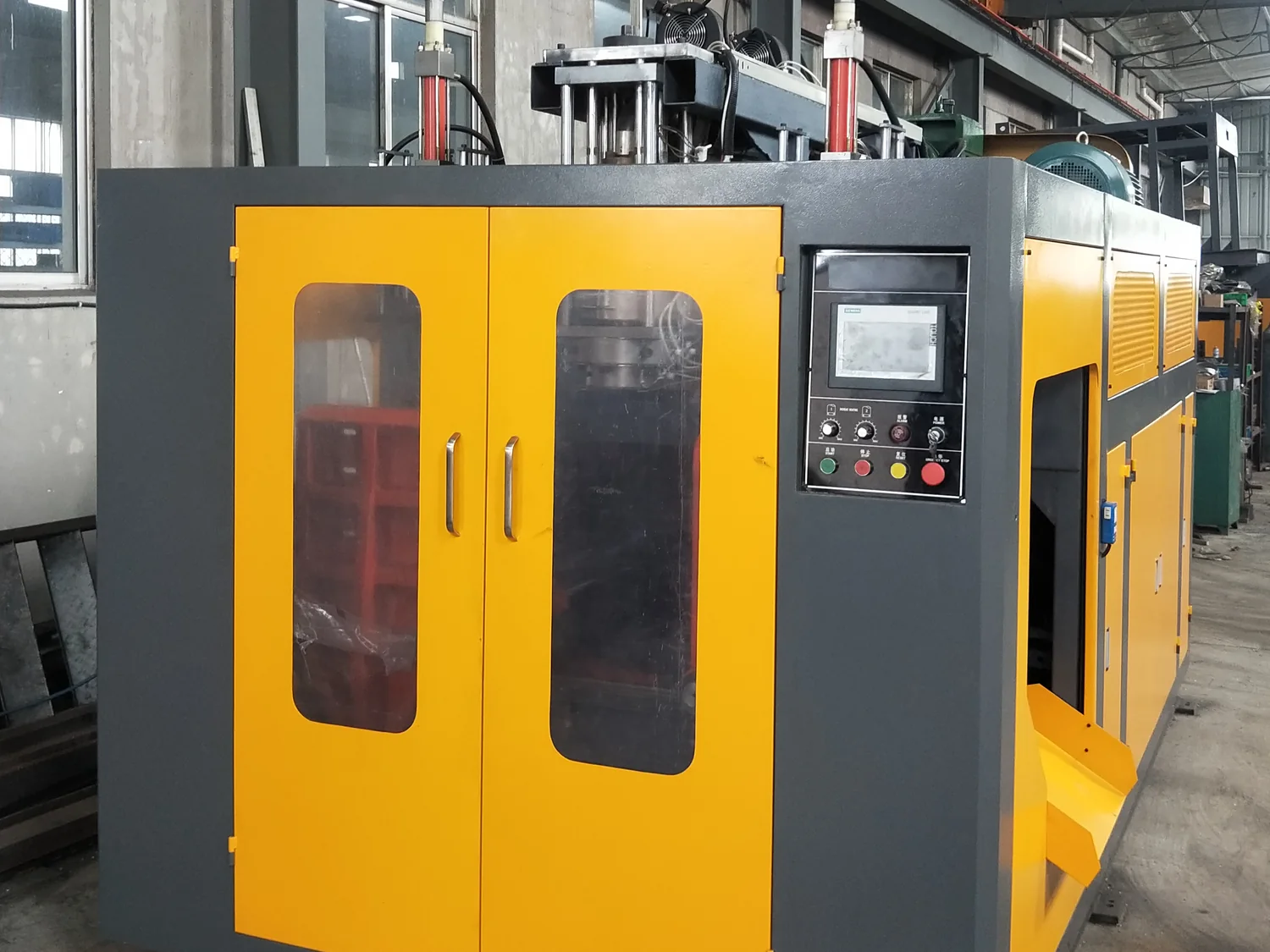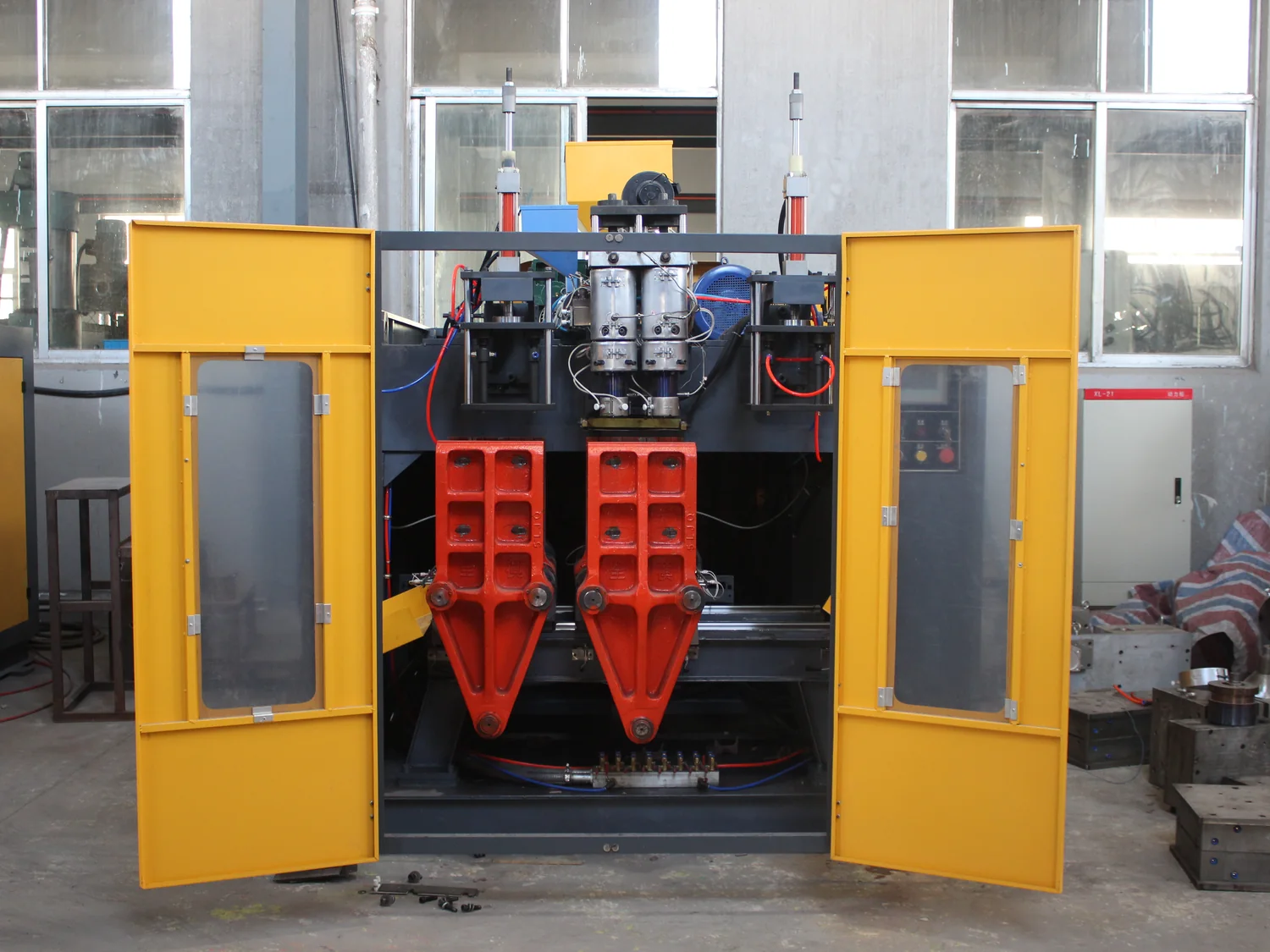
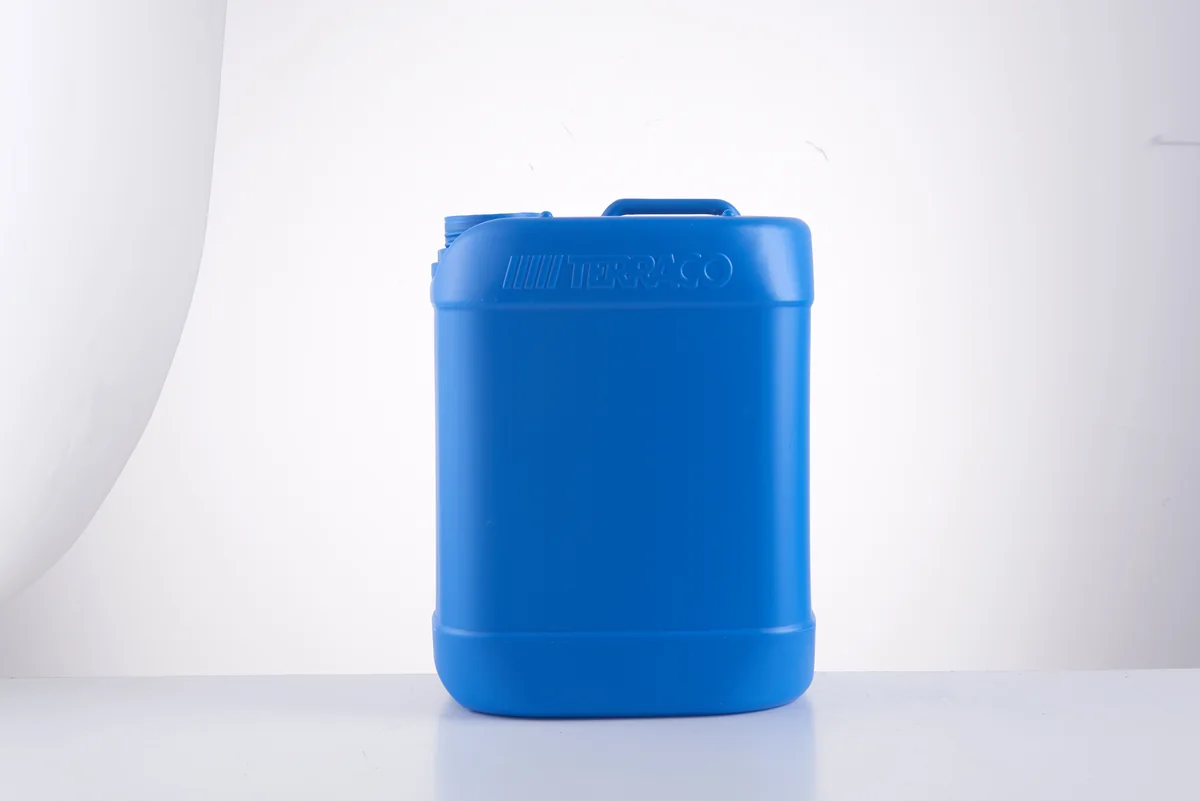
A 20 L jerrycan or a 50 L drum is not just a scaled-up bottle. The mold is heavier, the platen spacing is greater, the parison is larger and the cost of a bad cycle is higher. The machine decision starts with the mold and the container geometry.
1. The container is the project
Record the container's outer dimensions, handle, neck, base, part weight and wall-thickness distribution. For a jerrycan, the handle and recessed profiles can make the mold much more complex than the nominal volume suggests. For a drum, the height and mold depth drive the platen-spacing requirement.
2. Clamping and mold support
The catalog lists 215 kN clamping force and 580 × 740 mm die plates for ES-30L, and 260 kN with 880 × 780 mm plates for ES-50L. These are the limits to check against the actual mold projection area, blowing pressure and mold weight. A mold that fits the platen can still be too heavy or too deep for the machine.
| Catalog field | ES-30L | ES-50L |
|---|---|---|
| Max. product volume | 30 L | 50 L |
| Clamping force | 215 kN | 260 kN |
| Platen spacing | 350–800 mm | 400–1000 mm |
| Die plate size | 580 × 740 mm | 880 × 780 mm |
| Screw diameter / L/D | 80 mm / 25:1 | 90 mm / 25:1 |
| Extruding capacity | 100–120 kg/hr | 110–160 kg/hr |
| Installed power | 100–110 kW | 105–120 kW |
| Actual power (reference) | 30–40 kW | 35–50 kW |
| Machine weight | 10 t | 13 t |
3. Output and energy
For a single-cavity large container, output is often limited by cooling and cycle time rather than the extruder. Calculate good parts per hour from the measured cycle and scrap rate. Then use the machine's actual-power reference as a starting point for energy cost, and verify it on the installed machine.
Do not compare machines by installed power alone. A machine with a higher installed load may run a different heating and drive strategy; the meaningful figure is energy per good part under the same product and cycle conditions.
4. The cost drivers
- Part weight and material price: often the largest single cost.
- Scrap and start-up losses: more significant on large parts because each reject contains more material.
- Cycle time and energy: cooling, hydraulics and heating all contribute.
- Mold cost and maintenance: large molds are a major capital item.
- Labor and handling: large parts need suitable take-out and packing.
- Logistics: machine and mold shipping, installation and commissioning.
5. Project checklist
- Container drawing with dimensions, handle and neck details.
- Mold drawing, estimated weight and required platen spacing.
- Material grade and chemical-contact requirement.
- Target output and shift pattern.
- Available power, air and cooling water at the site.
- Take-out, leak testing and packing plan.
- Certification and inspection requirements for the destination.
6. What to confirm in the quotation
Ask for the final machine configuration, mold interface drawing, utility schedule, test scope, packing plan and spare-parts list. For large containers, the mold and machine must be quoted as one system; a machine-only quotation leaves the most important interface unresolved.
Source: E-SHION product catalog, pages 05–10. Specifications are subject to change without notice; customization is available.
This guide is written for production and procurement decisions. It uses catalog data where available and avoids unverified performance claims.