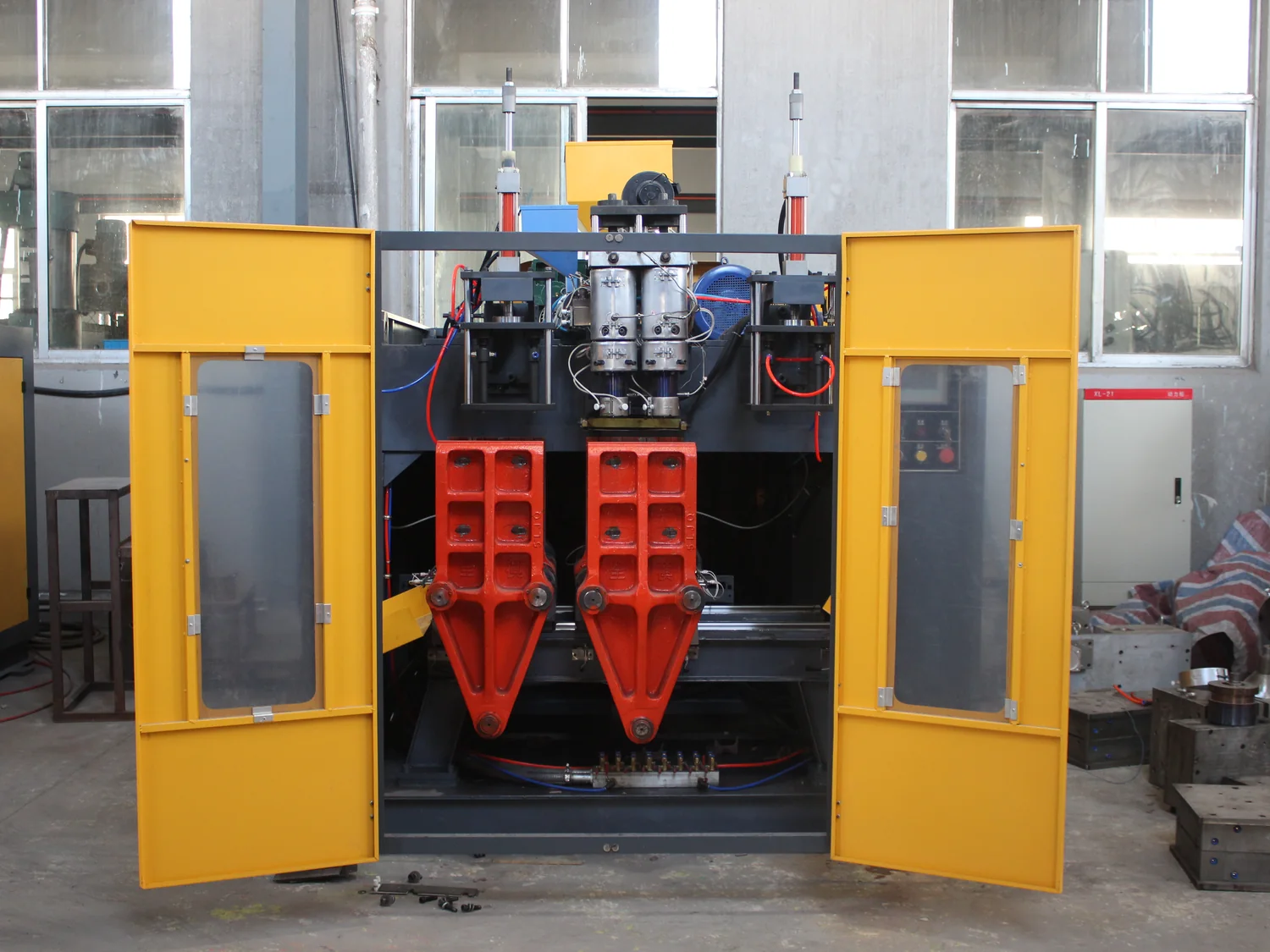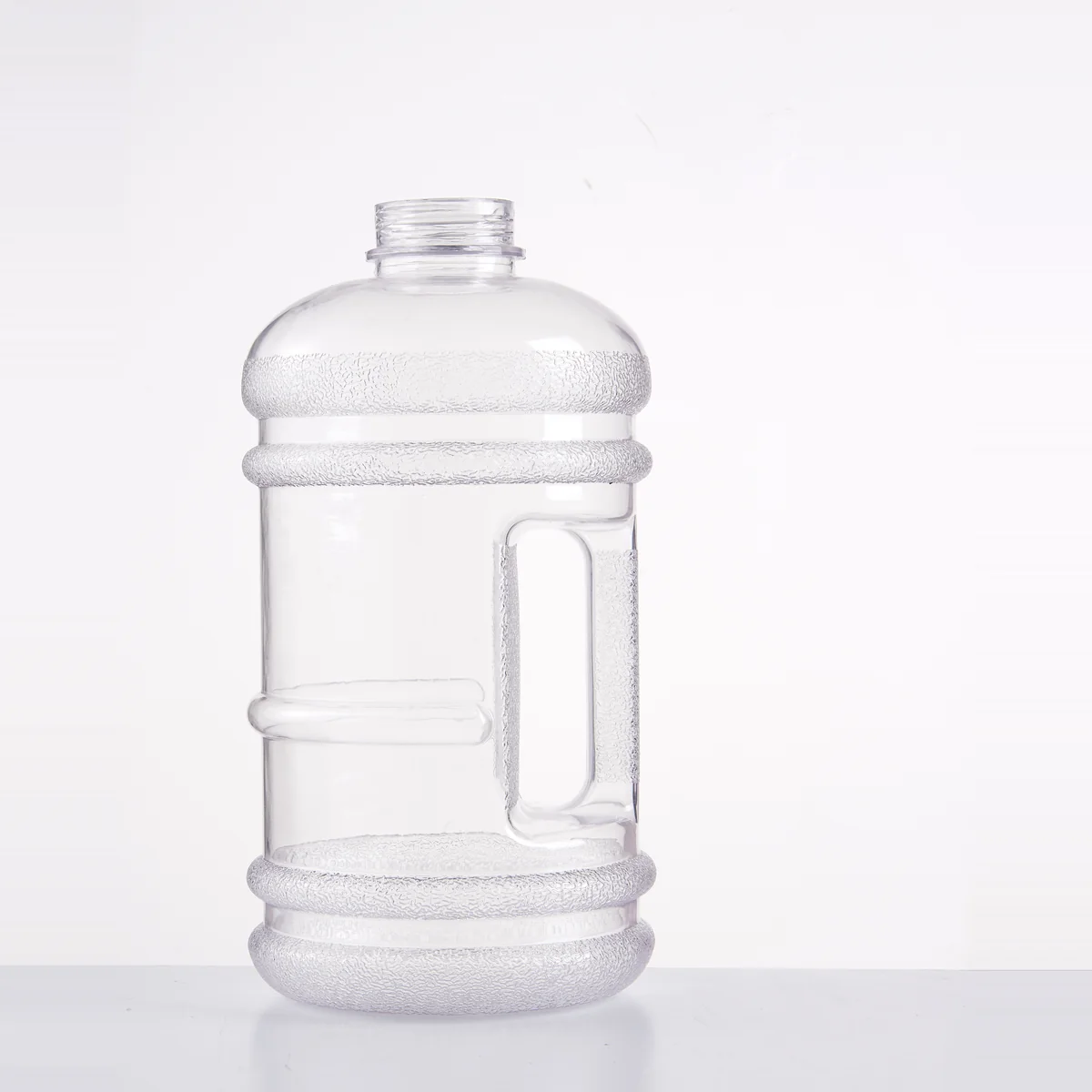
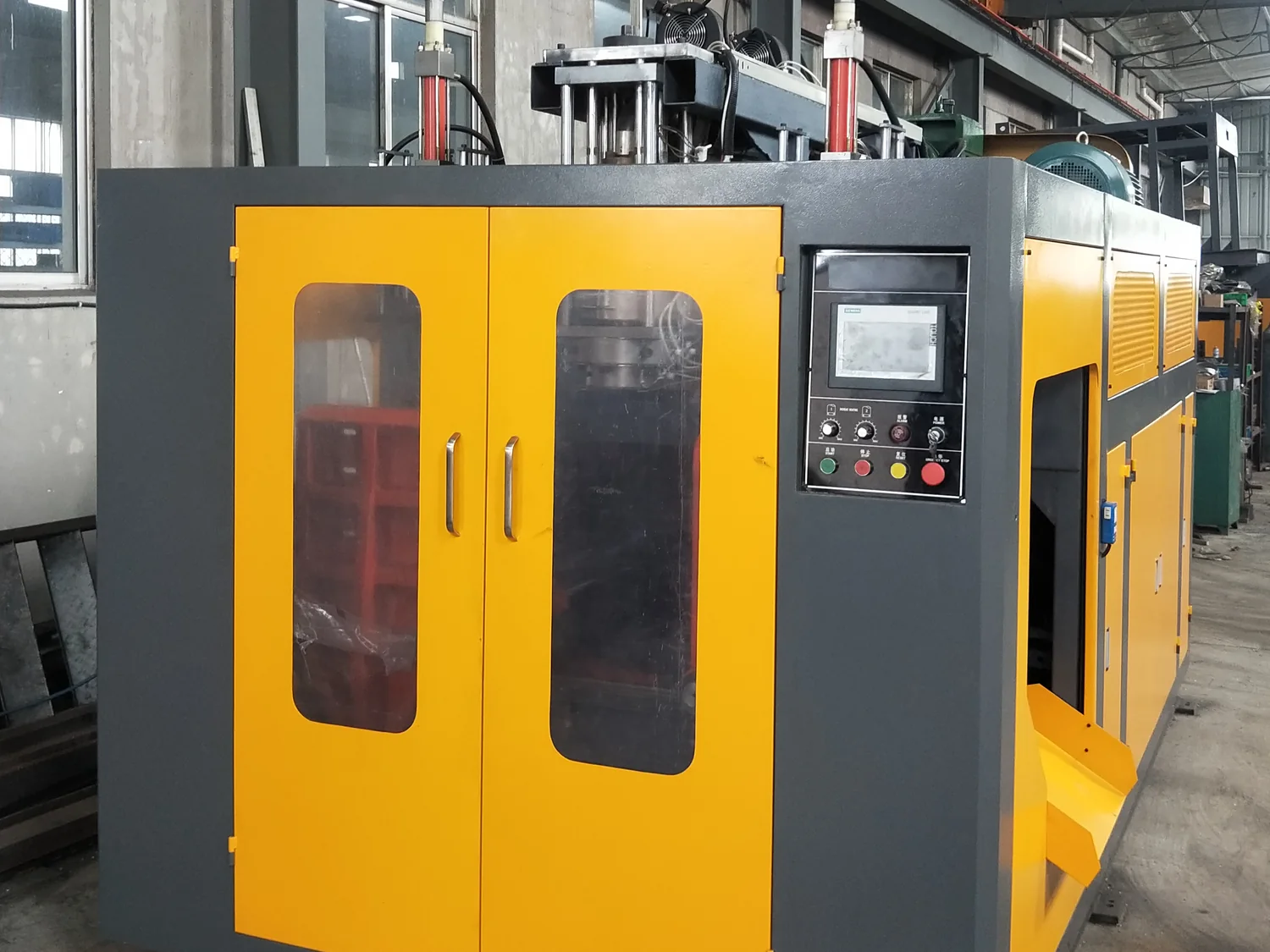
The catalog lists single- and double-station versions of the same 0.1–16 L platform. On paper, the main difference is the station count. In production, the second station changes the cycle balance, the number of molds, the take-out layout and the amount of coordination required from the operator.
What a second station changes
- Output per cycle: two stations can produce two molds' worth of parts in a coordinated cycle.
- Mold count: two sets of tooling must be matched and maintained, not one.
- Extruder utilization: the die head and extruder must supply both stations without starving either one.
- Floor space and access: two clamping units need more room for mold changes and maintenance.
- Changeover: more molds mean more setup work when the product changes.
- Take-out: the finished-part path and automation need to handle both stations.
Output math: do not simply double the number
The catalog shows higher extruding capacity and installed power for the double-station models, which is consistent with a machine configured for two stations. But finished output still depends on cavities, cycle time, cooling and scrap.
Use the formula: cavities × good parts per cavity per cycle × cycles per hour. If one station runs a two-cavity mold on a 20-second cycle, the theoretical output is 360 parts/hour. A double-station machine with two identical molds could theoretically double that, but only if the extruder, cooling and take-out can support the same cycle for both stations.
| Model | Max. volume | Extruding capacity | Installed power | Weight |
|---|---|---|---|---|
| QQ-5LS | 5 L | 65–80 kg/hr | 32–42 kW | 4.5 t |
| QQ-5LD | 5 L | 100–120 kg/hr | 34–45 kW | 6 t |
| QQ-10LS | 10 L | 80–100 kg/hr | 38–48 kW | 6.5 t |
| QQ-10LD | 10 L | 130–160 kg/hr | 45–55 kW | 8 t |
| QQ-16LS | 16 L | 100–120 kg/hr | 48–55 kW | 7 t |
| QQ-16LD | 16 L | 130–160 kg/hr | 50–65 kW | 10 t |
When single-station is the better choice
- The product range changes often, so changeover time matters more than peak output.
- The initial volume does not justify two sets of tooling.
- Floor space is limited, or the plant layout favors a compact cell.
- The part is large relative to the platform, so one mold already uses the available platen.
- The operator team is small and a simpler setup is easier to run reliably.
When double-station earns its place
- The product mix is stable and volumes are high.
- Two molds can be kept in good condition and changed as a planned pair.
- The extruder and cooling system can support a balanced cycle across both stations.
- The plant can handle the larger footprint and the additional take-out equipment.
- The business case is based on measured cycle time and real mold cost, not a simple 2× assumption.
The hidden cost: more mold positions
Two stations mean two molds, two setup routines and a larger number of dimensional checks. If the project has a short run or many SKUs, the extra tooling can erase the output advantage. This is a production-planning question, not only a machine-price question.
A decision checklist
- What is the annual volume and the number of SKUs?
- How often will the mold change?
- Can the plant support two molds and their maintenance?
- What is the measured cycle for the actual part?
- Does the die head and extruder have capacity for both stations?
- Is there enough floor space for molds, take-out and maintenance access?
Source: E-SHION product catalog, pages 05–10. Specifications are subject to change without notice; customization is available.
This guide is written for production and procurement decisions. It uses catalog data where available and avoids unverified performance claims.