Injection stretch blow molding and extrusion blow molding are often compared as if they were two machine options. They are different starting shapes. ISBM begins with a solid preform that is injection molded, reheated and stretch-blown. Extrusion blow molding begins with a molten tube that is cut, clamped and blown in one cycle. That difference decides the material, the tooling, the neck finish and the batch size that makes sense.
The starting shape decides the process
An ISBM preform already has the finished neck and a body whose wall is designed for stretching. The preform can be made in-house or bought, and it can be shipped to a filling site. An extrusion parison has no fixed shape until the mold closes. Its wall is controlled by the die gap, the parison programmer, melt temperature and extrusion speed, all within seconds of the blow.
This is why the two processes handle necks differently. ISBM gives a precise, injection-molded neck before the bottle exists; extrusion blow molding forms the neck by pinching and calibrating the parison, so the neck tolerances and the pinch-off line have to be designed into the mold.
Where injection stretch blow molding wins
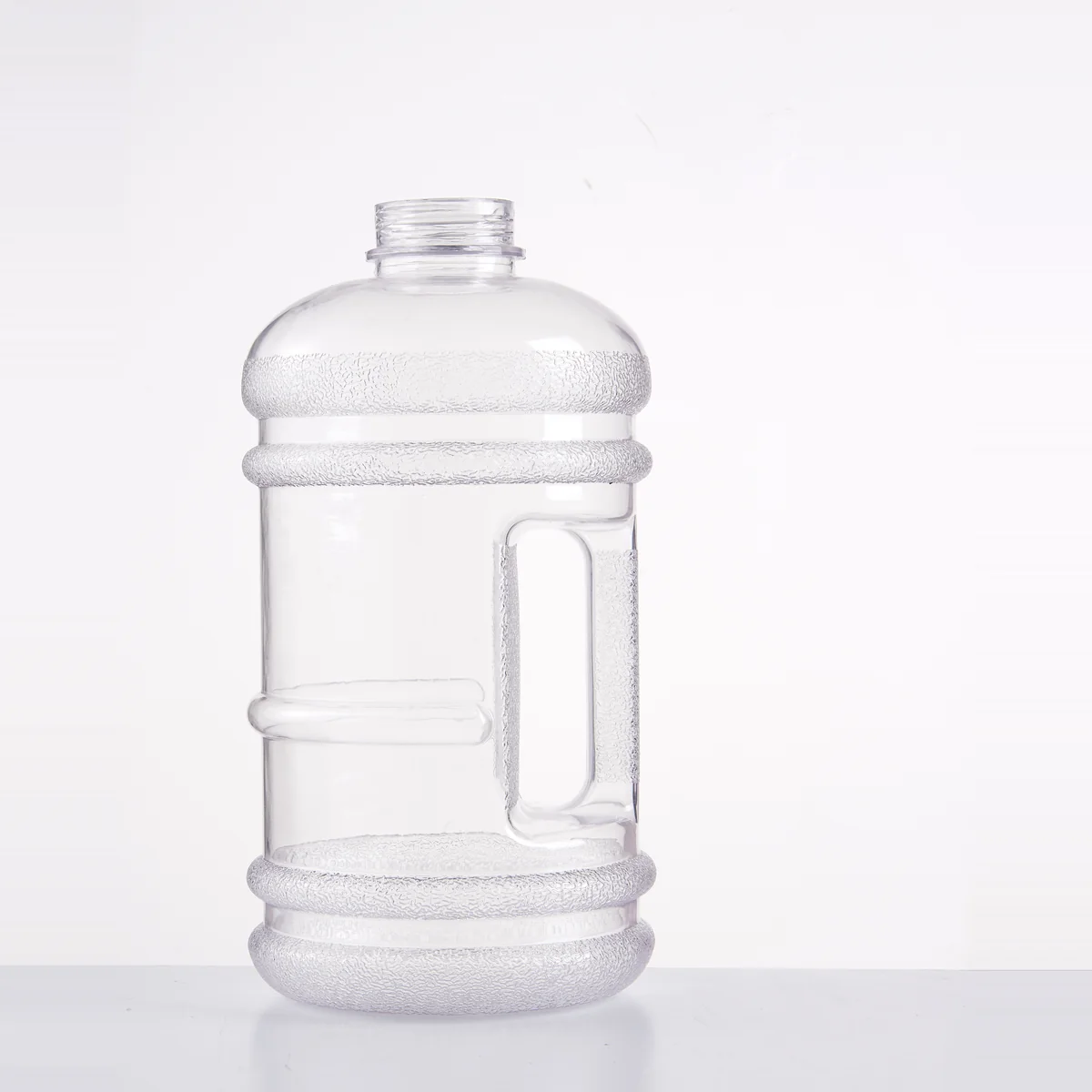
- PET water, CSD and juice bottles where clarity, pressure resistance and a precise neck are required.
- High-cavity production where preform injection and blow molding are separated into efficient cells.
- Lightweighting projects: the stretch ratio and preform design can be optimized before the blow mold is cut.
- Bottles that will be filled on high-speed lines and need a consistent neck dimension.
Where extrusion blow molding wins
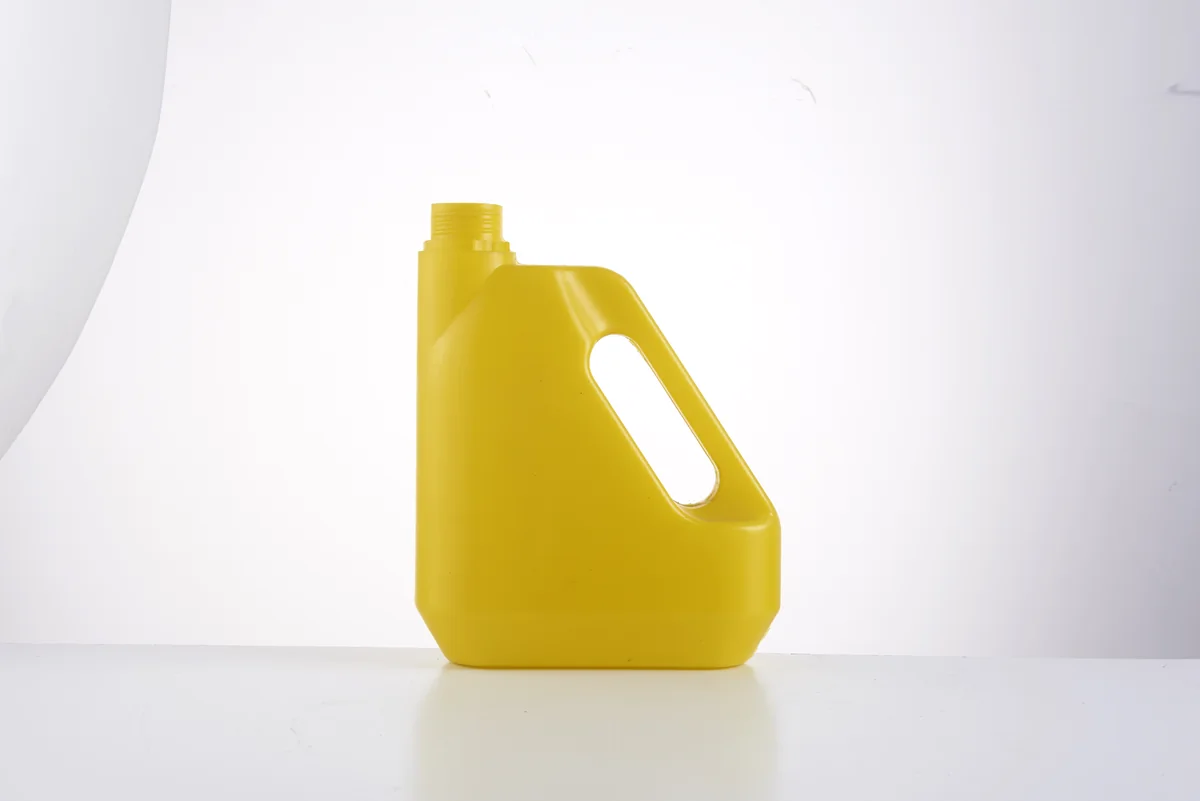
- HDPE, PP, PVC and PETG containers from 0.1 L to 50 L, especially jerrycans, jars, drums and industrial bottles.
- Handles, offset necks, multilayer barriers and recycled-content structures that are difficult in a preform.
- Large parts where the mold cost and the clamp tonnage dominate the project.
- Short runs and frequent size changes, because a blow mold and a die head can be changed without a preform injection cell.
Side-by-side comparison
| Point | Injection stretch blow molding (ISBM) | Extrusion blow molding (EBM) |
|---|---|---|
| Starting shape | Injection-molded preform with finished neck | Extruded molten parison, cut at the die |
| Typical materials | PET, some PP and PEN | HDPE, PP, PVC, PETG, PC, PA |
| Typical products | Water, CSD, juice, edible-oil bottles | Jerrycans, jars, drums, industrial containers |
| Tooling | Preform mold plus blow mold | Blow mold plus die head |
| Neck | Injection-molded, precise | Pinched and calibrated in the mold |
| Wall control | Preform design and stretch ratio | Die gap, programmer, temperature, speed |
| Best batch size | High volume, dedicated preform supply | Medium to high volume; also short runs |
| Changeover | Preform and blow-mold change | Mold and die-head change, material purge |
Swipe the table to see all columns →
Tooling and unit cost
ISBM has two tooling investments: the preform mold and the blow mold. The preform can be bought from a specialist, which removes the injection machine from the project but adds a purchased-part cost and a minimum order. Extrusion blow molding has one mold family and a die head, but the die head, parison programmer and take-out have to match the container.
At low volume, the mold cost per part dominates. At high volume, material weight, cycle time, energy and uptime dominate. A 5,000-piece order rarely justifies a dedicated preform cell; a 5 million-piece bottle rarely justifies a hand-loaded extrusion cell. The crossover is project-specific and should be calculated with quoted mold prices, measured cycle time and the real scrap rate.
Quality differences you can see
ISBM usually gives the better neck and the better optical clarity. Extrusion blow molding usually gives the stronger integral handle and the more forgiving route to a multilayer wall. Every EBM part has a pinch-off line; every ISBM part has a preform gate and a stretch history. Neither is a defect by itself. The question is whether the line, gate or stress sits where the customer will accept it.
When the answer is both
A factory can run both routes. PET water bottles go to ISBM; HDPE jerrycans and PETG jars go to extrusion. The mistake is to force one process across the whole product range because a single machine is already on the floor. Start with the container, the material and the annual volume, then choose the process, then the machine.
For the narrower comparison between extrusion and stretch blowing, see extrusion vs stretch blow molding. For clear PETG jars made by extrusion, use the PETG blow molding guide; for station counts, see single vs double station.
Source: E-SHION product data. Specifications are subject to change without notice; customization is available.
This guide is written for production and procurement decisions. It uses published figures where available and avoids unverified performance claims.