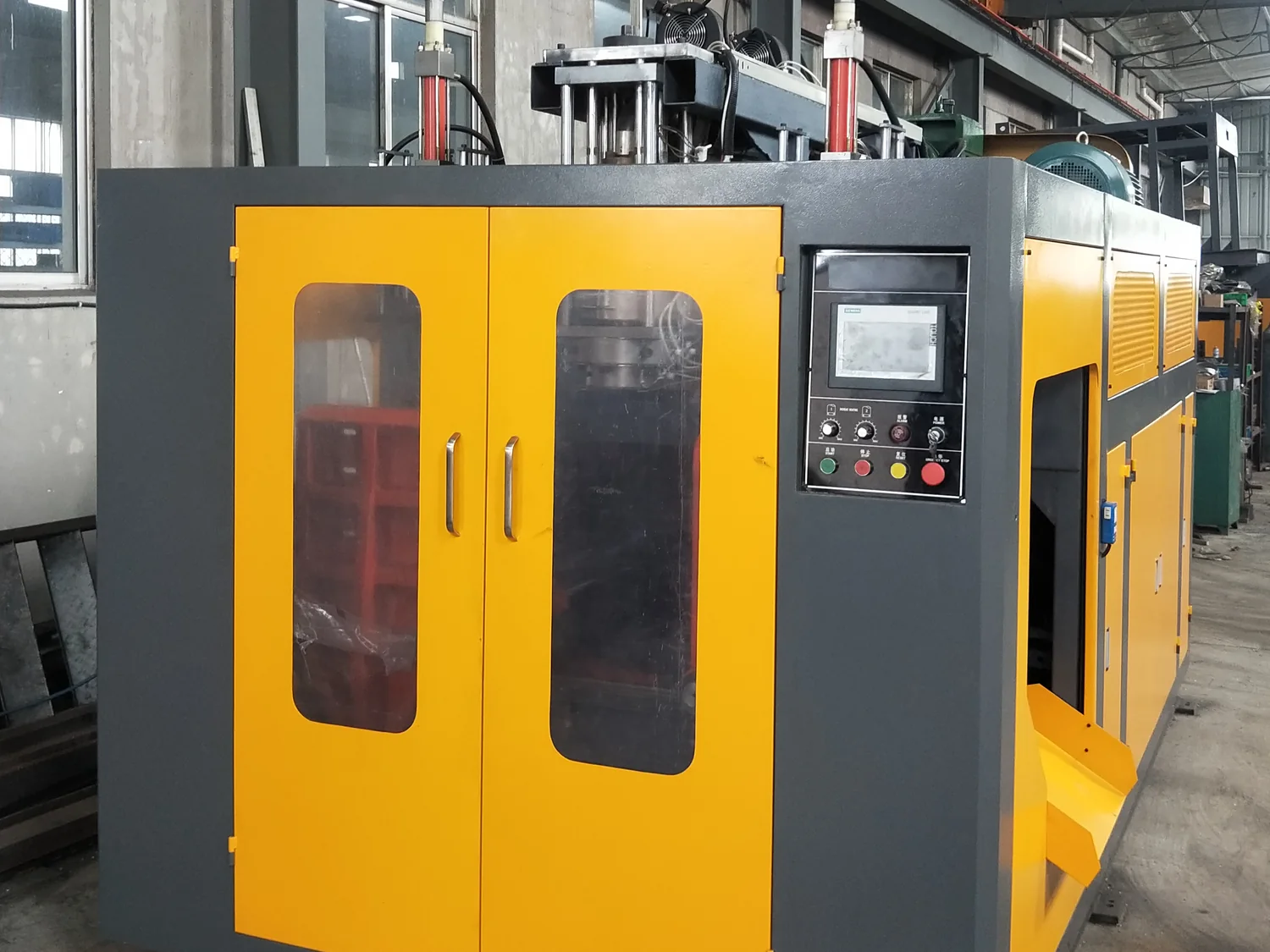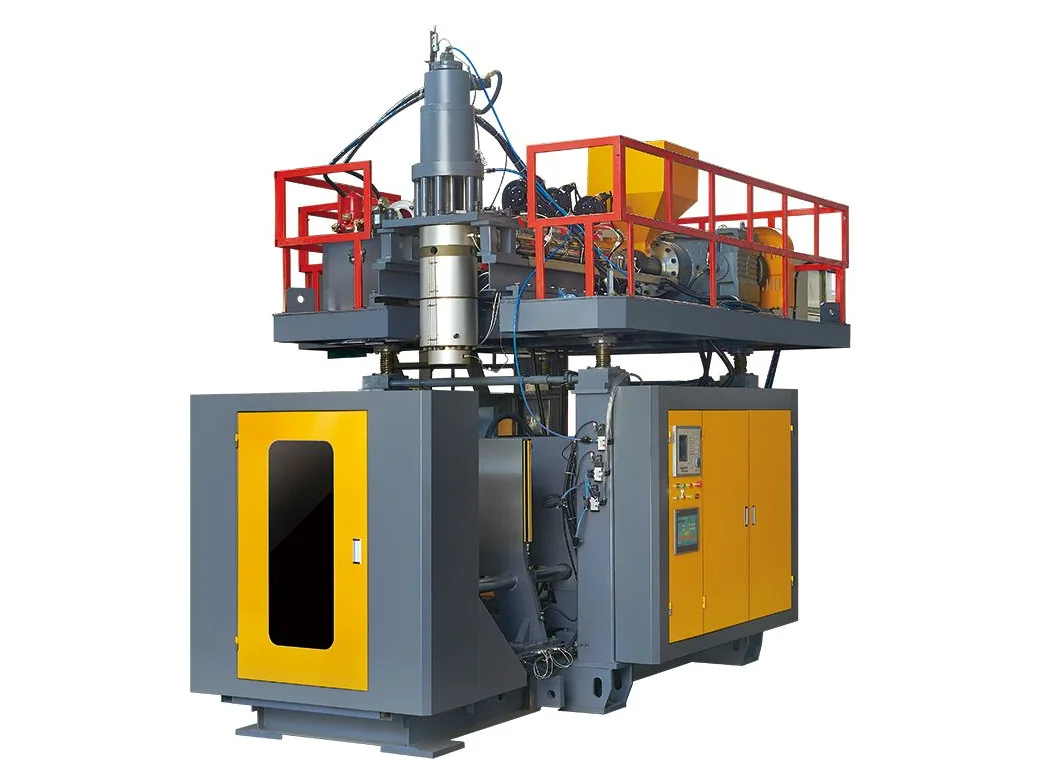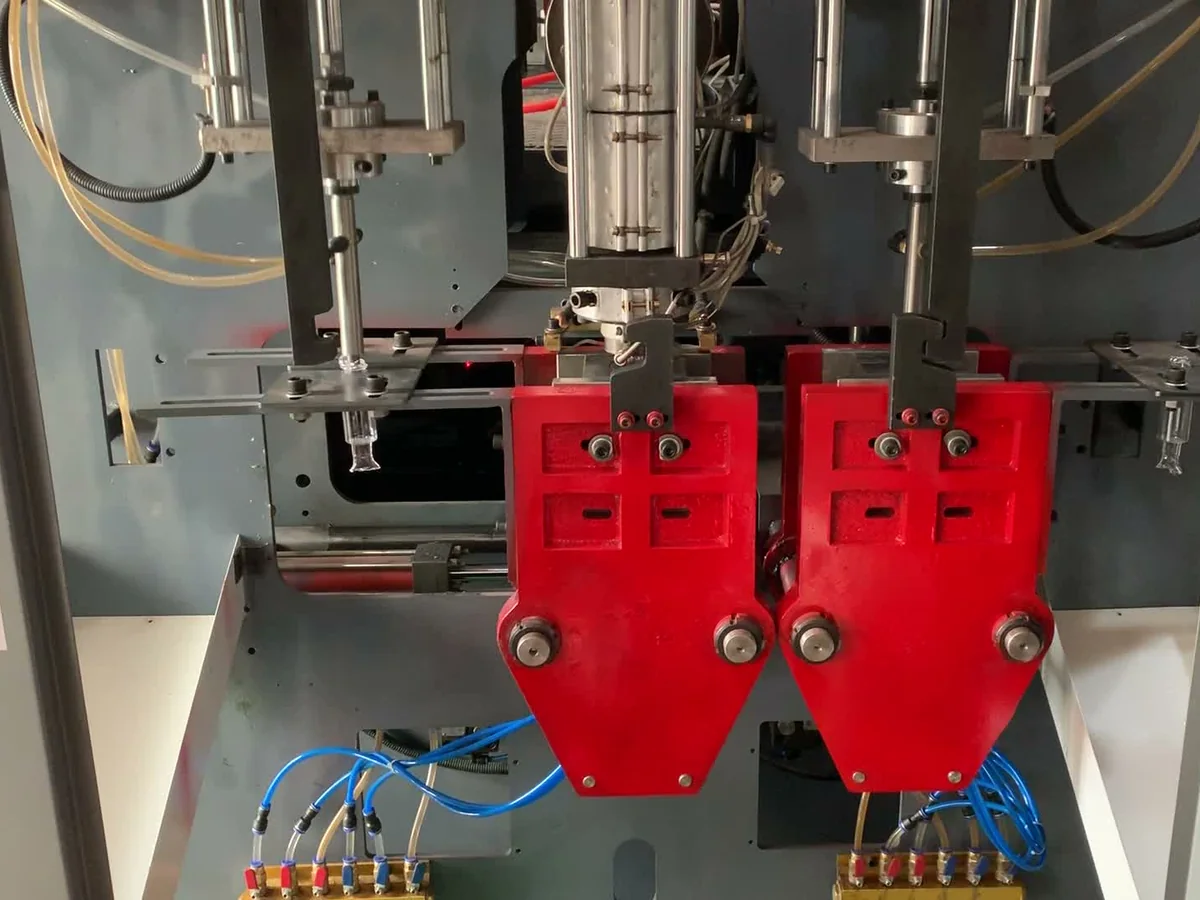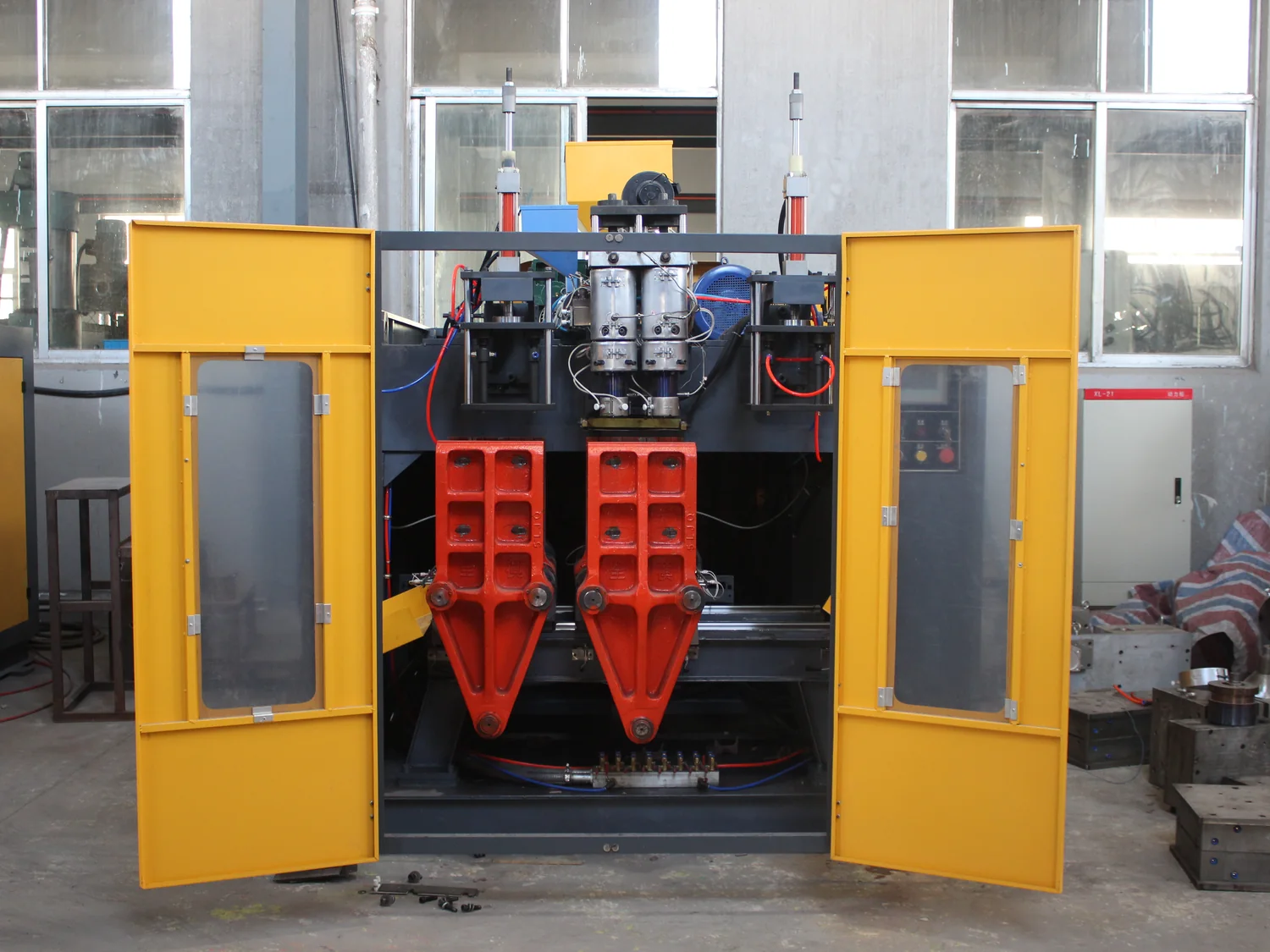
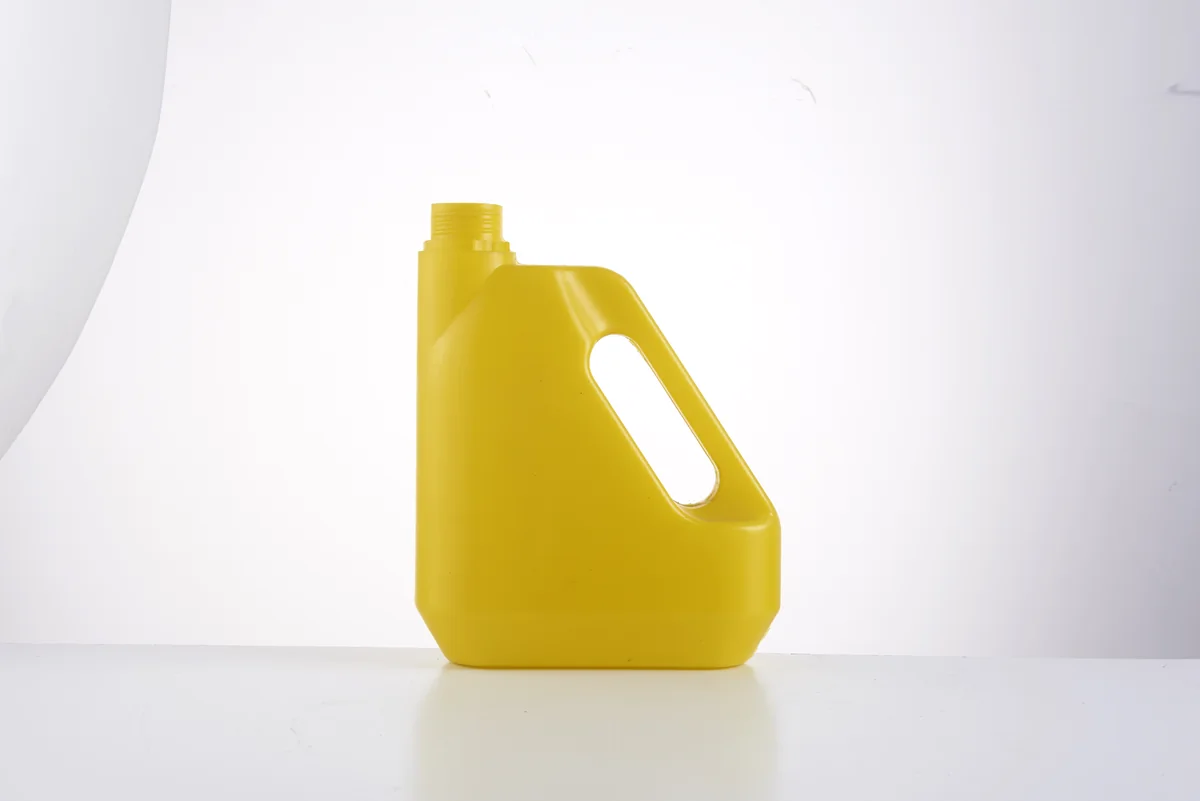
The names sound similar, but the two processes start from different places. Extrusion blow molding extrudes a tube of molten plastic — the parison — closes a mold around it and blows it out against the cavity. Injection stretch blow molding first injection-molds a preform, then reheats and stretches it into the final bottle. The machine, the mold and the cost structure are different.
Neither process is better in general. The useful question is which one fits the container, the material and the annual volume — and which costs less over the life of the project, not just at the machine quotation.
Where the cost difference comes from
The mold is the first difference. An extrusion blow mold is a split cavity that closes around the parison. It does not need the precision core, gate and cooling layout of an injection preform mold. For a 5 L jerrycan or a 20 L drum, the blow mold is typically simpler and less expensive than the injection mold plus stretch-blow tooling needed for the same container.
The second difference is air. Extrusion blow molding runs on low-pressure air, typically 0.6–0.8 MPa (6–8 bar). Stretch blow molding needs high-pressure air, often around 3–4 MPa, and a high-pressure compressor adds capital and running cost. The peripheral equipment package is therefore different from the start.
The third is material. Extrusion blow molding handles HDPE, PP, PVC, PETG and multi-layer structures that include regrind. Stretch blow molding is dominant in bottle-grade PET because the stretch step orients the molecules and gives strength at low wall thickness. PETG is a different material from bottle-grade PET and is normally extrusion blow molded, not stretch blown.
| Extrusion blow molding | Injection stretch blow molding | |
|---|---|---|
| Typical containers | Bottles, jars, jerrycans and drums; handles and wide mouths are straightforward | Thin-wall PET water, CSD and juice bottles |
| Mold | Blow mold only; no preform mold | Injection preform mold plus stretch-blow mold |
| Air pressure | 0.6–0.8 MPa | Typically around 3–4 MPa |
| Material fit | HDPE, PP, PVC, PETG; multi-layer with EVOH | Bottle-grade PET; some PP and PLA |
| Output pattern | Small to medium runs; frequent size changes; multi-cavity | Very high volume with a narrow size range |
| Where it wins | Handles, wide mouths, barrier layers, regrind, thicker walls | Lightweight, thin-wall, high-clarity bottles at scale |
Swipe the table to see all columns →
What extrusion blow molding does well
The process has structural advantages that matter for containers in the 0.1–50 L range:
- Handles and wide mouths: the parison is captured in a split mold, so an integral handle or a wide opening does not need a separate injection-molded part.
- Barrier structures: multi-layer die heads can combine HDPE, EVOH and adhesive layers in one parison, putting the barrier in the wall rather than in a separate liner.
- Regrind: production scrap can be ground and returned to an inner layer, which changes the material cost of the project.
- Changeover: a different blow mold and die head can move the machine to another container; the platform is not tied to one preform design.
- Wall thickness: parison control and wall-thickness control let you build material where the container needs it — handle, base and neck.
Where stretch blow molding is the better answer
If the product is a thin-wall PET water or CSD bottle, running at very high volume with a narrow size range, stretch blow molding is usually the right process. The stretch step gives clarity, strength and lightweighting that extrusion blow molding does not match for that product. A supplier who only builds extrusion blow molding machines should say so rather than force the wrong process.
The same logic applies at the other end. A 20 L HDPE drum with an integral handle, a thick base and a chemical barrier is not a good candidate for stretch blow molding. The mold, the handle and the wall section point to extrusion.
The costs buyers forget to compare
- Mold and changeover cost: a cheaper machine with expensive molds and slow changeover can cost more over three years.
- Air and cooling: high-pressure air and chilled water are operating costs, not just utilities.
- Scrap and regrind: a process that can reuse its own scrap has a different material cost from one that cannot.
- Floor space and operator skill: a compact single-station line and a high-output stretch-blow line need different buildings and teams.
A short selection sequence
- Name the container, material and annual volume.
- Decide whether the wall needs a barrier or regrind layer.
- Compare mold cost and changeover, not only machine price.
- Check air pressure, air volume, cooling and power at the site.
- Ask for a trial or a sample on the proposed configuration.
Source: E-SHION product data. Specifications are subject to change without notice; customization is available.
This guide is written for production and procurement decisions. It uses published figures where available and avoids unverified performance claims.