Roughly three out of four hollow plastic containers are made by extrusion blow molding, and most of the rest by injection blow molding. That split matters when you specify a machine, because the process fixes the pressure band, the tooling, the container shape and the wall-thickness control you need — long before the nameplate matters.
The short answer: three processes, three pressure bands
Extrusion blow molding covers about 75% of hollow-container production and runs at roughly 0.21–0.62 MPa. Injection blow molding covers about 24% and runs at 0.55–1 MPa. Stretch blow molding takes the small remainder and can reach about 4 MPa. These are industry estimates for PE, PP, PVC and PET, not a census of every factory.
One caveat: those numbers describe hollow-container production weighted by volume, not machine count in one country. A shop making 200 ml cosmetic bottles sees a very different mix from a shop making 20 L drums. Use the split to orient the search, then let the container decide.
Pressure follows the process, not the container size
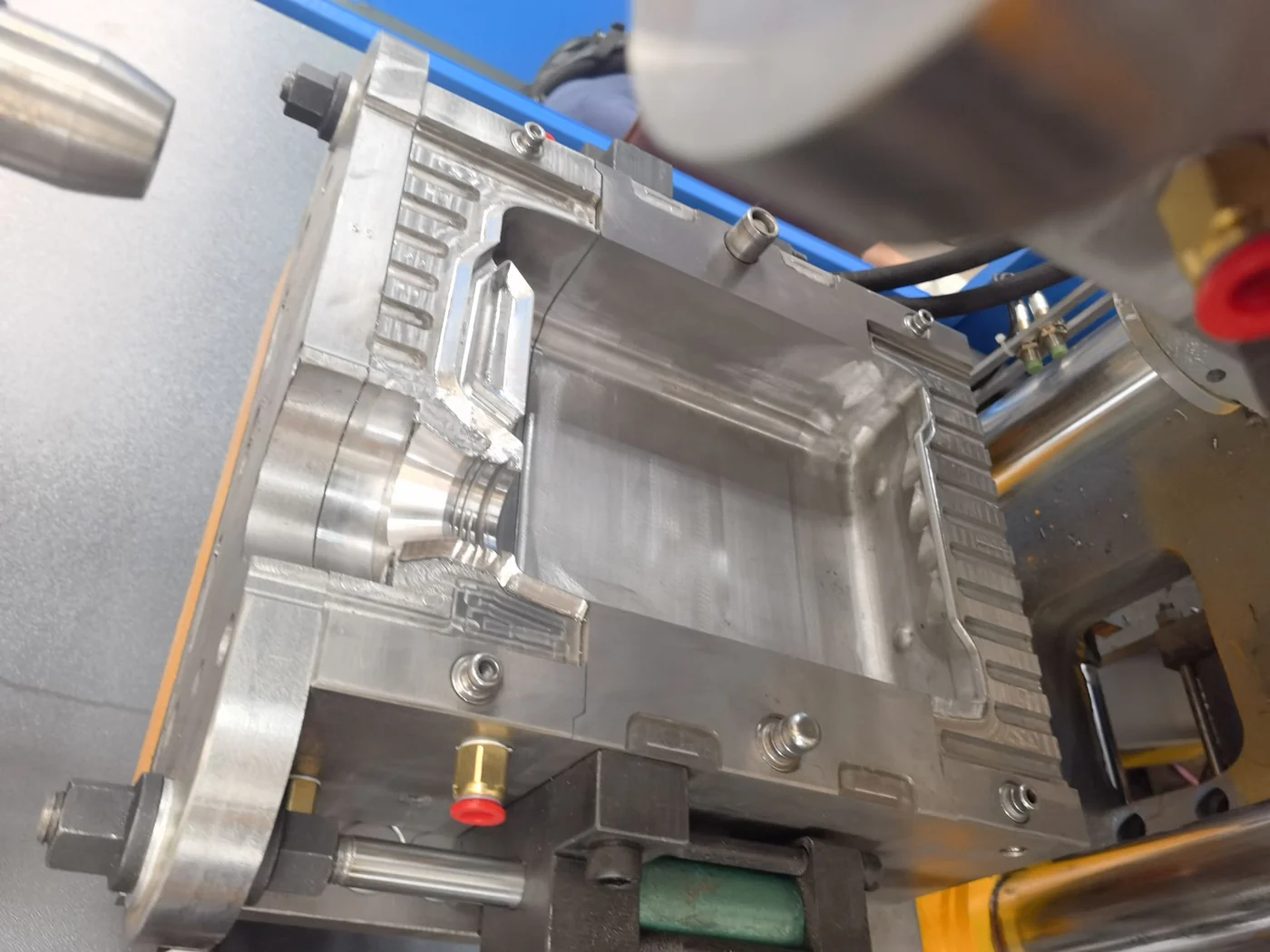
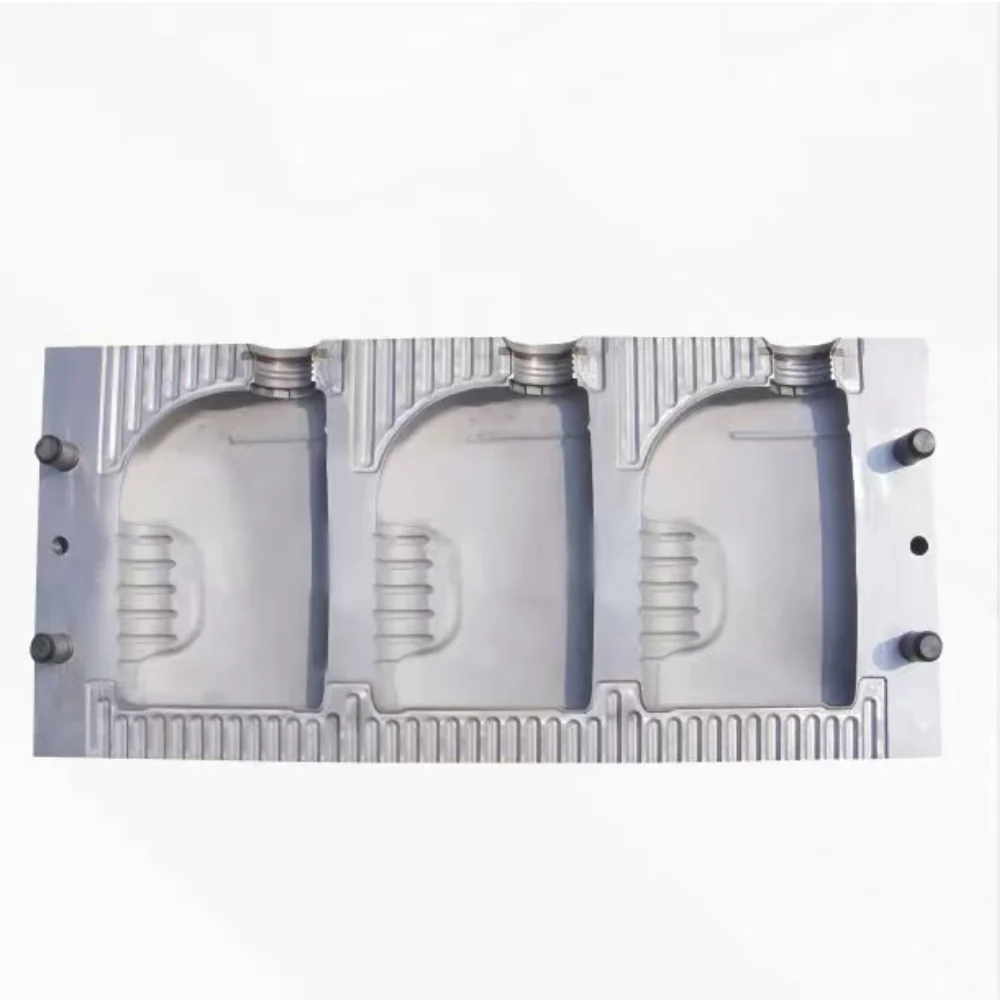
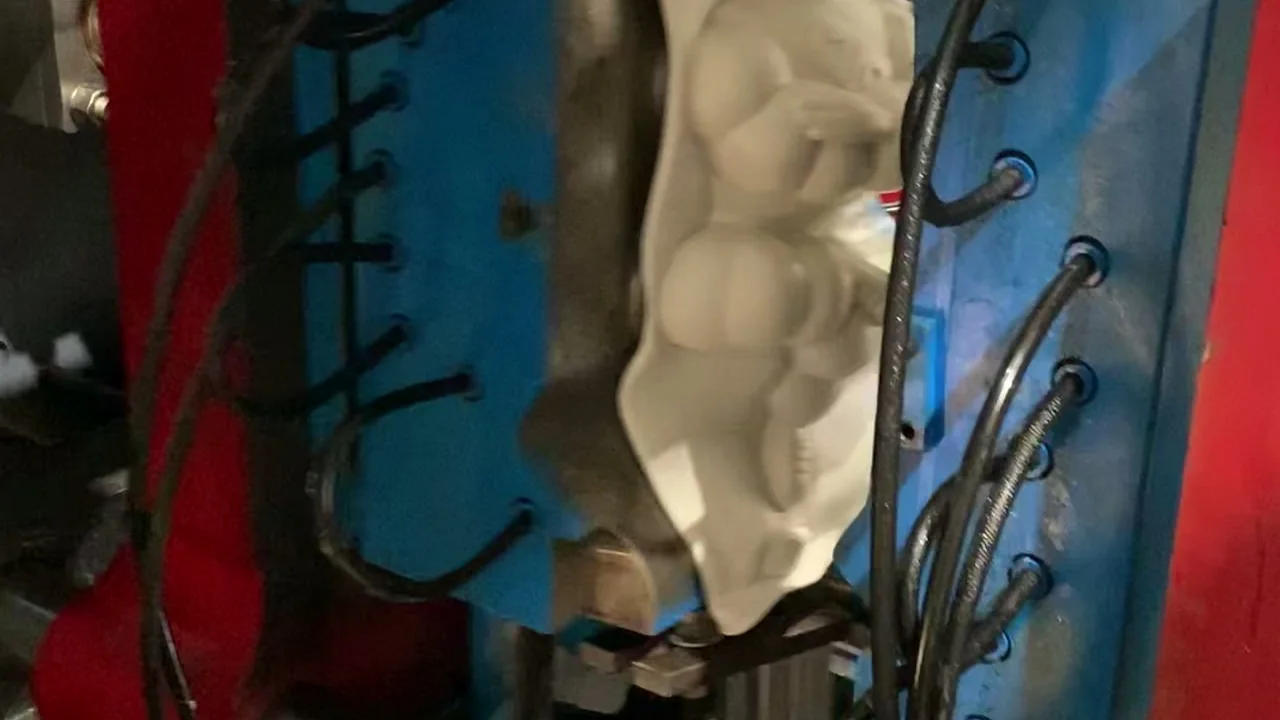
Each process forms the container differently, which is why the pressure bands barely overlap. In extrusion blow molding, a parison is extruded downward, caught in a closed mold and inflated against the mold wall. The air only has to push a hot tube outward, so 0.21–0.62 MPa is enough. In injection blow molding, a preform is injection molded on a core rod and blown in the same tool; the preform is cooler and more defined, so blow pressure sits higher, around 0.55–1 MPa. Stretch blow molding stretches the preform mechanically with a rod, and the biaxial orientation that gives PET bottles their strength needs pressures up to about 4 MPa.
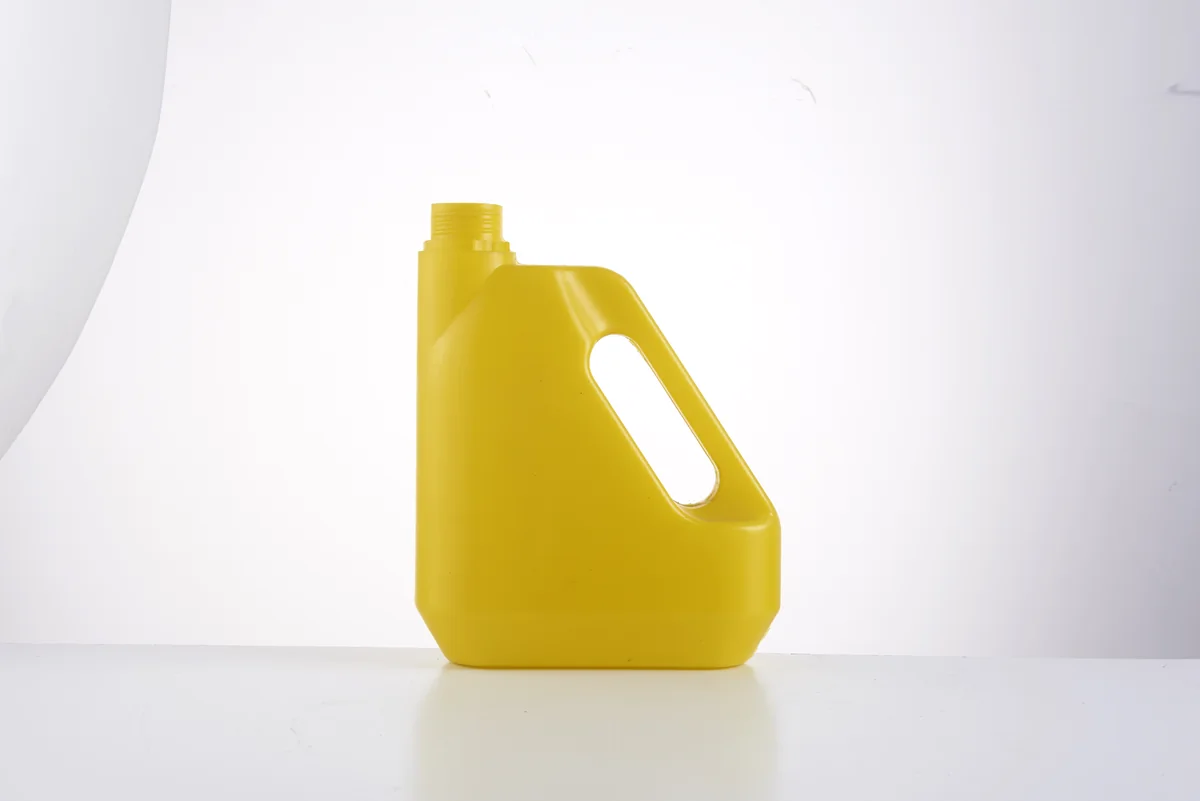
Material generally follows the same logic. Extrusion blow molding handles PE, PP and PVC well and is the usual route for HDPE containers from 0.1 L to 50 L. Injection blow molding gives a precise neck and a uniform wall, which suits small pharmaceutical and personal-care bottles. Stretch blow molding is the PET route: water, carbonated drinks, edible oil. If your container is HDPE or PP and holds more than a litre or two, price extrusion blow molding first.
Pressure also drives clamp force. Clamping force must be checked against the mold projection area multiplied by blowing pressure, not against container volume alone. A tall, flat 10 L bottle can need more clamp than a round 20 L container, and that is a machine-size decision, not a detail for the shop floor.
Matching process to container and material
The table below is the comparison I use in process discussions. Pressure values are the industry ranges published by 86pla for PE, PP, PVC and PET; treat them as a starting point for the pressure setting and confirm them on your own mold and resin.
| Process | Share of hollow-container production | Typical blow pressure | Common materials | Typical containers |
|---|---|---|---|---|
| Extrusion blow molding (EBM) | About 75% | 0.21–0.62 MPa | PE, PP, PVC | 0.1–50 L jerrycans, bottles and drums; multi-layer containers |
| Injection blow molding (IBM) | About 24% | 0.55–1 MPa | PE, PP, PVC, PET | Small pharmaceutical and personal-care bottles with precise necks |
| Stretch blow molding (ISBM) | About 1% | Up to about 4 MPa | PET | Water, carbonated-drink and edible-oil bottles |
Swipe the table to see all columns →
Where E-SHION fits: extrusion blow molding, 0.1–50 L
E-SHION builds extrusion blow molding machines only, so this article is not a pitch for all three processes. The range runs from 0.1 L to 50 L in single-station and double-station layouts, one to six cavities and one to six layers where the configuration allows. The ES-10LS is a single-station machine with a 110 kN clamp, 450 × 480 mm platens, a 70–75 mm screw and 80–100 kg/h output — a normal fit for 5–10 L HDPE bottles and jerrycans. Above it, the ES-30L moves to a 215 kN clamp and 580 × 740 mm platens for 30 L containers, and the ES-50L to 260 kN for 50 L.
Where the container needs an injection-molded neck, or PET clarity from biaxial orientation, we say so and point the buyer to the right process instead of forcing an extrusion machine into the job. Choosing the wrong process costs more than choosing the wrong model.
Output is the other half of the choice. A double-station machine can raise output substantially because two molds run at once, but the extruder's plasticizing capacity is the ceiling — adding stations does not add melt. For a given container, compare the measured cycle time and the screw's kg/h before you compare cavity counts.
The 0–16 L range splits intosingle-station machinesanddouble-station machines. If you are still comparing processes, start withextrusion vs injection blow molding.
What to send for a quotation
- Container drawing or 3D file with volume, neck finish and wall-thickness target
- Material and layer structure: single layer, or multi-layer with EVOH or regrind
- Target output per hour and shift pattern
- Cavity count you want to evaluate, and whether the mold is new or existing
- Voltage, control preference and destination port
Send these to doris@e-shionmachine.com or WhatsApp +86 151 6778 9726. If the container is PET and needs biaxial orientation, or the neck tolerance is tighter than extrusion can hold, we will say so before quoting rather than price a job we cannot do.
Source: E-SHION product data. Specifications are subject to change without notice; customization is available.
This guide is written for production and procurement decisions. It uses published figures where available and avoids unverified performance claims.