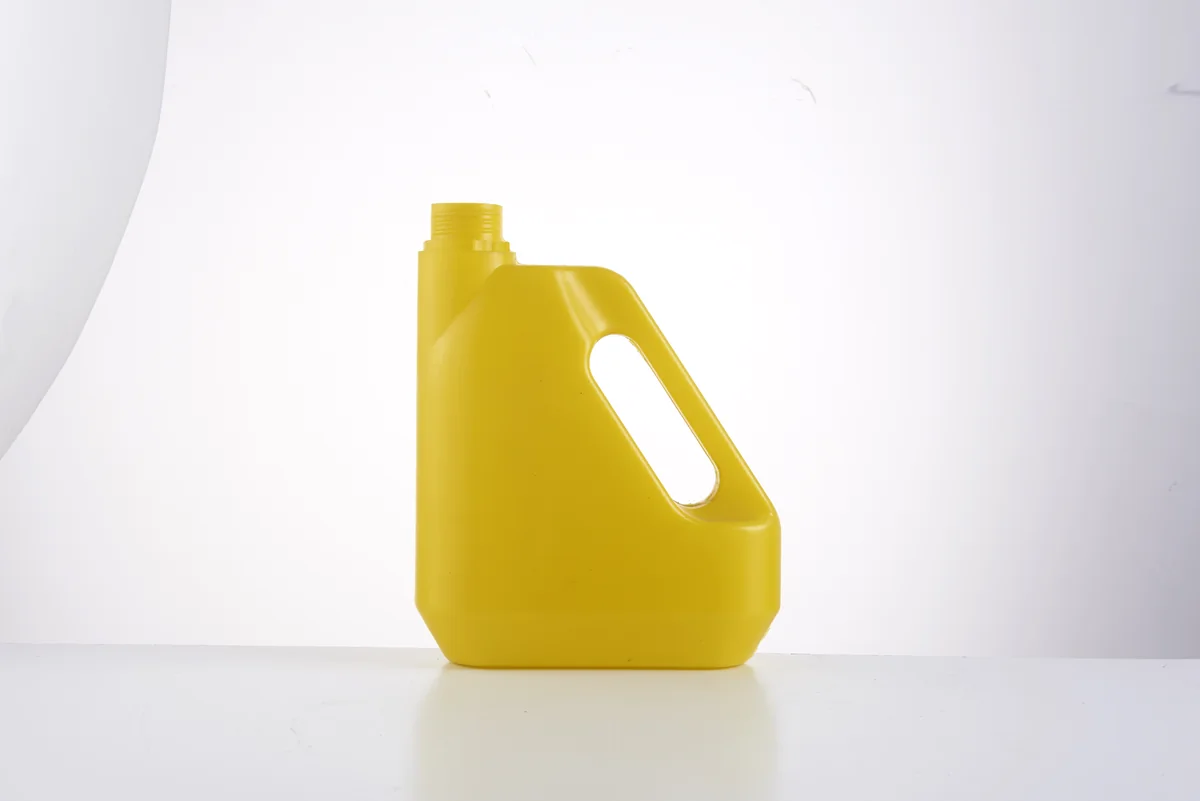
A 5 L jerrycan and a 5 L pharmaceutical bottle can reach the same buyer with very different quotations. One machine extrudes a tube of melt and blows it in a split mold; the other injection-molds a preform on a core rod and then blows it into shape. Both are containers; the tooling, neck tolerance, scrap and operator routine are not the same. Start with the container and annual volume, not the machine's maximum volume.
The short answer: match the process to the container
Choose extrusion blow molding (EBM) when the container is large, has an integral handle or wide mouth, needs a multi-layer barrier, or changes size often enough that one blow mold per product is the practical tooling choice. Choose injection blow molding (IBM) when the container is small, the neck finish and bore are what the filling line checks first, and the volume keeps two matched tools busy. Between the two, ask both suppliers to quote the same drawing and compare cost per good part, not machine price.
The three-question shortcut
If the container is large and the neck is ordinary, extrusion blow molding is usually the lower-tooling route. If the container is small and the neck is the dimension the filling line checks first, injection blow molding is the better fit, even though the machine and the two-mold set cost more.
- Container type and size: 5–30 L chemical drums, oil cans, water tanks and detergent bottles point to EBM; medicine bottles, cosmetic jars and eye-drop bottles point to IBM. The IBM examples sit outside E-SHION's 0.1–50 L extrusion range and would be quoted by an injection-blow supplier.
- Neck precision: a precise thread and sealing surface point to IBM, where the neck is injection-molded on the core rod. An ordinary neck and sealing requirement point to EBM; the parison programmer can adjust wall thickness, but the neck is formed in the blow mold and trimmed after take-out.
- Mold budget and volume: a limited tooling budget at medium volume points to EBM, where one blow mold per container is the normal tool. A tooling budget that can carry two matched molds at high volume points to IBM; the higher tooling is amortized by the cleaner neck and less finishing.
One more shape rule: a complex or irregular container that must be one piece often favors EBM, because the parison can be blown into the full shape in one mold. If the tolerance is the hard requirement, IBM is the better route. Neither rule replaces a sample and a quote on the same drawing.
For the extrusion route, compare the 0.1–16 L single-station range and the 20–50 L container platform, then read the machine selection guide before fixing a model.
How the two processes differ
Extrusion blow molding starts with a parison: a tube of molten plastic. Material options across the range include PE, PP, HDPE, HDPP, PC, PVC, PETG and EVOH multi-layer structures, subject to available configurations; confirm the exact list for your model against the offer. The mold closes around the parison, air inflates it against the cavity, and the part is cooled and taken out. The neck is formed in the blow mold and finished after take-out, so trimming and reaming are part of the process.
Injection blow molding starts one step earlier. A preform is injection-molded onto a core rod; the core, with the still-warm preform, moves to the blow station; air expands the preform against the blow cavity. The neck is created in the injection step and stays on the core through blowing. That is why IBM is associated with precise neck dimensions — and why it needs two matched tools and an injection station.
- Tooling: EBM needs one blow mold per container; IBM needs a preform mold plus a blow mold, matched as a set.
- Neck and bore: IBM forms the neck by injection; EBM forms it in the blow mold and finishes it after take-out. Check the tolerance against the drawing.
- Handles and wide mouths: EBM can mold an integral handle or wide opening; IBM is built around a core rod, so an integral handle is not its normal layout.
- Wall control: EBM uses a parison programmer and die-gap profile, and sag matters; IBM sets the preform wall at injection and completes it in the blow.
- Output: EBM runs multi-cavity molds within extruder plasticizing capacity; IBM has more steps per part and suits stable, smaller-part volumes.
Where injection blow molding is worth the extra tooling
IBM is not a premium EBM. It answers a narrower question. The extra injection station and second mold usually pay back only when the container is small, the neck is critical, and the volume keeps both tools busy. Pharmaceutical bottles, cosmetic jars and small technical parts are its territory. A 20 L chemical drum with an integral handle is not: the core rod, two-tool set and extra handling work against it.
State a supplier's scope plainly. E-SHION's published range is extrusion blow molding for 0.1–50 L containers. If your small precision bottle's neck cannot be held after trimming, quote IBM with a supplier who builds it, then compare that quote with an EBM quote on the same drawing.
Cost, output and mold count: what actually decides
Machine price is only one line in the comparison. For EBM, the market frame for a 1–5 L machine is roughly USD 25,000–70,000; for 5–30 L, roughly USD 40,000–90,000; for 30–50 L, roughly USD 60,000–120,000. A simple two-cavity blow mold is roughly USD 2,000–5,000; a larger multi-cavity tool roughly USD 15,000–35,000, with 20–60 days commonly needed after drawing approval. These are market ranges, not E-SHION list prices; confirm the final price in the quotation, because it depends on model, mold, cavity layout, material, drive and control, and destination. Auxiliaries — compressor, chiller, grinder, conveyor — are separate and can add a meaningful share of the budget.
IBM pricing is a separate market, outside E-SHION's extrusion blow molding range. Keep the comparison complete anyway: preform mold plus blow mold, injection station, dryer and chiller load, and any finishing the neck requires. Ask both suppliers to quote the same container, annual volume and cavity count.
| Decision point | Extrusion blow molding | Injection blow molding |
|---|---|---|
| Typical container | Bottles, jars, jerrycans, drums; handles and wide mouths | Small bottles and jars where neck and bore are critical |
| Tooling | One blow mold per container | Preform mold plus blow mold, matched set |
| Neck finish | Formed in the blow mold, finished after take-out | Injection-molded on a core rod, then blown |
| Handle and wide mouth | Integral handle possible; wide mouth is a normal layout | Core-rod layout; integral handle not normal |
| Wall control | Parison programmer and die-gap profile | Preform wall set at injection, completed in the blow |
| Output pattern | Multi-cavity; extruder plasticizing capacity is the ceiling | More steps per part; stable, smaller-part volumes |
| Flash and finishing | Flash at the pinch-off line; trimming or deflashing is normal. | Neck is injection-molded; little or no flash at the neck, cleaner sealing surface. |
| Mold cost pattern | One blow mold per container; market rule of thumb often roughly one-third to one-half of an IBM tool set. Confirm with quotes. | Preform mold plus blow mold; higher tooling, amortized at volume. |
| Typical examples | 5–30 L chemical drums, oil cans, water tanks, detergent bottles. | Medicine bottles, cosmetic jars, eye-drop bottles. |
Swipe the table to see all columns →
What the production video shows — and what it does not
The clip below is a representative 5 L multi-cavity extrusion blow molding run. Watch the parisons form, the mold close and the finished bottles leave at take-out. That rhythm is the part of the cycle a quotation cannot show you. What it does not show is your container: your neck, wall-thickness range, material and measured cycle time. Use the video to understand the machine layout, then confirm the rest on a sample or trial.
What to send for a quotation
A useful quotation starts with a complete container file, not a capacity in liters. Send the drawing or sample, material and grade, target output and annual volume, cavity preference, existing mold data, destination voltage and frequency, and the certification or inspection documents you need. If the neck is critical, give the tolerance. If the container needs a handle, wide mouth or barrier layer, put it in the first message — it changes the machine and the mold.
If the drawing is ready, send it through the contact page and tell us which dimensions the filling line checks first. That usually points to the right process faster than a machine-by-machine comparison.
Source: E-SHION product data. Specifications are subject to change without notice; customization is available.
This guide is written for production and procurement decisions. It uses published figures where available and avoids unverified performance claims.