A mold quote arrives with a price, a cavity count and a lead time of 20 to 60 days. What it usually does not show is the sequence behind that number: who cut the cavity, how the shrinkage allowance was set, whether the water circuits were pressure-tested, and what the trial sample actually measured. That gap is where buyers lose money, because two mold quotes at the same price can hide very different amounts of work.
How a blow mold is made, in the order that matters
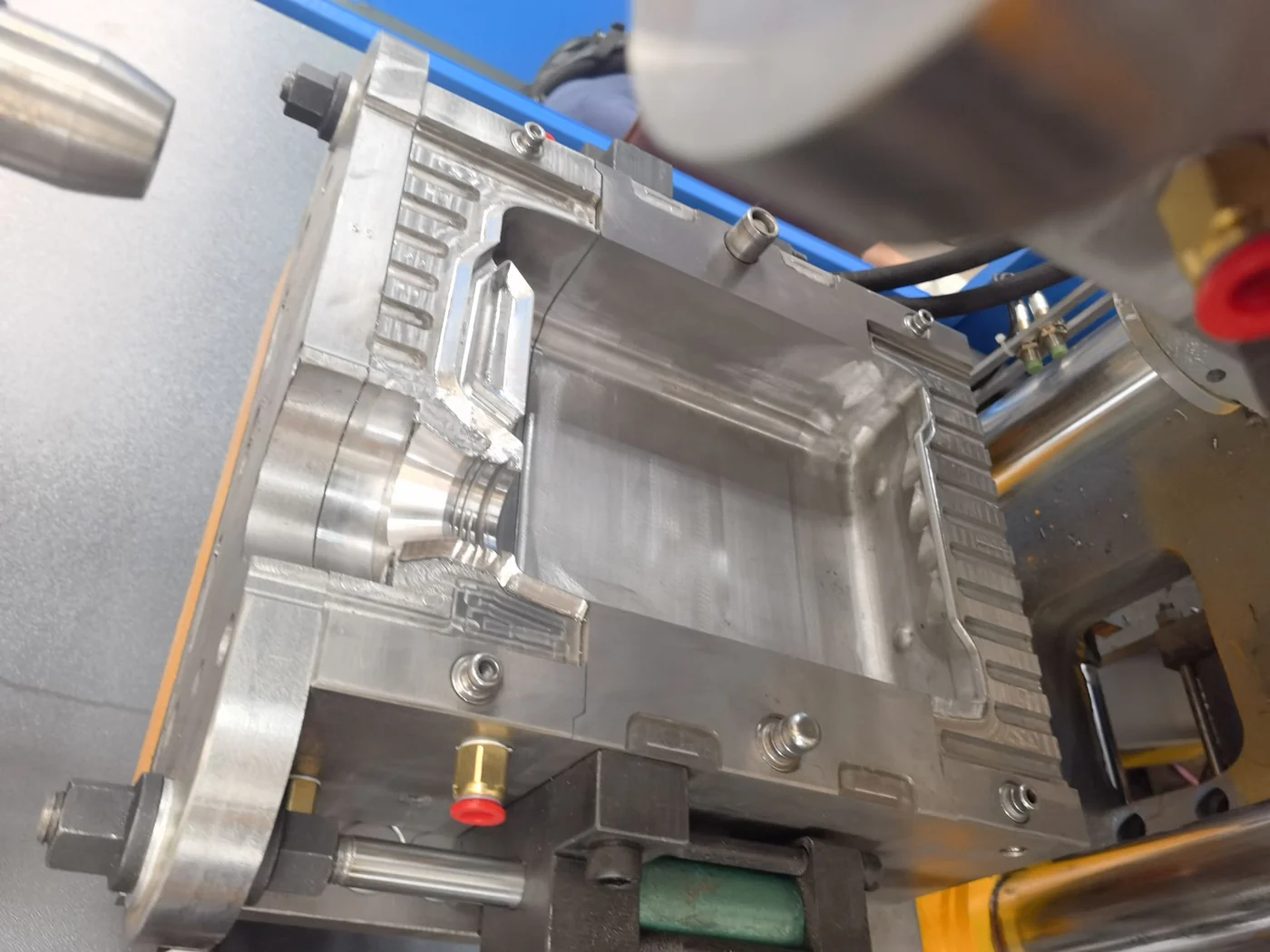
A blow mold is made by designing the cavity with a shrinkage allowance, cutting a steel or aluminum block on CNC, burning deep detail with EDM, fitting and spotting the halves, polishing the cavity, pressure-testing the water circuits, and running a trial sample. Each step leaves a record you can ask to see.
Read the sequence as a set of handoffs. Design fixes the cavity, the split line and the shrinkage allowance. The material block decides how fast the cavity can be cut and how well it holds detail. CNC and EDM produce the surface the bottle will copy. Bench fitting decides whether the halves close without a step at the parting line. The water circuits decide cooling, and the trial decides whether the mold is finished at all.
- Cavity and split-line design, with the shrinkage allowance agreed in writing
- Material block selection: aluminum or steel, with a certificate
- CNC roughing, then finishing of the cavity and parting surfaces
- EDM for deep ribs, sharp corners and detail a cutter cannot reach
- Bench fit and spot: blue-check the halves until they close cleanly
- Polishing to the surface finish the container needs
- Water-circuit pressure test, with pressure and hold time recorded
- Trial run, with a sample report on wall thickness, weight and cycle time
Design and material choice decide the rest
Shrinkage is the first number that gets argued about later. HDPE and PP pull differently, and a cavity cut for one grade will not give the same neck diameter in another. The allowance belongs on the drawing before the first cut, because it is expensive to correct after the cavity is polished. Draft angles, the pinch-off land and the blow-pin position are settled at the same time.
Aluminum cuts faster, cools quickly and suits short to medium runs and large containers where heat removal dominates. Steel holds sharp detail and a polished surface for longer, which matters for clear containers, deep ribs and long production. Neither is automatically better. Ask the mold maker which one they propose for your container, material and volume, and ask them to say why in the quotation.
CNC, EDM, fit, polish and water test: where the days go
The steps below are the ones that move a mold from a block of material to a tool you can accept. The third column is the part most buyers never ask for, and it is usually the fastest way to tell two mold quotes apart.
| Step | What happens | Record to ask for |
|---|---|---|
| Design | Cavity, split line, draft angles and shrinkage allowance set on the drawing | Approved drawing that states the allowance |
| Material block | Aluminum or steel selected for container size, material and run length | Material certificate with grade |
| CNC | Roughing, then finishing of cavity and parting surfaces | Tolerance value and how it is measured |
| EDM | Deep ribs, sharp corners and fine detail burned with electrodes | Electrode count per cavity |
| Fit and spot | Halves blue-checked and hand-fitted until the parting line closes clean | Fit report or contact-pattern photos |
| Polish | Cavity polished to the finish the container needs | Finish grade agreed against a sample |
| Water circuit | Circuits pressure-tested before assembly | Pressure, hold time and pass/fail record |
| Trial run | Mold run on the machine, samples measured | Wall-thickness points, part weight, cycle time |
Swipe the table to see all columns →
What a mold shop should show you
A mold shop tour is only useful if you know what to look at. Ask to see the machine cutting your cavity, not a finished mold on a shelf. Ask where the electrode rack is, how the water circuits are tested and who signs the trial report. A shop that does these steps in-house answers in minutes; a shop that subcontracts them has to make a phone call.
This is why a builder that also runs its own mold work is easier to hold to a date. Mold and machine are commissioned together: clamp force is checked against the mold projection area and blowing pressure, the parison programmer is set against measured wall-thickness readings, and the trial runs on the machine that will ship. If a defect appears, the cause is found in one place.
single-station 0-16 L rangedouble-station rangehow a factory acceptance test is runbefore you sign the trial report.
What to send for a quotation
A mold quotation is only comparable if both suppliers quote the same scope. Send these items together and ask each supplier to answer them in writing:
- Container drawing or a sample, with the neck finish and the volume in millilitres
- Material and grade, including any recycled content
- Target output per hour and the shift pattern
- Cavity count you want, or the count you are open to being advised on
- Surface and clarity requirement, with a reference sample if you have one
- Machine model the mold will run on, and the destination country
Source: E-SHION product data. Specifications are subject to change without notice; customization is available.
This guide is written for production and procurement decisions. It uses published figures where available and avoids unverified performance claims.