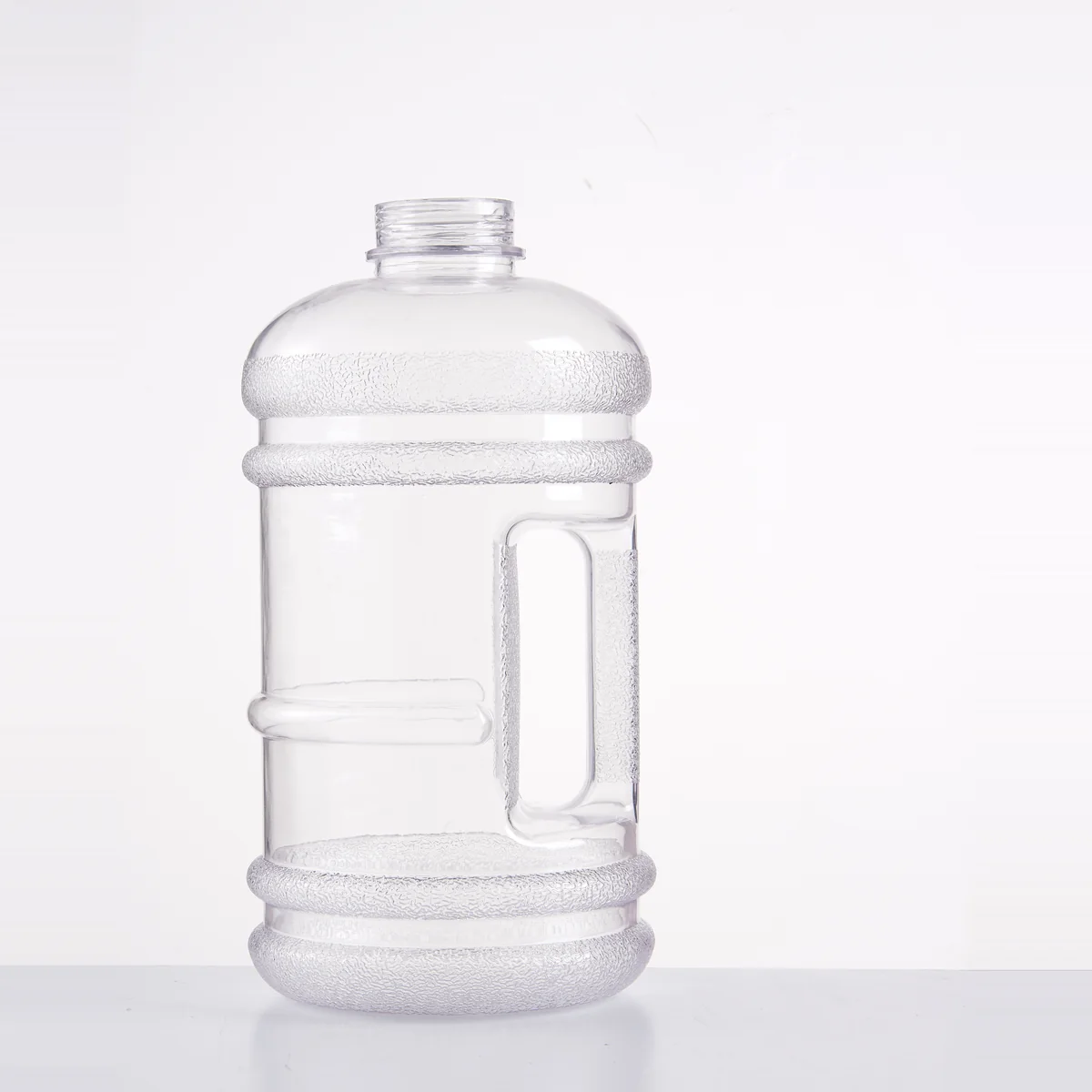
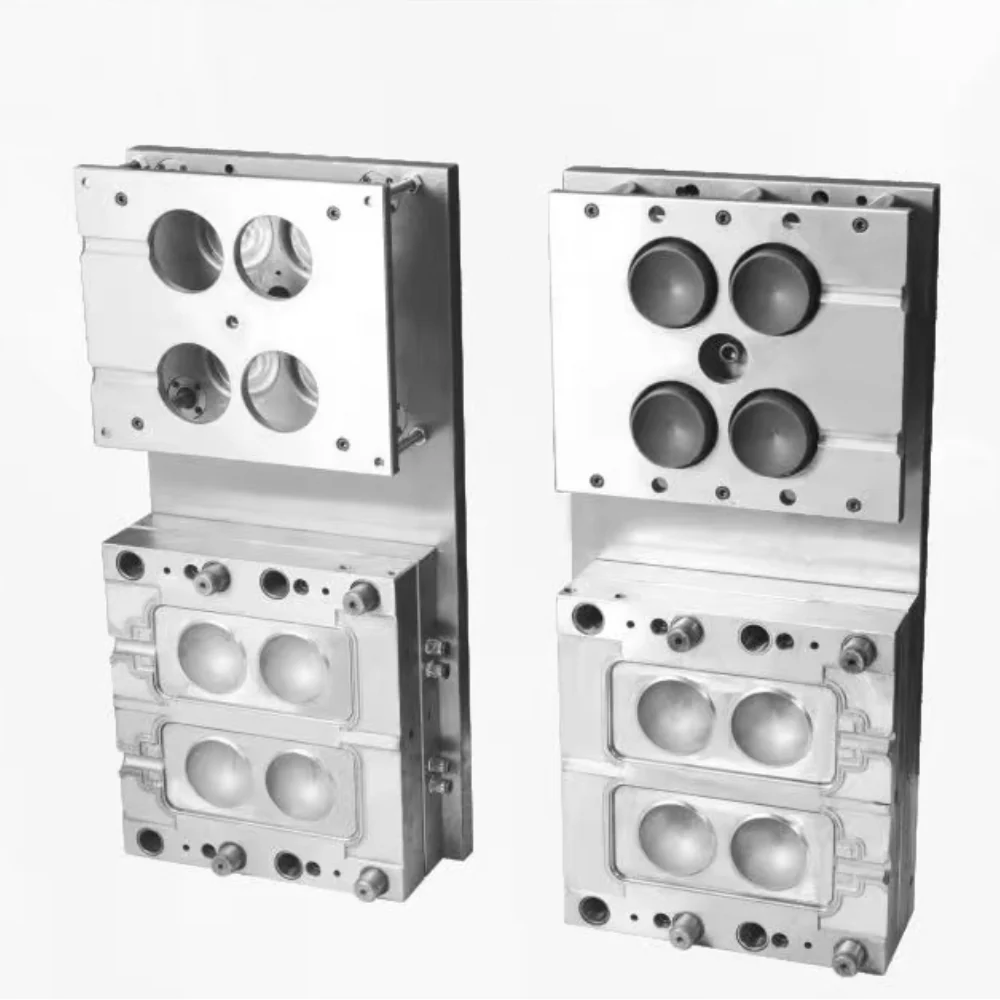
Polycarbonate is chosen for clarity, stiffness and impact strength. Those properties come with a narrow process window: the resin absorbs moisture, the melt is viscous, and the finished part can carry enough stress to crack weeks later. A PC project that starts from an HDPE process sheet usually fails at the drying or cooling step, not at the blow.
Dry the resin before it reaches the die
PC is hygroscopic. Moisture in the pellet hydrolyses the melt, producing bubbles, splay, weak weld lines and a drop in impact strength. Dry the resin in a desiccant dryer and confirm the moisture content with the resin supplier's method before the run. Typical PC drying is around 120 °C for several hours, but the exact time and temperature belong to the grade and the dryer, not to a generic table.
The hopper, the dryer and the transfer line all matter. A dry hopper that is open to humid air, or a dryer that is not regenerated, can undo the drying. Log the dew point and the hopper temperature during the run, not only at start-up.
Melt strength and parison control
PC has a high melt viscosity and a high processing temperature. The parison is heavier and stiffer than an HDPE parison of the same length, and it can sag or cool unevenly before the mold closes. The die gap, die-head temperature, extrusion speed and parison programme have to be set for PC, not copied from a polyolefin job.
| Parameter | Typical starting point | Why it matters |
|---|---|---|
| Moisture before processing | Below the resin supplier's limit; often below 0.02% | Hydrolysis, bubbles, impact loss |
| Drying | About 120 °C, several hours, desiccant dryer | Remove moisture without degrading the resin |
| Melt temperature | Roughly 280–310 °C, grade dependent | Flow, parison strength, stress |
| Mold temperature | Controlled, grade and part dependent | Surface, shrinkage, residual stress |
| Die and mandrel | Designed for the parison weight and drawdown | Wall distribution and weld quality |
Swipe the table to see all columns →
Mold design and cooling
PC shrinks less than HDPE but cools with a stiff skin, so ejection and cooling have to be planned. Mold steel, polished surfaces, generous draft and balanced cooling around thick sections matter. A sharp corner or a sudden section change concentrates stress; a radius is cheaper than a cracked part.
The pinch-off and blow-pin area also needs attention. PC is strong but notch-sensitive. A rough pinch-off edge or a poorly supported insert can start a crack that appears after the part is filled or dropped. Confirm the pinch-off geometry on a trial part, not only on the mold drawing.
Stress and annealing
Parts with thick sections, sharp corners or heavy interference fits can retain stress. Annealing after molding can relax it, but the cycle and temperature must be set for the grade and the part; an uncontrolled oven cycle can distort the container. Stress cracking is often a design and process issue together: the mold, the cooling, the gate/pinch-off and the assembly fit all contribute.
Food contact and BPA
Polycarbonate can contain bisphenol A (BPA). Food-contact use is restricted in several markets, including the EU, and the rules change by application and jurisdiction. Do not treat PC as food-safe because it is clear or because an old bottle was sold for drinking water. For food, drink or infant applications, confirm the grade, the declaration of compliance and the destination rules before tooling. For industrial, machine-guard or tool-case parts, the food-contact question may not apply.
Where PC makes sense
- Clear or tinted parts that need high impact strength and stiffness.
- Machine guards, tool cases, protective covers and industrial containers.
- Reusable bottles or containers only where the grade and the food-contact route are confirmed.
- Parts that will be machined or assembled after molding, where dimensional stability matters.
For clear containers in a more forgiving resin, see the PETG blow molding guide. For incoming resin checks, use resin incoming inspection; for wall control, see wall thickness control.
Source: E-SHION product data. Specifications are subject to change without notice; customization is available.
This guide is written for production and procurement decisions. It uses published figures where available and avoids unverified performance claims.