A buyer asks for 2,000 jerrycans, then 1,500 jars in a different colour, then 800 bottles for a trial market. The machine can make all three, but the project is not the same as a five-million-piece bottle line. Short-run work is a different cost structure: tooling is amortized over a small batch, changeover happens often, and the schedule has to absorb material purge and first-off approval.
What counts as a short run
There is no universal threshold. For a 20 L drum, 2,000 pieces can be a long run; for a 500 ml bottle, 2,000 pieces is small. A practical definition is a batch where mold cost per part is still visible in the quoted price and where changeover is a meaningful share of machine hours. Prototype or trial batches below 500 pieces sit in a separate category: the goal is a sample and a process window, not a production cost.
The cost equation
The quoted price has five parts: material, machine time, labour, tooling amortization and scrap. In a short run, tooling and changeover are spread over fewer parts, so they dominate. The same container can be profitable at 50,000 pieces and lose money at 2,000 with the same machine and the same cycle time. The calculation should use the actual batch, not the annual forecast.
| Batch | Typical tooling route | Setup focus | Main risk |
|---|---|---|---|
| Under 500 (prototype) | Aluminum or soft tooling, standard mold base, 3D-printed sample for form only | First-off approval, process window | Sample does not represent production surface or cycle |
| 500–2,000 | Aluminum mold, modular inserts, standard die head | Changeover, colour purge, first-off check | Mold life and repeatability |
| 2,000–5,000 | Aluminum or pre-hardened steel, quick-change clamps | Scheduling, material lot consistency | Tooling cost per part still high |
| 5,000–20,000 | Steel mold, dedicated die head, documented process | Cycle time, cooling, uptime | Underused capacity if demand falls |
Swipe the table to see all columns →
Mold options for small batches
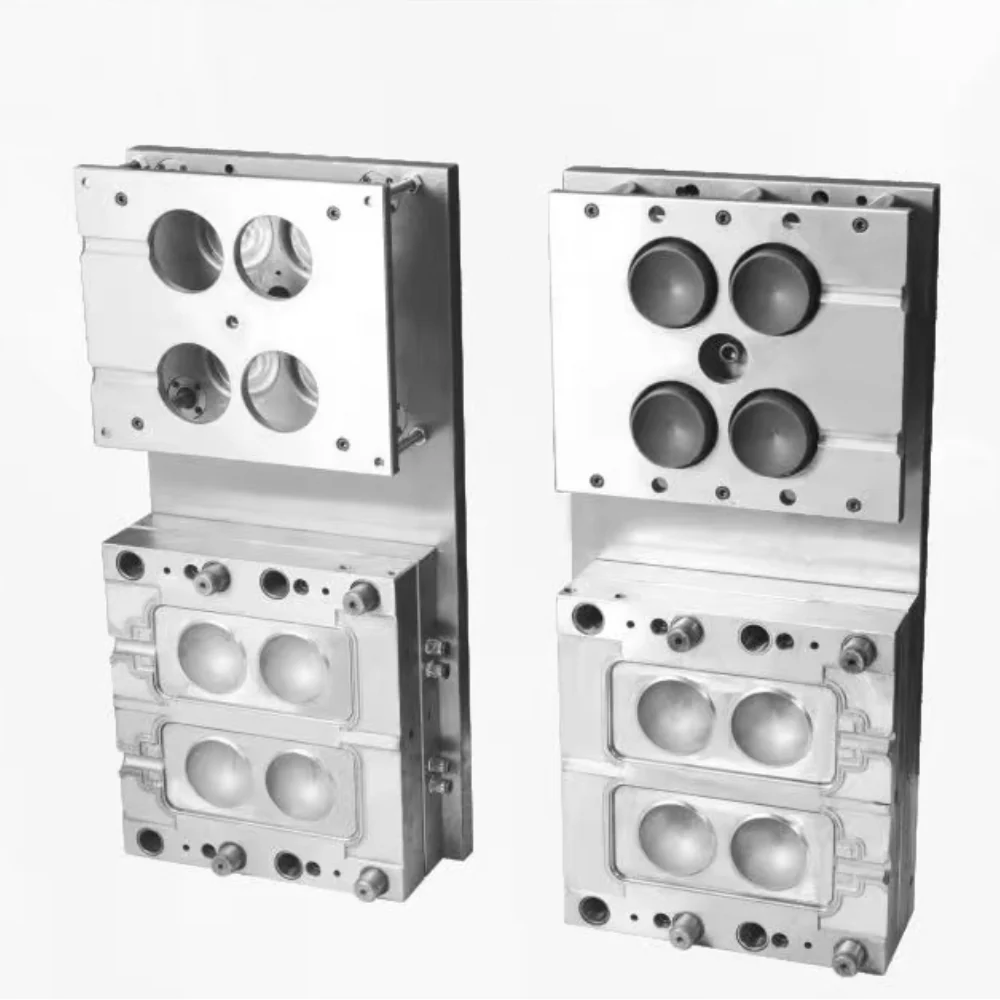
- Aluminum molds: faster to machine and cheaper for a small batch, but softer and less suited to abrasive filled grades.
- Modular inserts: a standard base with replaceable cavity inserts lets one base cover several container sizes.
- Standard mold bases and frames: reduces design and machining time; confirm the platen and clamp interface.
- Prototype tooling: good for shape and fit checks, not for quoting production cycle time or mold life.
Changeover is the hidden cost
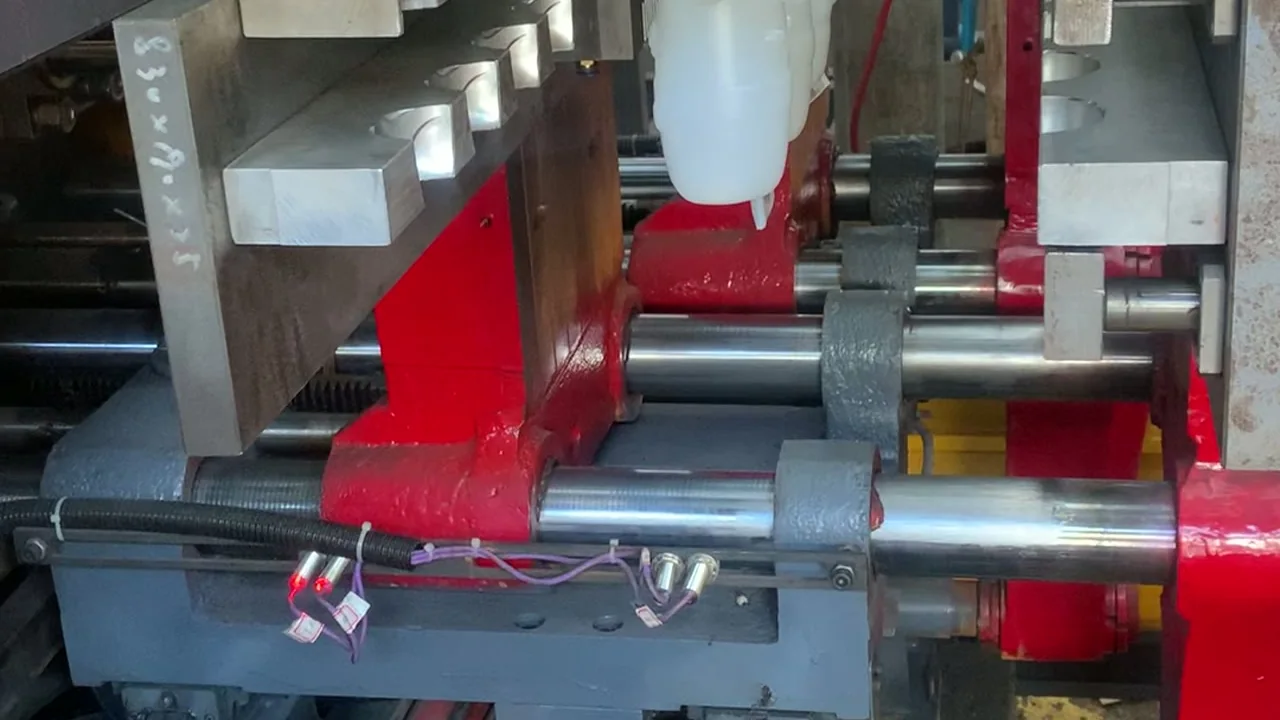
A short run spends a larger share of its time outside the cycle: draining and purging the extruder, changing the die head, swapping the mold, setting the parison programme, checking the first parts and cleaning the take-out. Quick mold-change clamps, a dedicated die-head cart and a colour-change sequence can cut hours from each change. The machine's cycle time is only one line in the quote.
When extrusion blow molding fits
Extrusion blow molding is usually the better short-run route for HDPE, PP, PVC and PETG containers because the tooling is one mold plus a die head, and the process can start from pellet rather than a purchased preform. It also handles handles, offset necks and large bodies that are difficult in a preform. ISBM can still win if a standard PET preform already exists and the bottle can use it.
When to use a contract molder instead
If the order is a one-off trial, a seasonal promotion or a market test, buying a machine can be the most expensive way to get 2,000 containers. A contract molder already has the mold base, the die head and the approval process. Use the trial to validate the container; buy the machine only when the annual volume and the repeat order pattern justify it.
What to send for a short-run quote
- Container drawing or 3D file, including neck, handle, wall range and decoration area.
- Material grade and any recycled-content or food-contact requirement.
- Batch size, annual forecast and expected repeat frequency.
- Target first-delivery date and the approval samples required.
- Destination market, voltage and any certification or UN test requirement.
- Whether the buyer will supply the mold or expects the machine builder to quote it.
For changeover practice, see quick mold change. For tooling budgets, use blow mold cost and lead time; for repeatability across cavities, see duplicate blow molds.
Source: E-SHION product data. Specifications are subject to change without notice; customization is available.
This guide is written for production and procurement decisions. It uses published figures where available and avoids unverified performance claims.