
A shampoo bottle program rarely fails on the machine. It fails at the neck: a 28/410 thread that will not seal, a shoulder that loses wall thickness, or a two-cavity mold priced before anyone counted the output. The mold is the cheapest part of the line and the hardest to change later.
What a shampoo bottle blow mold includes
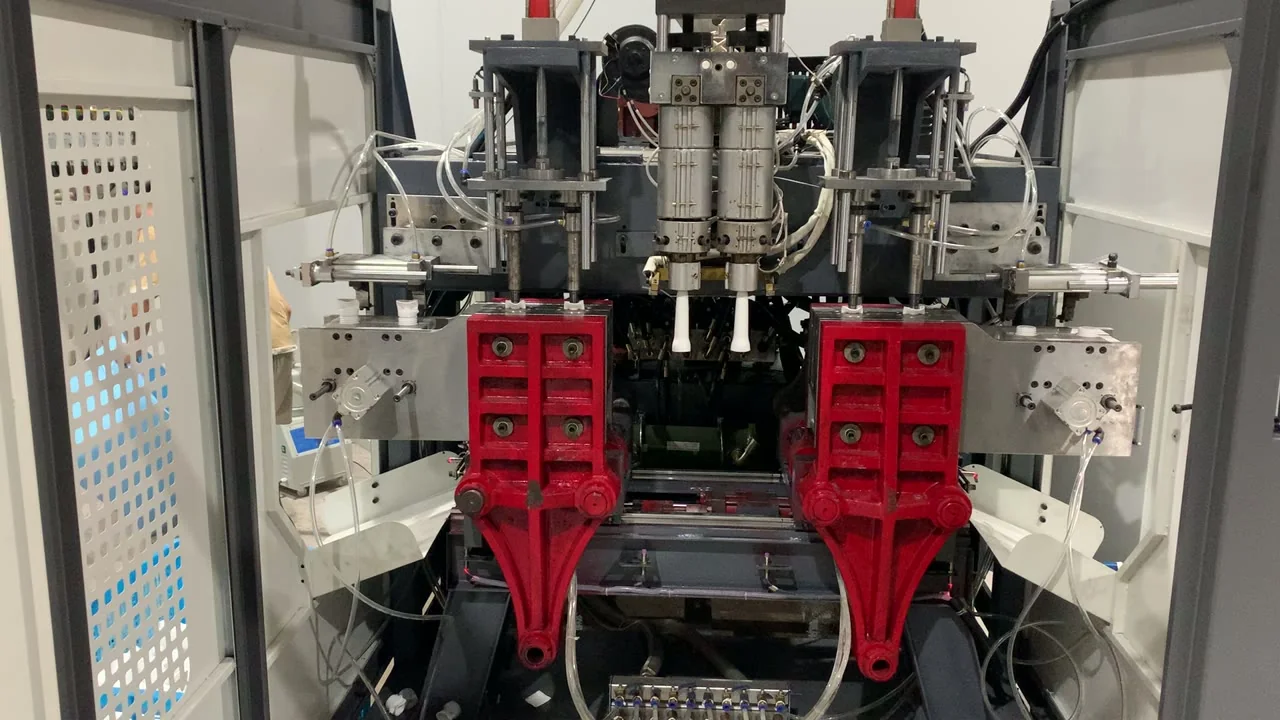
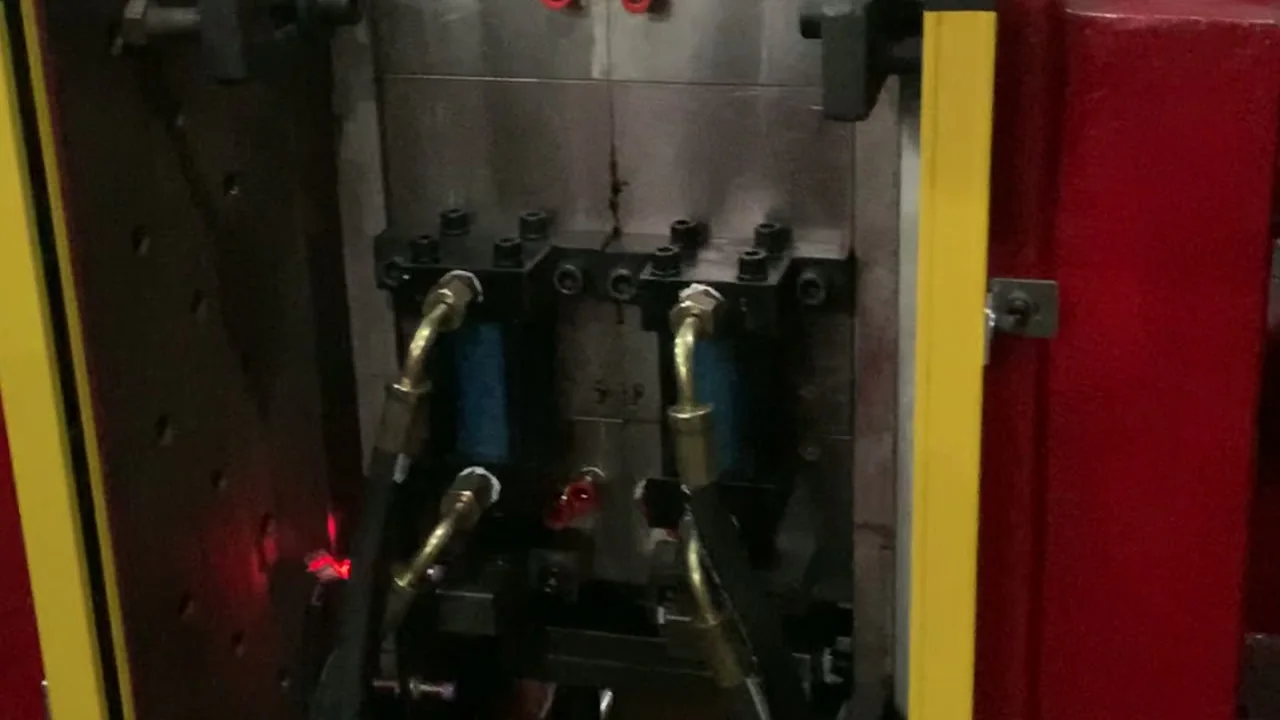
A shampoo bottle blow mold is a complete tool set: mold base, two cavity halves with cooling channels, a neck insert cut to the cap drawing, blow pin and take-off details. Price follows the neck insert, cavity count and polish level far more than the bottle's nominal volume.
- Mold base and cavity plates sized to the ES-5LS platens (320 × 380 mm) or the ES-10LS platens (450 × 480 mm).
- A 28/410 neck insert cut to the cap supplier's drawing, including thread start and sealing face.
- Blow pin, cooling circuits and take-off plate matched to the bottle shape.
- Surface finish stated per panel: as-machined, bead-blasted or polished.
- Spare neck inserts and wear parts, priced as a separate line.
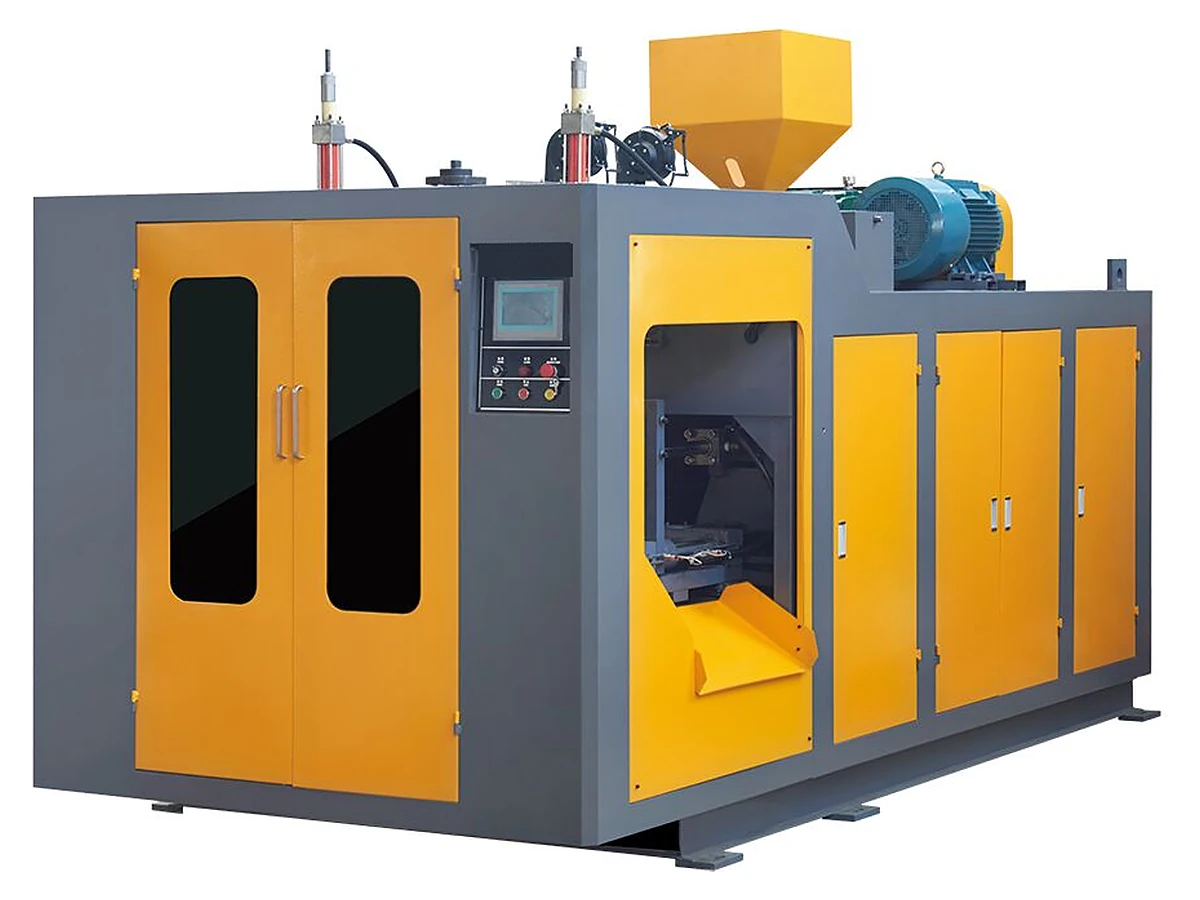
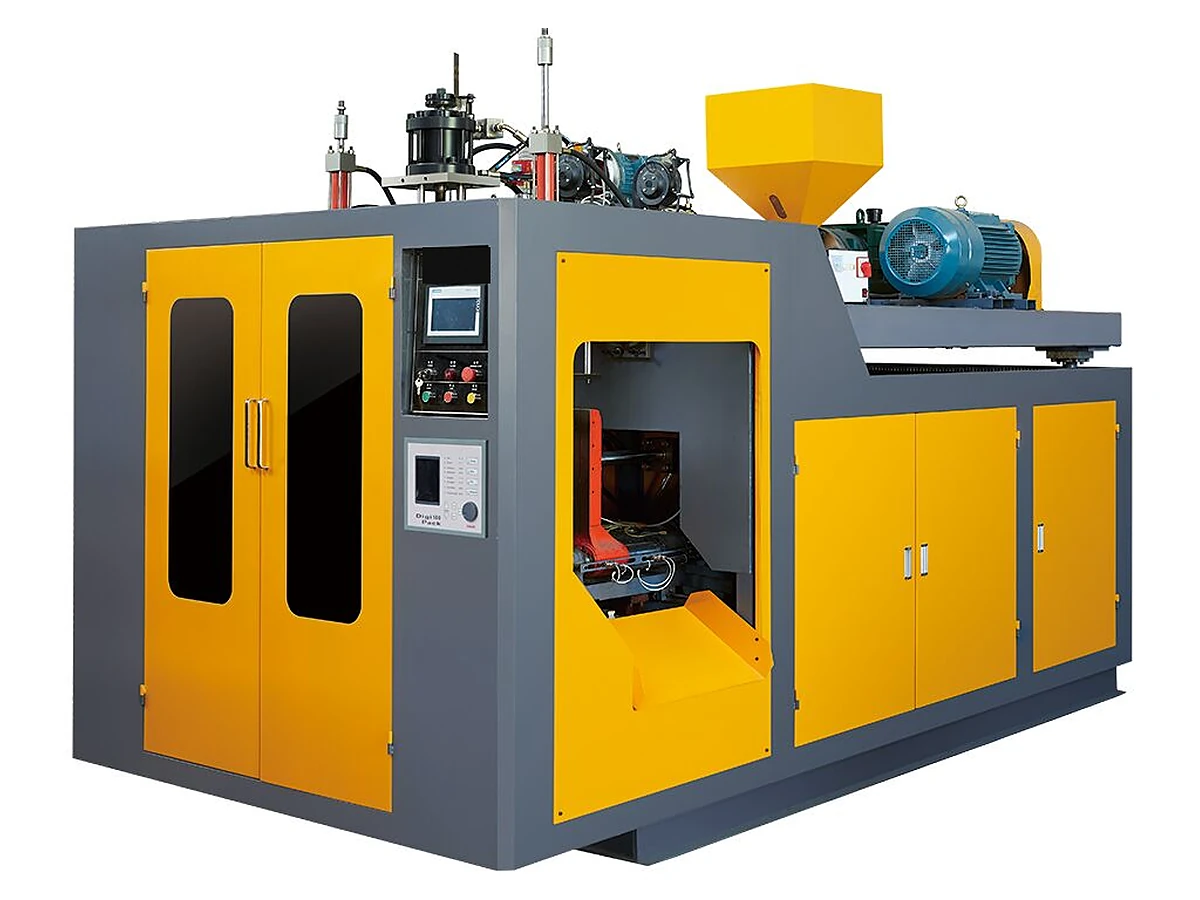
Mold dimensions must fit the platens of the machine that will run it, so check thesingle-station 0–16 L seriesbefore approving the tool drawing, and readhow blowing pressure affects mold and wall.
Cavity layout: where the price curve bends
One cavity suits sampling and short runs. Two cavities are the usual starting point for a retail shampoo bottle. Four cavities or more move the tool into a different class: output rises with each cavity, but so do the mold base, cooling, take-off and debugging work. Tool price is not linear, and neither is the clamp force the machine must supply. A replaceable 28/410 insert adds cost per cavity, so the neck decision multiplies with the layout.
| Cavity layout | Typical use | Indicative tool price (USD) | Machine class |
|---|---|---|---|
| 1 cavity | Sampling, short runs, frequent shape or label changes | About US$2,500–5,500 per set | ES-5LS |
| 2 cavities | Mainstream retail bottle, one or two SKUs | About US$2,500–5,500 per set, confirm with the mold maker | ES-5LS / ES-10LS |
| 4 cavities | One high-volume SKU, longer runs | Moves into the multi-cavity class, budget US$15,000–35,000 | ES-10LS |
| 6 cavities and up | Dedicated line, stable bottle design | Quoted per drawing | ES-10LD or double-station |
Swipe the table to see all columns →
These are market listings for the tool, not E-SHION prices. Freight, trial runs, spare inserts and taxes are extra; the final figure is quoted against your drawing.
Neck 28/410 and surface finish: where cheap molds fail
28/410 is a common finish, but common does not mean universal. The insert must match the cap and liner you will actually buy: thread start, sealing land, and the T dimension that sets how the cap sits. Every other dimension can be perfect and the bottle will still leak if the neck is cut to a generic drawing. Surface finish is the other shortcut: matte or bead-blasted panels hide flow marks on HDPE, while polished cavities are for clear or high-gloss bottles. Texture is cut into the mold, not added later.
A typical setup: 500 ml HDPE shampoo bottle, two cavities
Take a 500 ml HDPE bottle in a two-cavity mold on an ES-5LS: 320 × 380 mm platens and 100 kN clamp. Before accepting the layout, check clamp force against the projected bottle area multiplied by blowing pressure, not against volume. Wall thickness comes from the parison programmer, die gap profile and die centering. Output is cavities × good parts per cavity × cycles per hour, with the cycle time measured on your own mold, not copied from a video.
When one SKU outgrows a single station, compare thedouble-station 0–16 L series. Plasticizing capacity, not cavity count, sets the ceiling.
What to send for a quotation
- Bottle drawing: volume, weight, wall-thickness target and key dimensions.
- Cap and liner sample, or the cap drawing with the 28/410 T dimension and thread start.
- Target output per hour and shift pattern, so cavity count can be calculated.
- Resin grade and any recycled-content requirement.
- Surface requirement by panel: polished, matte or textured.
- Destination port, voltage and whether a trial run is needed before shipment.
Source: E-SHION product data. Specifications are subject to change without notice; customization is available.
This guide is written for production and procurement decisions. It uses published figures where available and avoids unverified performance claims.