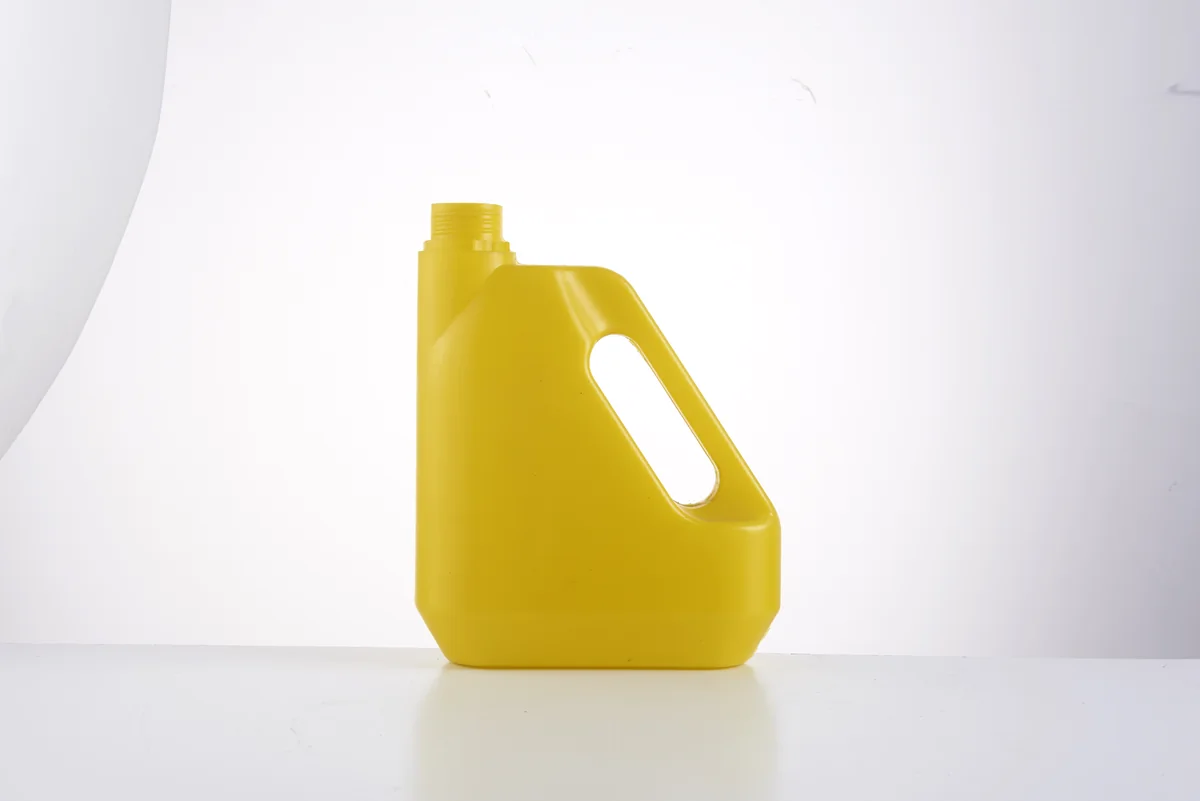
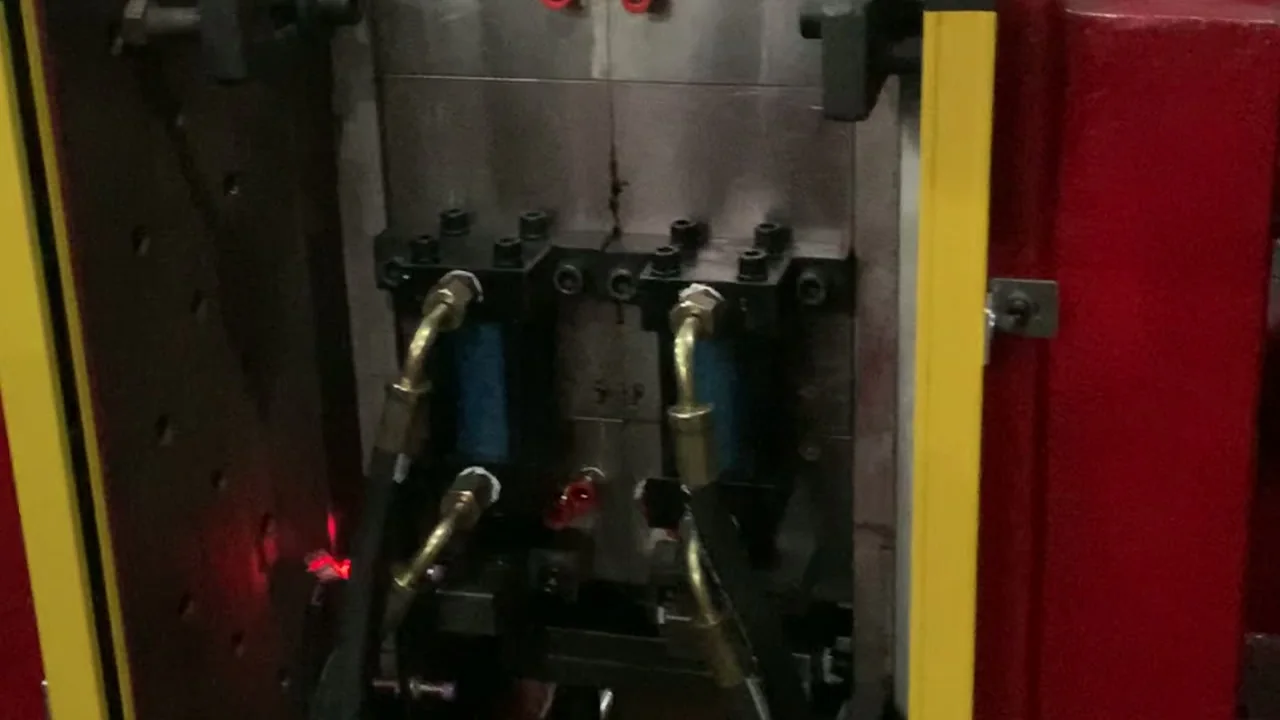
A 50 L tight-head drum looks like a bottle with two holes, so buyers often shortlist a blow molding machine by volume and price. Then the mold drawing arrives: a deep cavity, a heavy core, a 2-inch fill neck and a 3/4-inch vent that has to seal for years. Clamp force, platen size and mold stroke decide whether that mold runs safely and whether the drum leaves the tool round and leak-free. This guide sizes the machine from the drum, the bungs and the tests the finished drum must pass.
Start from the drum, not the tonnage
For 25–30 L tight-head drums, start with the ES-30L: 215 kN clamp, 580 × 740 mm platens, 350–800 mm mold stroke. For 50 L drums, step up to the ES-50L: 260 kN, 880 × 780 mm platens, 400–1000 mm stroke. Check clamp against mold projection area and blowing pressure, not container volume alone.
A 50 L drum is a deep-cavity, heavy-mold job. The ES-50L carries a 90 mm screw, 110–160 kg/h of plasticizing output and a 13 t machine mass; the ES-30L uses an 80 mm screw, 100–120 kg/h and 10 t. Those figures describe the extruder, not a cycle time for your drum: the real number comes from cavity count, wall thickness, cooling and the measured cycle on a test mold. Treat them as a capacity ceiling to check, not a promise.
If the drum is 50 L, read the20–50 L single-station rangeand check mold height againstthe 20–50 L container production guidebefore you compare prices.
Clamp, platen and stroke: three checks before the deposit
| Model | Clamp force | Platen | Mold stroke | Output | Machine mass |
|---|---|---|---|---|---|
| ES-30L | 215 kN | 580 × 740 mm | 350–800 mm | 100–120 kg/h | 10 t |
| ES-50L | 260 kN | 880 × 780 mm | 400–1000 mm | 110–160 kg/h | 13 t |
Swipe the table to see all columns →
Three checks decide the match. First, clamp: multiply the projected area of the drum body and both bungs by the blowing pressure, add a working margin, and compare with 215 or 260 kN. Second, platen: the mold body, neck inserts and take-off clearance must fit the 580 × 740 mm or 880 × 780 mm surface. Third, stroke: 350–800 mm and 400–1000 mm are opening strokes, not the clear space between platens. Send the mold drawing and let the builder confirm mold height, daylight and ejection before the machine is fixed.
Two bungs, one mold: inserts, threads and seal faces
The 2-inch fill opening and the 3/4-inch vent are not drilled after molding. They are mold inserts, and each insert carries a thread, a sealing land and often its own cooling. A drum can pass a visual check and still fail at the bung because the thread is tight, the seal face is scored, or the insert sits a fraction off the center line. Review these points on the mold drawing.
- Thread standard, tolerance and start point stated on the bung drawing.
- Seal face flatness and surface finish at the 2-inch and 3/4-inch openings.
- Independent cooling for each insert, so the neck does not stay soft after the body sets.
- Vent insert clearance and flash control on the inside of the neck.
- Bung position relative to the parison path and the pinch-off line.
Proving UN 1H1 and stacking on the finished drum
Buyers sometimes ask for a UN 1H1 drum as if the machine could be ordered with the marking. The sequence runs the other way: fix the drum design, mold it on the machine, test drums from normal production, and only then apply the marking under the system your packaging is tested in. Four tests carry most of the evidence.
- Drop test: height, orientation and filling temperature follow the packing instruction that applies to your product; confirm the exact procedure with the test laboratory.
- Leak test: each design is checked at the specified air pressure, with the bungs fitted as shipped.
- Hydraulic test: the drum is held at the specified pressure for the specified time; confirm both values before tooling is released.
- Stacking test: the drum carries a load for a set time at a set temperature, and the result is compared with the compression load calculated for your warehouse.
For stacking, calculate before you test: gross mass per drum, number of tiers, pallet mass, storage duration and the highest temperature the warehouse reaches. Multiply to get the load on the bottom drum, then compare it with the stacking test result. The machine's 13 t mass and 260 kN clamp say nothing about how a drum behaves in a four-high stack for six months.
What to send for a quotation
A useful quotation for a tight-head drum line is built from the drum and the mold, not from a model number alone. Send these six items and the reply can carry real numbers instead of ranges.
- Drum drawing: nominal volume, body diameter, overall height, empty mass and wall-thickness target.
- Bung drawing: 2-inch fill and 3/4-inch vent positions, thread standard, seal face detail and insert material.
- Material and layer structure, including any recycled or barrier layer.
- Required output per hour, cavity count you expect, and shift pattern.
- Test obligations: UN 1H1 or other performance tests, plus the destination market.
- Factory data: voltage, air supply, floor space, ceiling height and how drums leave the machine.
For 20 L jerrycans rather than drums, seethe 20 L chemical drum guide. Before a trial run, readthe factory tour checklistandstart-up and shut-down.
Source: E-SHION product data. Specifications are subject to change without notice; customization is available.
This guide is written for production and procurement decisions. It uses published figures where available and avoids unverified performance claims.