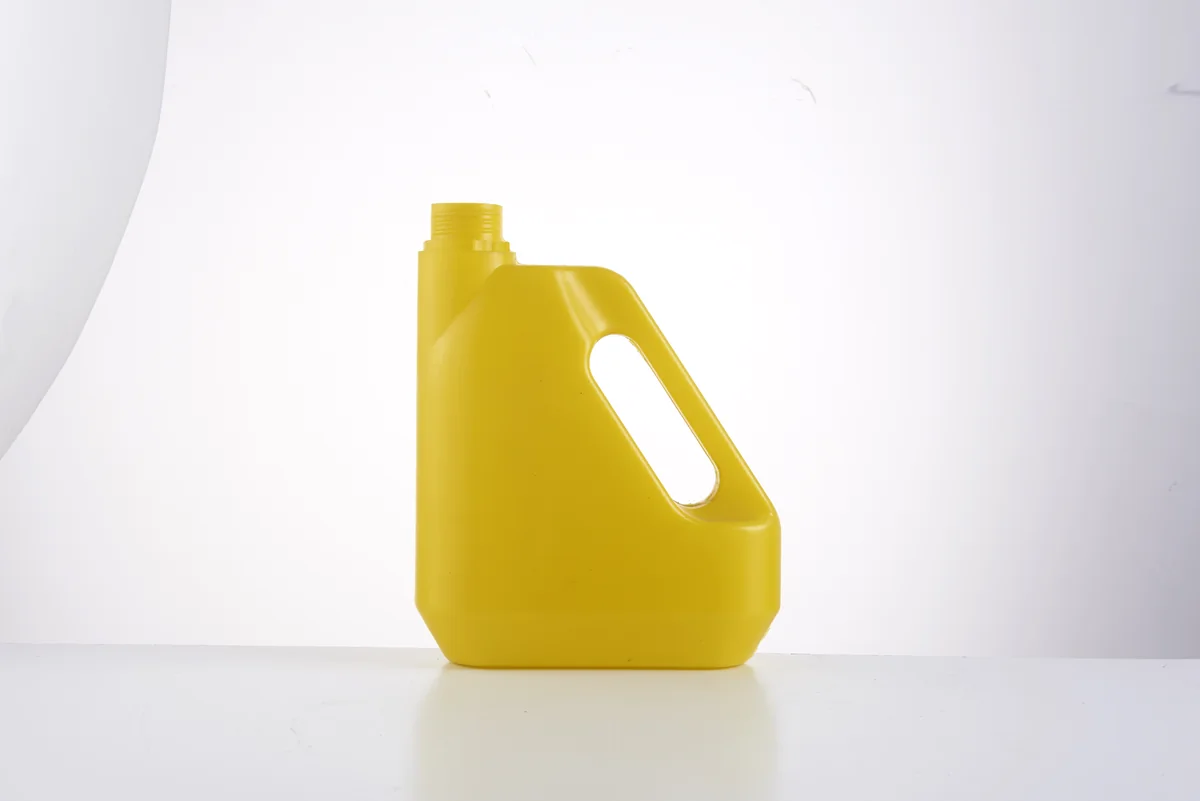

A 20 L jerrycan is not a scaled-up bottle. The handle, the pinch-off at the base and the UN marking insert are three separate mold decisions, and each one is quoted, machined and approved on its own. Buyers who compare jerrycan blow molds on cavity count alone usually find the gap after the drawing is signed — when the handle insert and the marking pocket are already fixed.
What a 5–20 L jerrycan blow mold includes
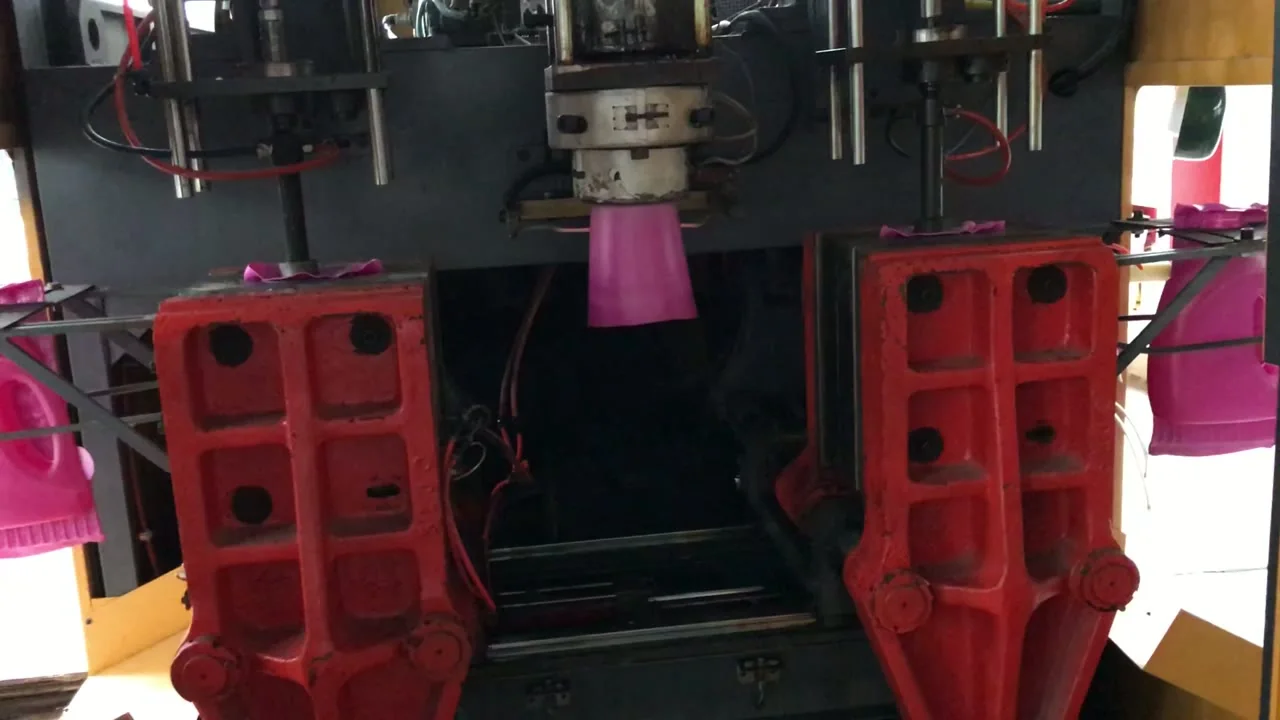
A 5–20 L jerrycan blow mold is a complete tool set: mold base and frame, two cavity halves, neck and handle inserts, pinch-off inserts, blow pin and cooling circuits, plus a pocket for the UN string. Price the set, not the cavity block — the inserts and the cooling layout decide whether the tool runs at your cycle.
The set is usually quoted as a package: base and frame, cavity halves, neck insert, handle insert, pinch-off inserts, blow pin, cooling circuits and the marking pocket. What varies is how much fitting and bench work is included, and whether a spare insert set is priced. Ask for the scope as a line-item list, because two quotes at the same price can differ by a handle insert.
- Mold base and frame, with the platen and tie-rod interface matched to your machine.
- Two cavity halves in the steel grade agreed for your resin and run length.
- Neck insert cut to your closure drawing, not to a nominal neck size.
- Handle insert or handle slide, depending on whether the handle is one-piece or separate.
- Pinch-off inserts at the base and handle root, with the flash allowance written down.
- Blow pin, air circuit and cooling channels, with water fittings and flow direction marked.
- Marking pocket sized for your UN string, plus date and cavity stamps.
One-piece handle or separate handle: the tool is different
A one-piece handle is blown with the body, so the mold needs a slide or a split insert to release it, and the wall thickness at the handle root becomes a mold-design question. A separate handle is a second part, often molded in a second cavity and fitted or welded after trimming.
The choice is commercial as much as technical. A one-piece handle removes an assembly step and a second part number. A separate handle lets you change handle colour or resin without touching the body cavity. Confirm the handle load and the drop requirement before the insert is drawn.
- Handle type, and the load it carries when the container is full.
- Wall thickness target at the handle root and at the base corner.
- Whether the handle is formed in the body cavity or in a separate cavity.
- The trimming and assembly steps you already run, so the mold matches them.
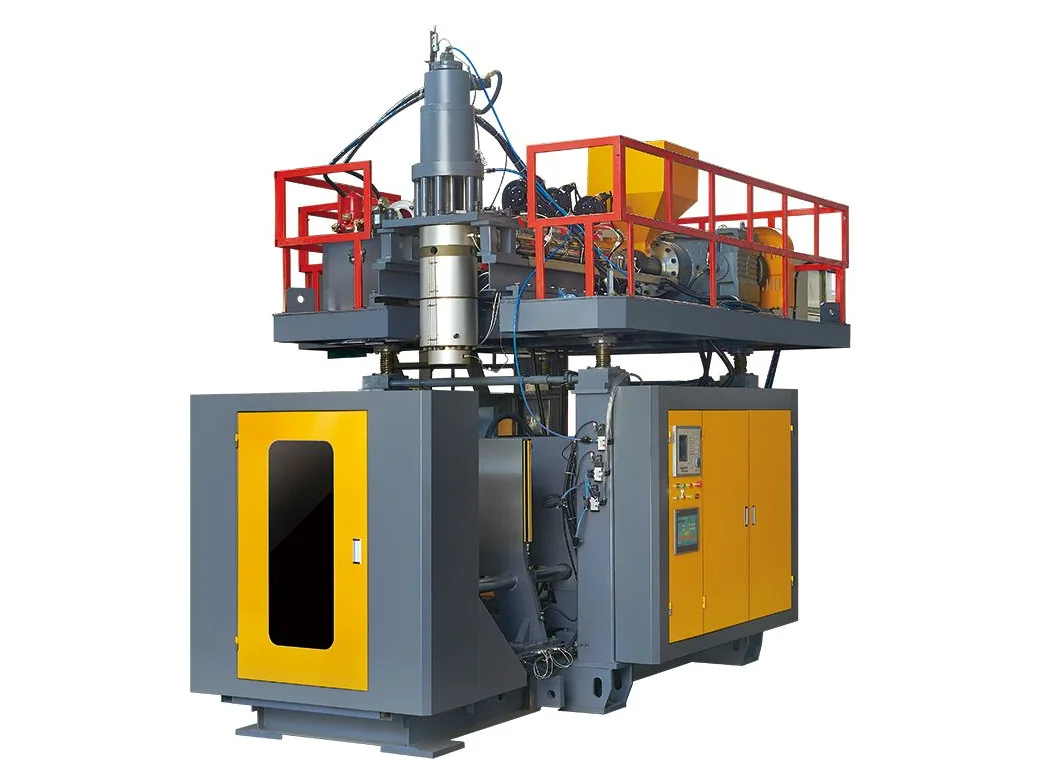
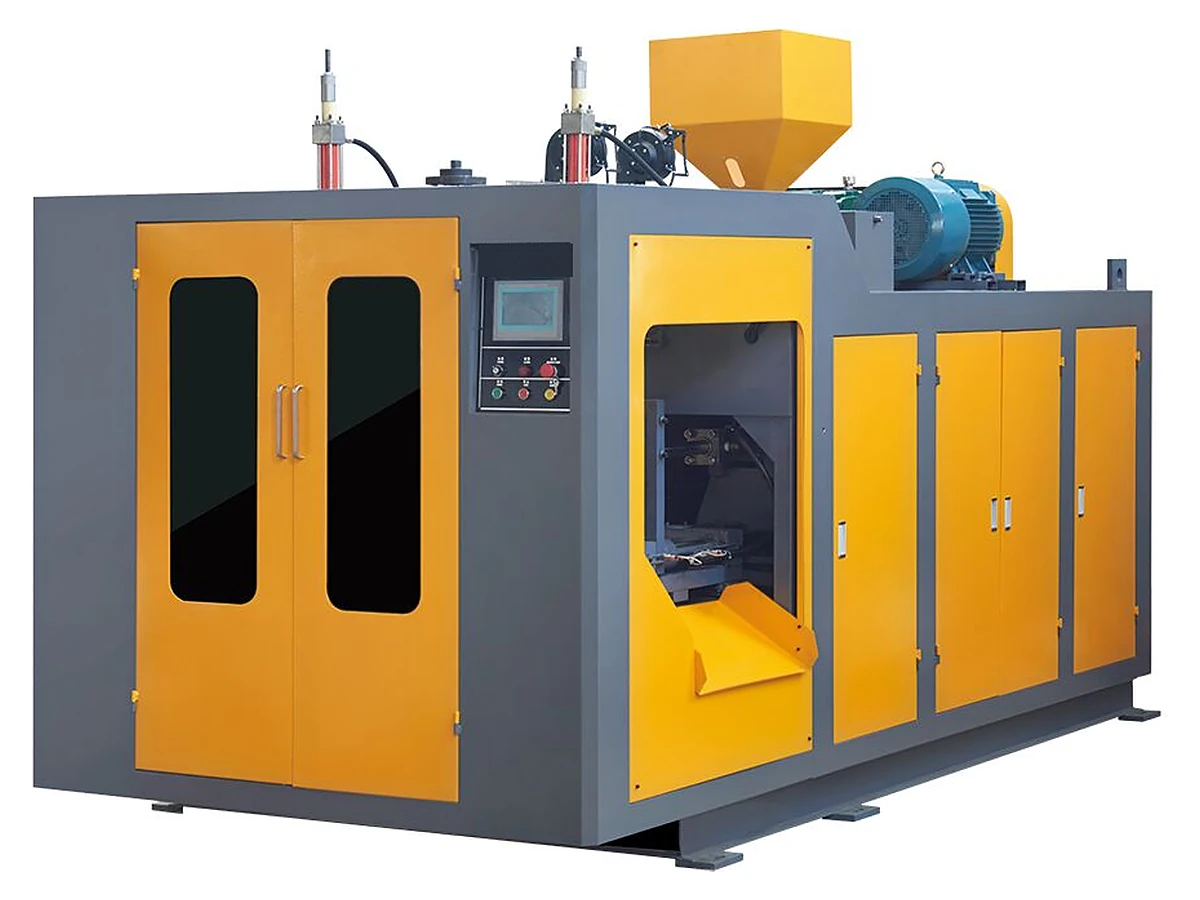
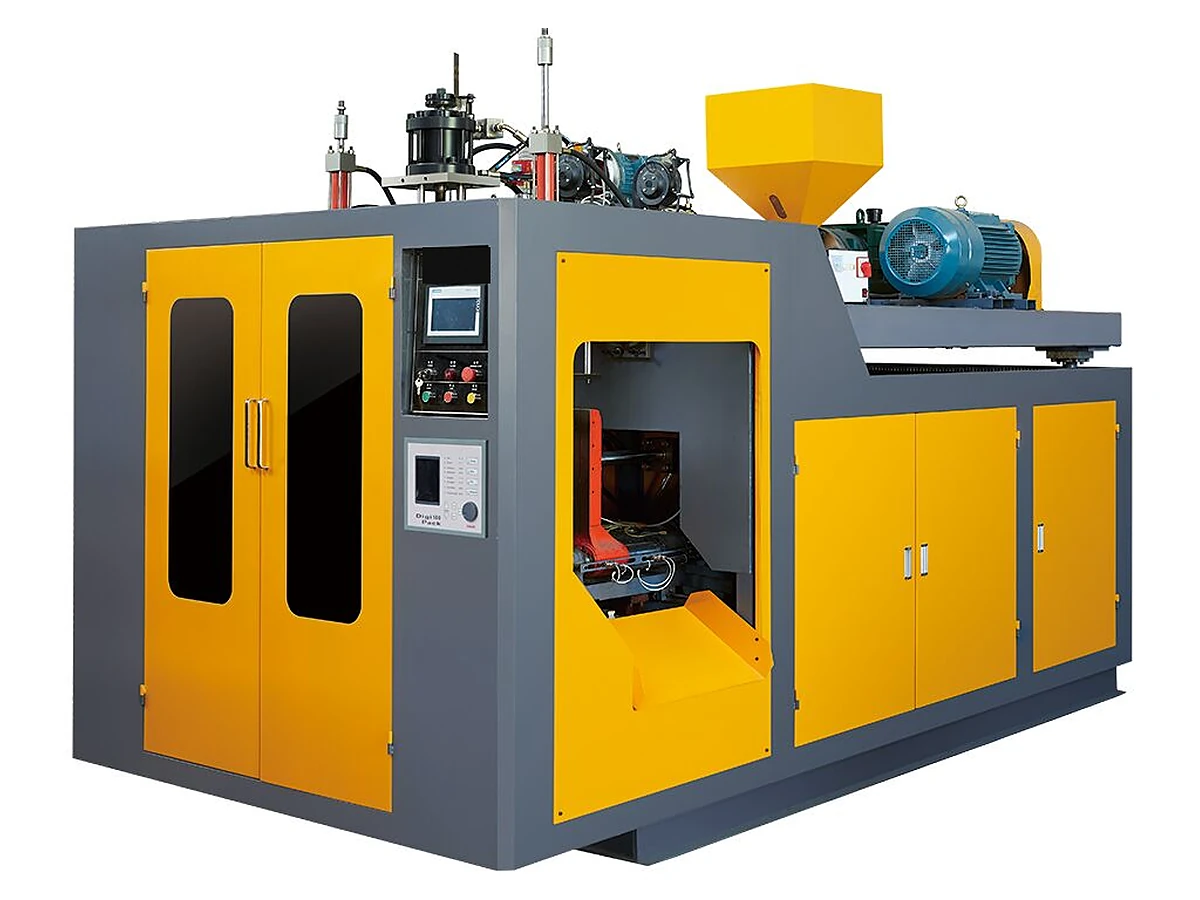
For the machine side,20–50 L container productioncovers the clamp and mold-projection check for this size, and thesingle-station 20–50 L seriesis where most 20 L jerrycan tools are mounted. Smaller work is covered by the5 L jerrycan production line.
What a jerrycan blow mold costs, and what moves the number
Market references put a simple 5–20 L jerrycan mold at roughly USD 2,000–3,000 per set, and larger multi-cavity tools well above that. Those are market ranges, not our quotation: the final price depends on cavity count, handle design, steel grade, marking inserts and destination.
| Mold item | What it changes | Confirm before quoting |
|---|---|---|
| Cavity count: 1, 2 or 4 | Output per cycle, and the clamp force and platen size the machine must have | Cavity layout drawing and target output per shift |
| Handle insert or slide | Release of a one-piece handle, and wall thickness at the handle root | Handle load, drop requirement, one-piece or separate |
| Neck insert | Cap fit and filling-line behaviour; a change here means a new insert | Closure drawing and neck finish, not a nominal size |
| Marking pocket and UN insert | Where the UN string, date and cavity stamps sit on the container | The exact character string, supplied by you |
| Cooling circuit layout | Cycle time and warpage on the flat panels | Water temperature and flow available in your plant |
| Pinch-off inserts | Weld strength at the base and handle root, and the flash allowance | Blow-pin position and your trimming method |
Swipe the table to see all columns →
Lead time is commonly 20–60 days after drawing approval, and drawing approval is usually the slower step. If the neck finish or the UN string is still open when steel is ordered, the schedule moves with that item, not with the machining.
Pinch-off, neck and marking: the three acceptance points
Most jerrycan complaints trace to one of three places. A weak pinch-off at the base or handle root shows up as a leak or crack after a drop test. An oval neck shows up as a leaking cap or a jammed filling line. A marking insert that sits proud or too deep shows up at your customer's inspection, not at yours. All three are mold geometry and cooling decisions, which makes them cheapest to settle at the drawing stage.
Ask for the trial report for the mold number you are quoted. It should name the machine, the cavity layout, the resin, the measured cycle time and the containers kept from the trial. A supplier who cannot show one for a comparable jerrycan tool is asking you to accept an unverified cycle time.
What to send for a quotation
Send these items together and the quote can be built without a second round of questions. Missing items become assumptions, and assumptions become change orders after the steel is cut.
- Container drawing with filled volume, neck finish and handle position.
- Handle type, plus the load and drop requirement it has to pass.
- Resin and layer structure, including any regrind percentage you intend to run.
- Target output per shift or per day, and the machine model if you already have one.
- The UN string and the date or cavity stamps you want in the marking pocket.
- Destination port, and the voltage and control standard at your plant.
- Whether you need a spare insert set and a trial report with the tool.
Still comparing machine sizes? Thesingle-station 0–16 L seriescovers the smaller jerrycan range, andcontactreaches our mold and machine team directly. Buyers shipping into the EU should also readEU packaging EPR for bottle producers.
Source: E-SHION product data. Specifications are subject to change without notice; customization is available.
This guide is written for production and procurement decisions. It uses published figures where available and avoids unverified performance claims.