
A specification line reads 'food-grade HDPE, migration tested', and the first technical email asks two questions: overall or specific, and when must we test again? The answer decides whether you book one campaign or two, and whether a colour change, a new PCR source or a supplier reformulation invalidates the existing report. Retest triggers are narrower than most suppliers assume.
Overall or specific migration: the short answer
Run both on the same finished article. Overall migration measures the total non-volatile material that transfers to the food and must stay under 10 mg/dm2 or 60 mg/kg, whichever is lower. Specific migration measures named substances against their individual limits. Overall migration is the baseline; specific migration is driven by the formulation and the food.
Neither test is run on resin granules. Wall thickness, surface finish and processing history change what migrates, so the report belongs to the article, not to the grade. The same resin blown into a thin 250 mL bottle and a thick 5 L jerrycan needs separate evidence.
- Overall migration (OM). The lab exposes the article to a simulant and weighs the non-volatile residue, expressed per dm2 and per kg of food. For plastics the EU limit is 10 mg/dm2 or 60 mg/kg, whichever is lower; confirm the current text with the lab.
- Specific migration (SM). The lab analyses named substances — monomers, additives, catalysts, degradation products — against their individual limits. The resin data sheet is not enough: the lab needs the full formulation list, including colourants and masterbatch carriers.
- One exposure, two results. Both tests usually run from the same exposed sample, so adding specific migration is analytical work, not a second campaign.
- What the report must state. Article identity, wetted area, fill weight, simulant, temperature and time, and the limit basis. Without these it cannot be defended to a buyer or reused for another SKU.
Choosing the simulant and condition from the food, not the resin
The simulant represents the food; the condition represents the fill and storage. An oil jerrycan, a milk bottle and a vinegar bottle do not share a test, and hot-fill cannot reuse an ambient-storage report. The published EU matrix runs from A to E.
| Simulant | Food type | Typical product | Condition (confirm) |
|---|---|---|---|
| A: 10% ethanol | Aqueous foods, pH above 4.5 | Milk, water, non-acidic drinks | Long ambient storage, commonly 40 C / 10 days |
| B: 3% acetic acid | Acidic foods, pH 4.5 or below | Vinegar, acidic sauces | As above, or hot-fill where filled hot |
| C: 20% ethanol | Alcoholic foods up to 20% alcohol | Beer, wine, cider | Ambient or chilled; confirm the code |
| D1: 50% ethanol | Fatty foods assigned an ethanol simulant | Where vegetable oil is unsuitable | Confirm the assignment with the lab |
| D2: vegetable oil | Fatty foods | Cooking oil, fatty sauces | Long storage; add fill temperature if applicable |
| E: Tenax | Dry foods | Powders, cereals, snacks | Dry-food condition; confirm the code |
Swipe the table to see all columns →
The condition follows how the container is filled and stored. The published table often cites 40 C for 10 days for ambient storage, 70 C for 2 hours for hot-fill, and 100 C for 30 minutes or 121 C for 1 hour for high-temperature use; the lab selects the code. Chilled and frozen products take a milder condition, not no test. Hot-fill plus a year of storage needs a condition covering both.
The document chain — resin DoC, GMP statement, test report and who signs the finished-article declaration — is set out infood-contact compliance in blow molding. The container-side risk often mistaken for a migration failure is covered inHDPE container stress cracking.
When a retest is required, and when a new lot is not
Retest rules are about change, not the calendar. Write them down before the first test.
- New additive, colourant, masterbatch or resin grade, or a reformulation under the same grade name. Anything that changes what enters the hopper changes the formulation: retest, or get a written supplier statement and ask the lab whether the report still covers the article.
- New PCR source or a higher regrind ratio. Recycled content changes the substance profile and is the classic reason a report stops matching the article. Retest at the new ratio.
- New food, higher fill temperature or longer shelf life. Migration is not linear in time, so a 10-day report does not automatically cover a two-year shelf life.
- New market. EU, US and China routes differ; a report written for one is supporting evidence elsewhere, not a substitute.
- New lot of the same grade: normally no. Keep the certificate of analysis, obtain written confirmation that the formulation is unchanged, and record the lot.
- Process change inside the approved window: confirm first. Melt temperature, regrind ratio and cycle changes can move migration; the lab decides whether existing data bridges the change.
The arithmetic that decides which limit binds
The limit is written two ways, and the smaller binds. Take a 500 mL bottle with 4.5 dm2 wetted area and a 0.5 kg fill. The area basis allows 45 mg; over 0.5 kg that is 90 mg/kg, above the 60 mg/kg ceiling, so the mass basis binds at 30 mg (6.7 mg/dm2). On a 5 L container with 20 dm2 and 5 kg, the area basis allows 200 mg against 300 mg — the area limit binds. Measure both numbers on your own article.
Specific migration depends on disclosure. A formulation list that stops at HDPE plus white masterbatch is not enough: the masterbatch carrier, slip agent, antioxidant and any PCR input each need a name and a limit. Send the current DoC revision with the sample so the lab tests the right substance list.
What to send for a quotation
A quotation cannot fix a cavity layout without the container, and cannot advise on test scope without the food. Send:
- Container drawing in 2D and 3D, neck finish and measured wetted area.
- Resin grade, supplier and current DoC revision; colourant and additives, including the masterbatch carrier.
- PCR source and intended regrind ratio, if either applies.
- Food type, fill temperature, storage condition and shelf life — these set the simulant and condition.
- Fill volume and weight, and the market where the filled container is sold.
- Output target, cavity count to price, and whether the mold is new or existing.
- Destination port, power supply, compressed air and cooling water data.
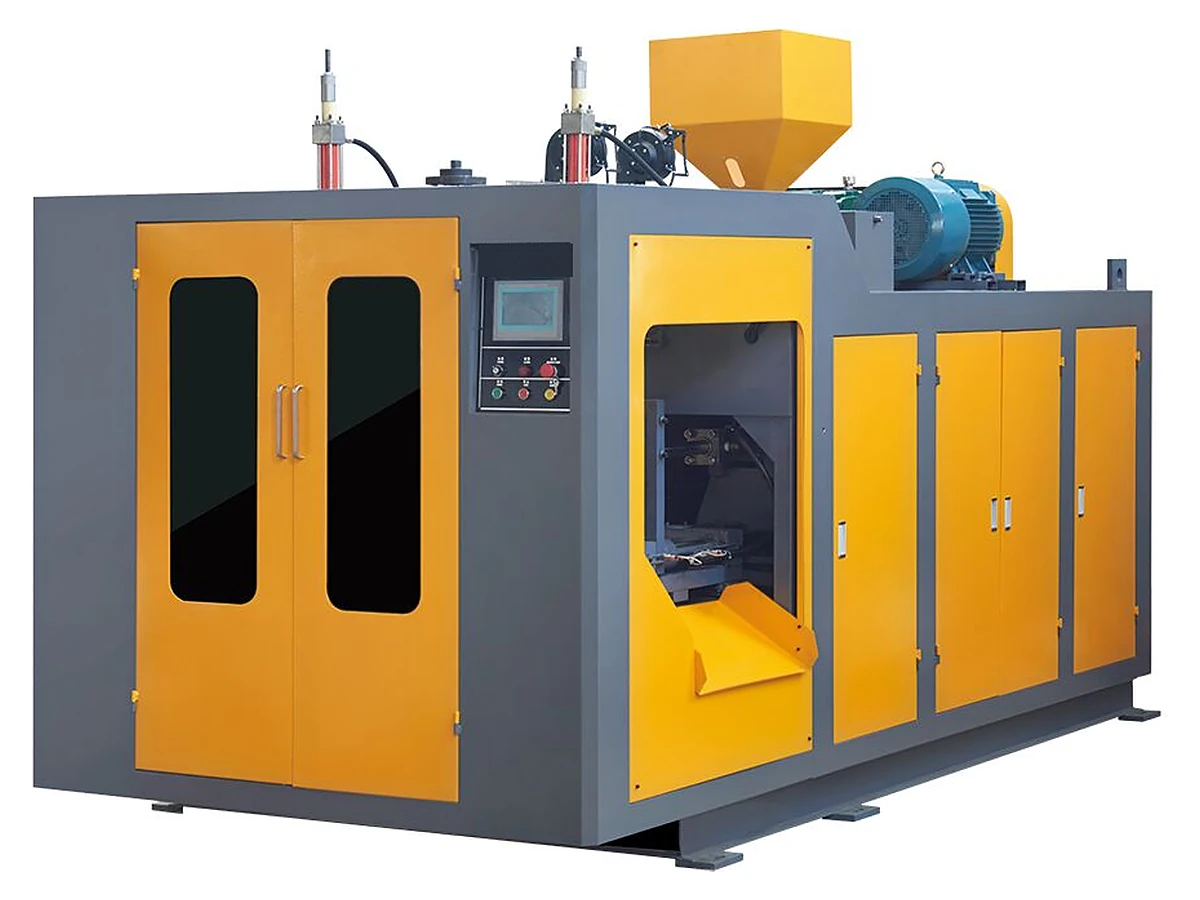
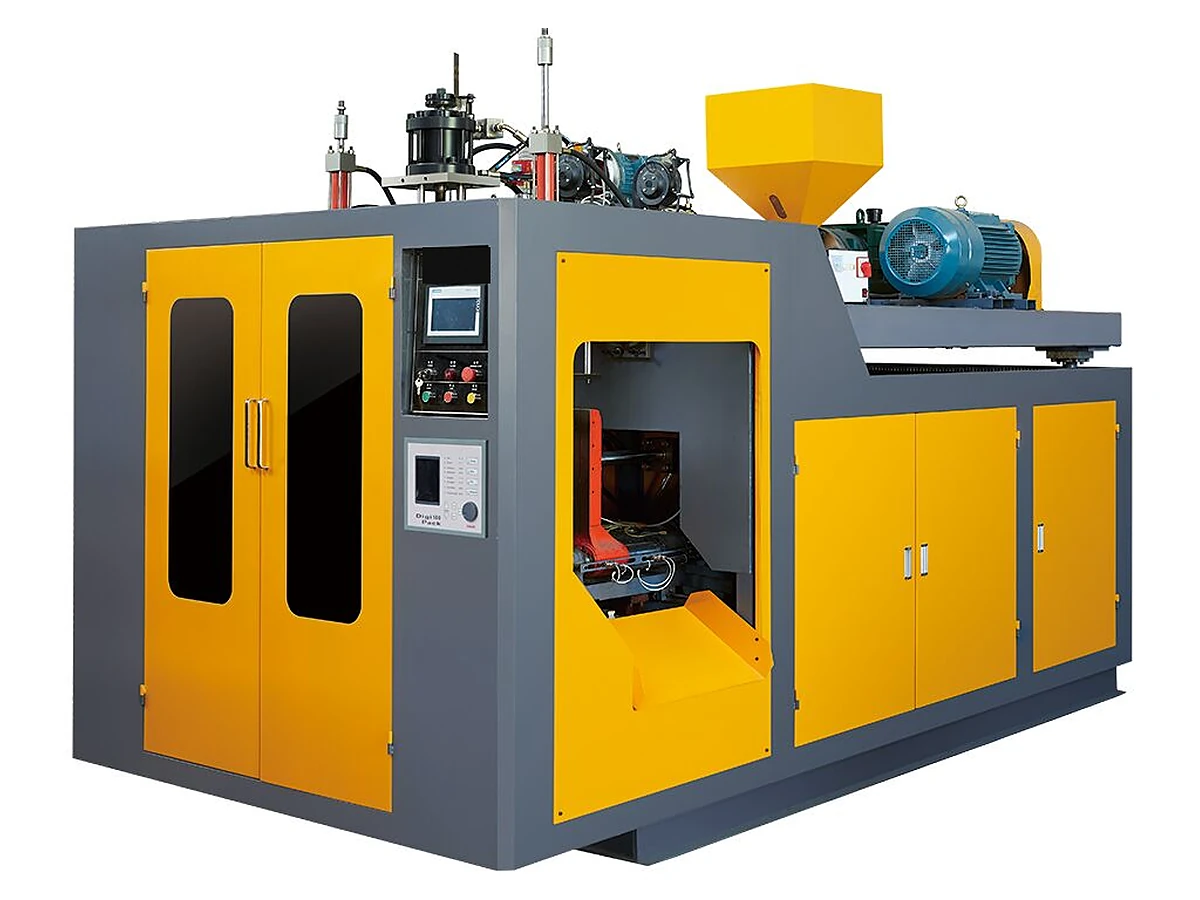
Send the details through thecontact page, and compare the0.1-16 L single-station rangeor thedouble-station platformbefore fixing a model.
Source: E-SHION product data. Specifications are subject to change without notice; customization is available.
This guide is written for production and procurement decisions. It uses published figures where available and avoids unverified performance claims.