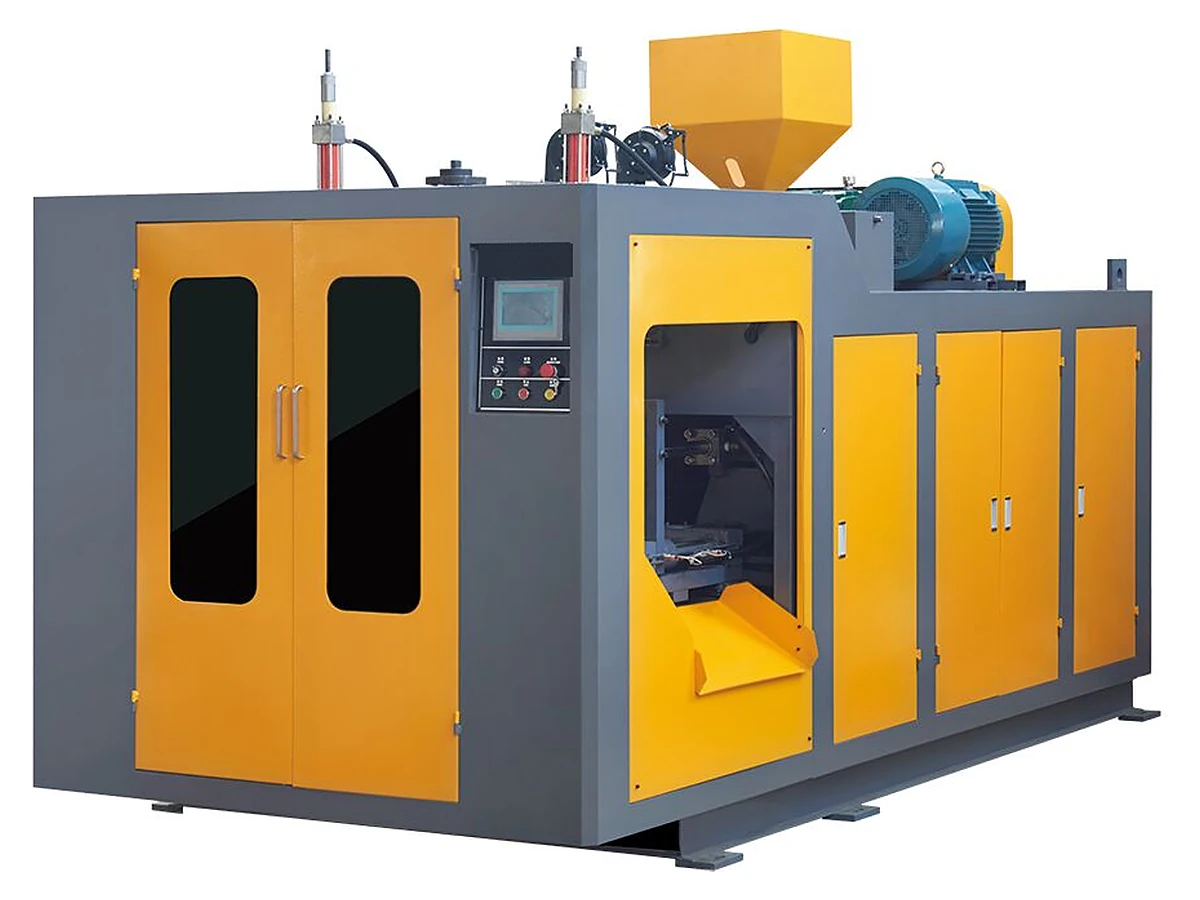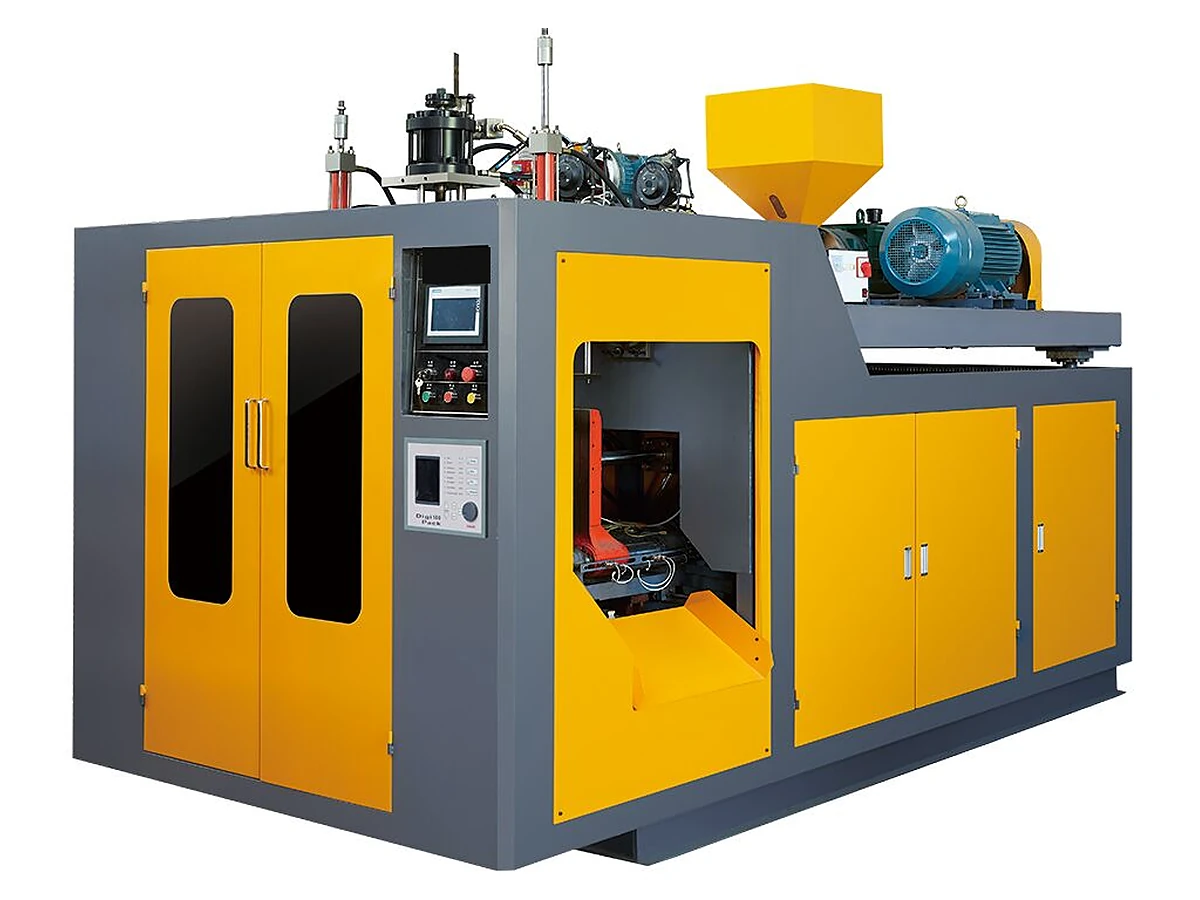
Most electrical problems on a new blow molding machine are decided before the machine is switched on, at the point where the purchase order is signed and nobody has asked what the plant transformer can actually deliver. The machine arrives with a nameplate. The building either has the capacity behind it or it does not.
What electrical supply does a blow molding machine need?
An extrusion blow molding machine needs a three-phase supply sized from installed power, not from container volume. Installed power across the range is 24–120 kW depending on model, against a normal running load of roughly 12–50 kW. Voltage and frequency follow the destination country, and 380 V/50 Hz should never be assumed.
Installed power adds up every motor, heater band and fan that can run at the same time, and it is what the cable, breaker and transformer must survive. Running load is what the machine actually draws through a shift: heaters cycle, and the screw does not plasticise at full torque all day. The gap explains why an oversized transformer wastes money and an undersized one trips breakers.
Machine sizes and the power figures behind them are listed on thesingle-station 0.1–16 L rangeand thedouble-station rangepages.
Installed power across ten models
The table covers the ten numbered models, from the 2 L single-station machine to the 50 L container machine. Use it for the first conversation with your electrician and transformer supplier. The number that governs in the end is the one on the electrical drawing issued for your order.
| Model | Container size | Installed power | Output |
|---|---|---|---|
| ES-2LS | 2 L | 24–32 kW | 50–55 kg/h |
| ES-5LS | 5 L | 32–42 kW | 65–80 kg/h |
| ES-10LS | 10 L | 38–48 kW | 80–100 kg/h |
| ES-16LS | 16 L | 48–55 kW | 100–120 kg/h |
| ES-2LD | 2 L | 26–35 kW | 60–80 kg/h |
| ES-5LD | 5 L | 34–45 kW | 100–120 kg/h |
| ES-10LD | 10 L | 45–55 kW | 130–160 kg/h |
| ES-16LD | 16 L | 50–65 kW | 130–160 kg/h |
| ES-30L | 30 L | 100–110 kW | 100–120 kg/h |
| ES-50L | 50 L | 105–120 kW | 110–160 kg/h |
Swipe the table to see all columns →
Read the installed power column as the size of the supply, not the size of the electricity bill. A 48 kW machine may run well below that for most of a shift, but the supply has to hold at the moment every heater is on and the clamp closes. Sizing on running load alone is how plants end up tripping breakers at start-up.
Sizing the transformer: one formula, two checks
The working formula is kVA = installed kW / power factor × margin, with a margin of 1.2–1.3. Take the power factor from the machine data sheet, not from a rule of thumb, because it changes with the motor and drive configuration. Then run two checks: the machine alone, and everything else that shares its supply.
- Write down the installed kW from the drawing for your model.
- Divide by the power factor on the data sheet; if the sheet is not issued yet, get it before buying the transformer.
- Multiply by 1.2 for a single machine with light auxiliary load, or 1.3 where a chiller and compressor share the supply.
- Round up to the next standard rating available locally and confirm it with the supplier and your electrician.
For illustration, a 45 kW installed machine at a power factor of 0.85 gives 45 / 0.85 = 53 kVA, and 53 × 1.25 = 66 kVA. The standard rating above 66 kVA is the number to discuss, not 45 kW. Treat the arithmetic as the frame of the conversation: the drawing carries the actual connected load, the largest motor and the heater total.
The second check is everything beside the machine. Chillers, air compressors, grinders and conveyors are separate loads and belong on their own circuits with their own isolation, so a fault in an auxiliary does not stop the machine and the transformer sees the whole picture. Add their rated input before choosing a transformer size.
Commissioning day: checks before the first cycle
Most supply problems show up in the first hour, not the first month. Work through this list with the buyer's electrician present, and record the readings rather than accepting a verbal OK.
The same visit should cover themachine safety checksthat decide whether the line can be handed over.
- Nameplate voltage and frequency against the building supply, checked before the main breaker is closed.
- Screw motor rotation after the first start; three-phase supplies can be reversed.
- Each heater zone reaching its set temperature, with the actual value logged.
- Chiller and compressor running on their own circuits, each with a working isolator.
- Earth connection to the control cabinet, with the resistance value recorded.
- Control cabinet cooling and room temperature, because a hot cabinet derates what the machine can hold.
What to send for a quotation
A quotation that includes electrical data is more useful than one that only lists the machine. Send these points and the reply can be checked by your electrician before any money moves.
- Destination country and port, so voltage, frequency and terminal arrangement can be confirmed.
- Site supply: voltage, frequency, phases, and the transformer capacity you already have.
- Container: volume, shape, neck finish and target weight.
- Material and layer structure, including any regrind.
- Cavity count and the output you need per hour.
- Auxiliaries: chiller, compressor, grinder, conveyor, and who supplies them.
- Site conditions: ambient temperature, ceiling height and floor space.
Send them through thecontact pageand the reply will include the electrical data for the model you name.
Source: E-SHION product data. Specifications are subject to change without notice; customization is available.
This guide is written for production and procurement decisions. It uses published figures where available and avoids unverified performance claims.