Most first bottle projects are not stopped by the blow molding machine. They are stopped by the gap between cash out — machine, mold, auxiliaries, plant, resin, wages — and cash back from orders. The machine is easy to quote; the launch plan decides whether the business survives year one.
The short answer: orders first, machine third
Compare models in this order: orders set output, output sets cavities and stations, and the bottle sets the platform. The rule is to buy for the orders you can name, not the orders you hope for. If the bottle is 5 L or smaller and volume does not yet justify two stations, a single-station 0–16 L machine with one mold is the minimum viable start. Add cavities only when volume supports them.
Output is arithmetic: good parts per hour = cavities × good parts per cavity per cycle × cycles per hour, with cycles per hour = 3600 ÷ measured cycle time. What matters for cash is good parts sold per month, not rated output. Example arithmetic only: if your measured cycle gives 300 cycles per hour on a two-cavity mold, that is 600 good parts per hour, 4,800 in an eight-hour shift at 100% yield, and 4,560 at 95% yield. Substitute your own measured cycle; never use a supplier's rated output as a sales forecast.
What the minimum viable line includes
A working line is more than the machine. Plan these together:
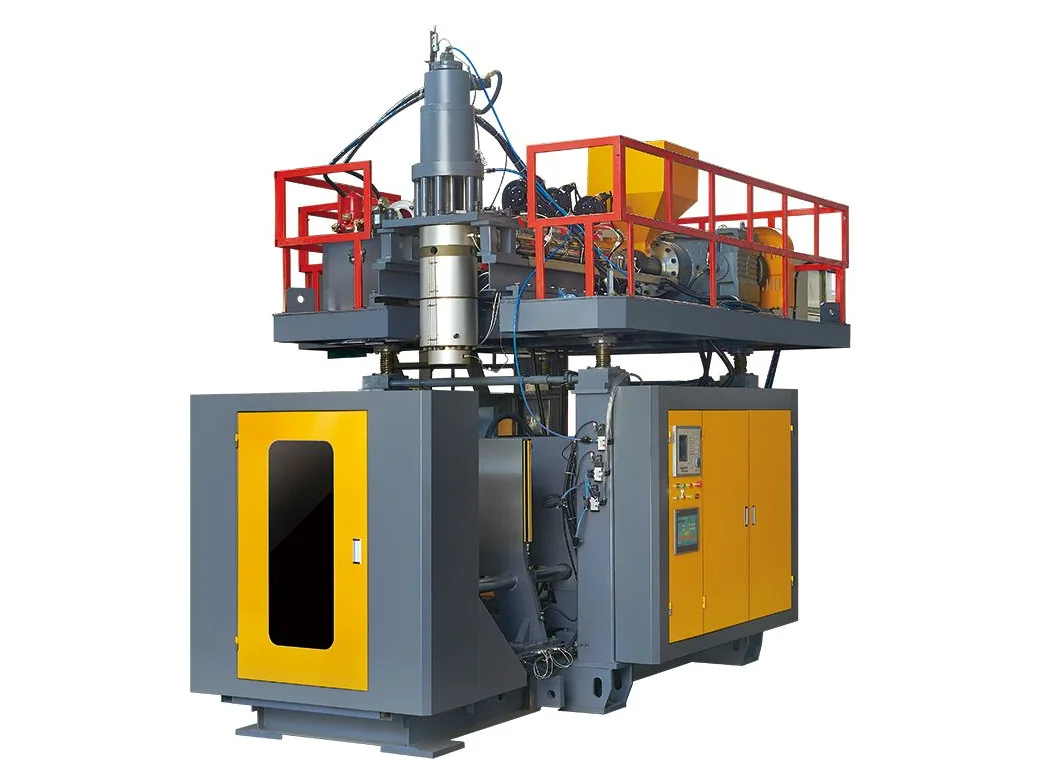
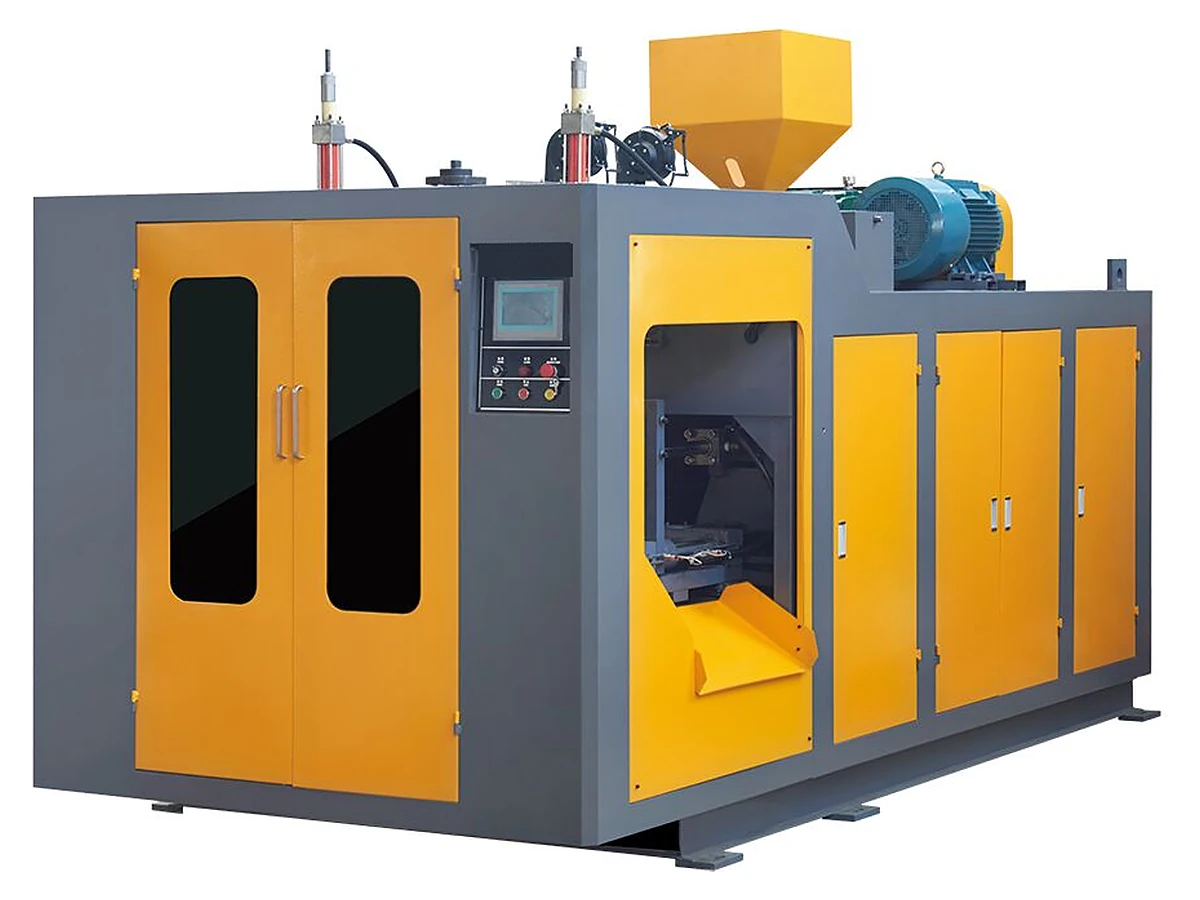
- Machine. One extrusion blow molding machine; ES-5LS lists a 100 kN clamp, 320 × 380 mm platens and 65–80 kg/h output.
- Mold. One production mold, usually 1–2 cavities. A simple two-cavity bottle mold is roughly USD 2,000–5,000 on the market and commonly takes 20–60 days after drawing approval.
- Auxiliaries. Compressor, chiller, grinder and conveyor are separate and can take a meaningful share of the project budget.
- Plant. Power, water, air, floor space, resin and finished-goods storage; check the layout before leasing.
- People and working capital. Operator, mold handler, quality and packing, plus resin, wages, power, freight and receivables.
One machine and one mold is deliberate. More cavities raise output, but also mold cost, clamp size, take-off complexity and scrap control. Add capacity when orders and yield data support it.
A common first mistake is to buy for the order you hope to win. One machine, one mold and a written trial plan are easier to finance and easier to correct than a half-loaded multi-cavity line. If a customer needs a second bottle size, price the second mold before you add a second machine.
The launch budget: five lines, not one
A first budget usually quotes the machine and forgets the rest. Build five lines — machine, mold, auxiliaries, plant and working capital — and compare suppliers on the same scope.
| Budget line | Example | Market range |
|---|---|---|
| Blow molding machine | Single-station 1–5 L (ES-5LS is one model) | Market: USD 25,000–70,000, machine only |
| Blow mold | Simple two-cavity bottle mold | Market: USD 2,000–5,000; 20–60 days after drawing approval |
| Auxiliaries | Compressor, chiller, grinder, conveyor | Separate; a meaningful share of budget |
| Plant and utilities | Power, water, air, floor space, fit-out | Price locally against your site |
| Working capital | Resin, wages, power, packaging, freight | Size from orders and payment terms |
Swipe the table to see all columns →
That total is the project cost. Comparing machine prices without mold and auxiliaries is not like-for-like. A 5 L bottle may sit on a small or larger platform.
Market bands are in blow molding machine price; this article uses them only for the startup budget.
What can wait until year two
Automatic take-out, a second machine, extra cavities, a larger mold set and full palletizing can wait. Each adds capital and complexity before you have stable yield and repeat orders. Start with one mold, one shift and simple take-out, then add capacity when the good-parts data and order book justify it. If a customer requires a specific automation or packaging format from day one, price it in the first scope rather than retrofitting it later.
The first 12 months: plan the cash gap
Do not forecast profit first. Forecast when cash leaves and returns:
- Before the order. Machine and mold deposits, plant lease, fit-out and utilities.
- Build. The mold commonly takes 20–60 days after drawing approval; confirm machine lead time in the quotation. Use the wait for training and customer samples.
- Installation and trials. Shipping, installation, commissioning, trial runs and learning scrap.
- First production months. Resin, power, wages, packaging and freight go out before receivables arrive — the gap a machine-only budget hides.
- Months 6–12. Stabilize yield and delivery before adding shifts, cavities or a machine.
Run your own figures: annual good parts = cavities × parts per cavity per cycle × cycles per hour × production hours. Revenue is good parts sold × price; contribution subtracts resin, power, labour, packaging and freight. Keep a monthly sheet — opening cash, cash in, cash out, closing cash — and compare it with the plan. This is planning, not a payback promise.
The single-station 0–16 L series covers 0.1–16 L with 1–6 cavities and 1–6 layers; the blow mold cost and lead-time guide explains tool pricing.
What to send for a quotation
A useful quotation starts with your bottle and order plan:
- Bottle drawing or 3D file, with neck, handle and base detail.
- Volume, part weight, wall-thickness requirement and material — PE, PP, HDPE, HDPP, PC, PVC, PETG or a multi-layer structure. Configurations vary by series.
- Target output in good parts per hour or month, shift pattern and first-year sales estimate.
- Whether you already have a mold, and the starting cavity count.
- Plant conditions: voltage, power, water, compressed air and floor space.
- Destination port and delivery terms.
If you only have a sample bottle, send photos next to a ruler and the part weight. Also state your budget range and launch date, so must-have scope is separated from later additions.
Send the details through the contact page, or review the 0–16 L single-station series before you write the inquiry.
E-SHION MACHINERY, Taizhou, Zhejiang, China. https://www.e-shionmachinery.com. WhatsApp +86 151 6778 9726. Email doris@e-shionmachine.com
Source: E-SHION product data. Specifications are subject to change without notice; customization is available.
This guide is written for production and procurement decisions. It uses published figures where available and avoids unverified performance claims.