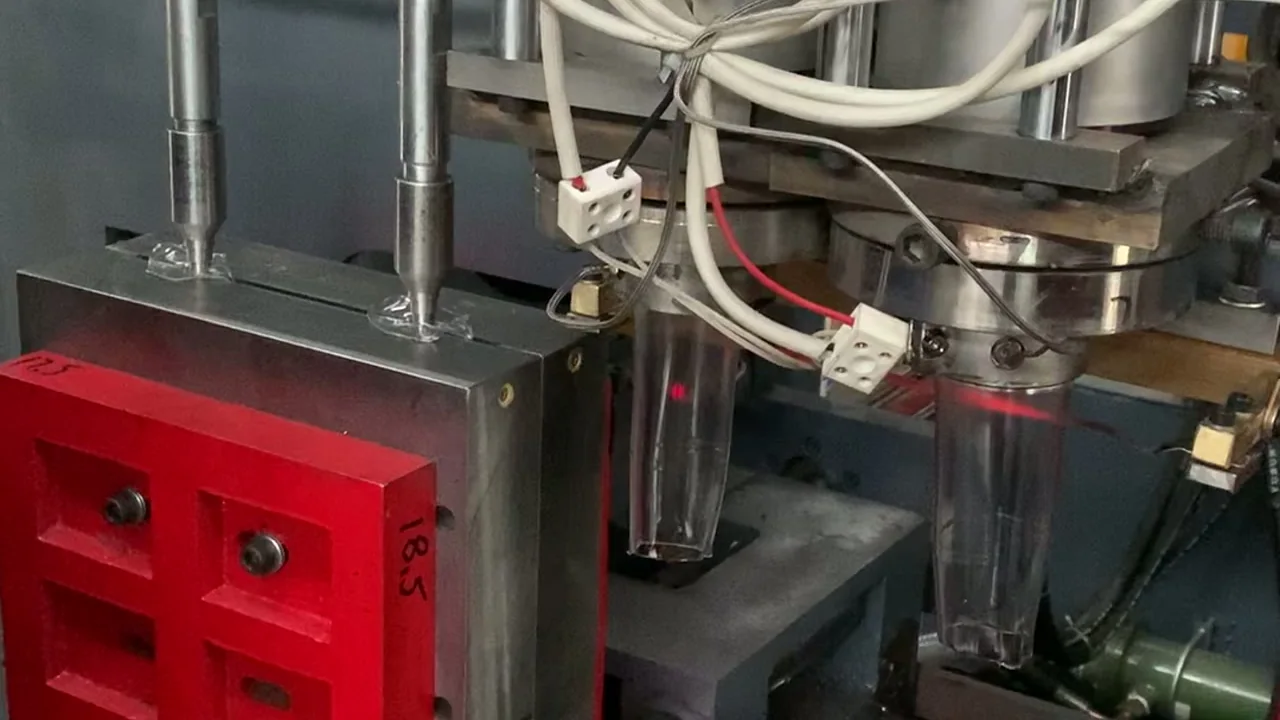
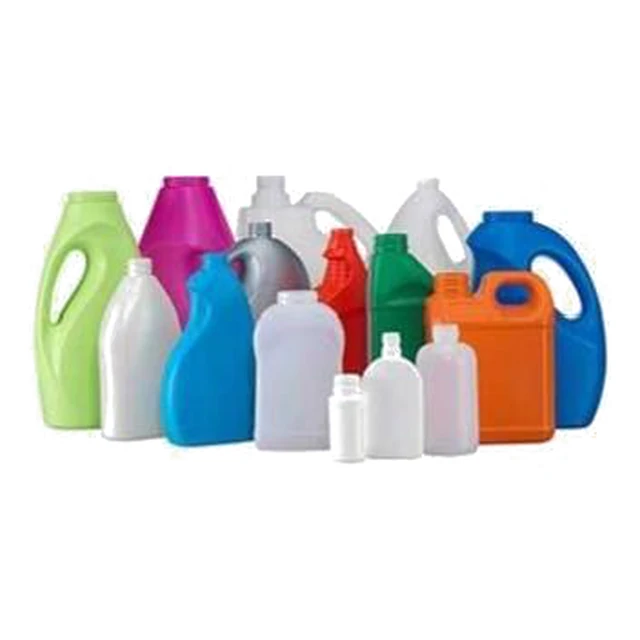
A clear PETG jar that reaches the filling line with a faint haze, a flow line under the shoulder, or a neck that splits at the capper is usually blamed on the machine. More often the resin lot, the drying window or the regrind share moved first. Before anyone touches screw speed or blow pressure, get the incoming resin data and run a regrind test on your own jar.
Which PETG grade do you actually need?
Ask the resin supplier for the grade's intrinsic viscosity (IV), the test method behind that number, and the moisture limit at delivery. Match the IV to your container size, wall thickness and clarity target, then prove it on a trial jar. No single PETG IV fits every blow molded container; the grade and the jar decide together.
IV describes chain length, and chain length is what holds a parison together. A higher-IV grade gives more melt strength for a heavier parison and a thicker wall, which matters on larger jars and wide-mouth designs. A lower-IV grade flows more easily but can sag, thin out at the shoulder and leave a weaker neck. The supplier's data sheet is the only IV figure worth quoting internally, and the grade code and test method belong next to it, because two suppliers can report IV on different bases.
Colour is part of the specification, not a cosmetic afterthought. Record the pellet colour value (b*) on the certificate and keep a retained sample from each lot. Pellet contamination — black specks, dust, foreign pellets, fines — stretches into a visible dark line along the parison, and no amount of mold polishing hides it.
- Grade code, IV value and the test method printed on the certificate
- Moisture at delivery, measured on a sample you keep
- Colour b* and a retained pellet sample per lot
- Pellet contamination check: black specks, fines, dust, foreign pellets
- The supplier's recommended melt-temperature window and drying conditions
Drying is a window, not a maximum
PETG is hygroscopic. Under-dried resin carries moisture into the melt, and the result is bubbles, streaks and a weak pinch-off that only shows up as a leak after filling. Over-drying is the quieter failure: too high a temperature or too long in the hopper yellows the pellet and starts the same IV loss you were trying to avoid. Treat drying as a window with a floor and a ceiling, and write both values into the process sheet.
- Dryer dew point and actual hopper temperature, checked at start-up and mid-shift
- Residence time in the hopper at your real output — running slowly means longer exposure
- Purge sequence at start-up and after every blend or lot change
- Hopper seal and return-air condition, or the setpoint means little
- One drying record per shift, kept with the lot number
Dryer settings and jar clarity are checked together inPETG clear jar production; if you are still weighing PETG against PVC or PC, start withblow molding material selection.
Set a regrind ladder before you set a regrind ratio
Regrind is where clarity usually dies. Every extra pass through the extruder shortens the chains a little more, and the jar shows it as haze, flow lines and a brittle neck. Run a ladder at 0%, 15% and 30% on the actual jar before you approve any ratio for production.
| Regrind share | What to measure on the jar | How to judge it | Record |
|---|---|---|---|
| 0% | Haze, IV on a cut wall section, neck impact, colour b* | This is the baseline; every other share is read against it | Full trial sheet, retained samples |
| 15% | The same four, same cavity, same shift | Pass only if haze and colour stay inside the limit agreed with the brand owner and neck impact does not fall below the 0% result | Trial sheet plus jar samples |
| 30% | The same four measurements | The highest passing share becomes the ceiling for that grade and colour | Trial sheet plus the IV result |
| New lot at the approved share | The same four measurements | A lot change is a new trial, not a formality | Lot record linked to the approved share |
Swipe the table to see all columns →
Read the ladder from the bottom up. If the jar fails at 0% regrind, the problem sits in the resin, the drying or the melt temperature, and adding virgin material will not fix it. If it passes at 0% and 15% but hazes at 30%, you have found a regrind ceiling rather than a machine fault — a useful number to keep.
What good looks like on the jar, not on the certificate
A certificate tells you what left the resin plant. The jar tells you what your line did with it. On the PETG double-station platform — 0.1 to 15 L, 1 to 4 cavities, layer structure set per project — run the trial at the cavity count you intend to buy and at the output you intend to run, because a two-cavity trial at half speed will flatter both the drying and the regrind result.
Then keep four numbers together: haze on the jar wall, IV on a cut section, neck impact, and colour against your retained standard under the same light. A single number misleads — a jar can hold its IV and still haze because mold temperature or cooling moved, and it can lose IV while looking clean because the wall got thicker.
If the gap turns out to be cavity count or clamp rather than resin, look at thePETG double-station rangeand send the drawing throughcontact.
What to send for a quotation
A PETG line is quoted around a container, not around a model code. Send these and the reply can be specific:
- Container drawing or sample: volume, neck finish, wall target and decoration
- Resin grade, IV, the supplier data sheet and the regrind share you plan to run
- Target output per hour and the cavity count you expect
- Available power, air and chilled water at the site, plus the destination country
- The clarity standard the brand owner checks against, with light source and limit
Source: E-SHION product data. Specifications are subject to change without notice; customization is available.
This guide is written for production and procurement decisions. It uses published figures where available and avoids unverified performance claims.