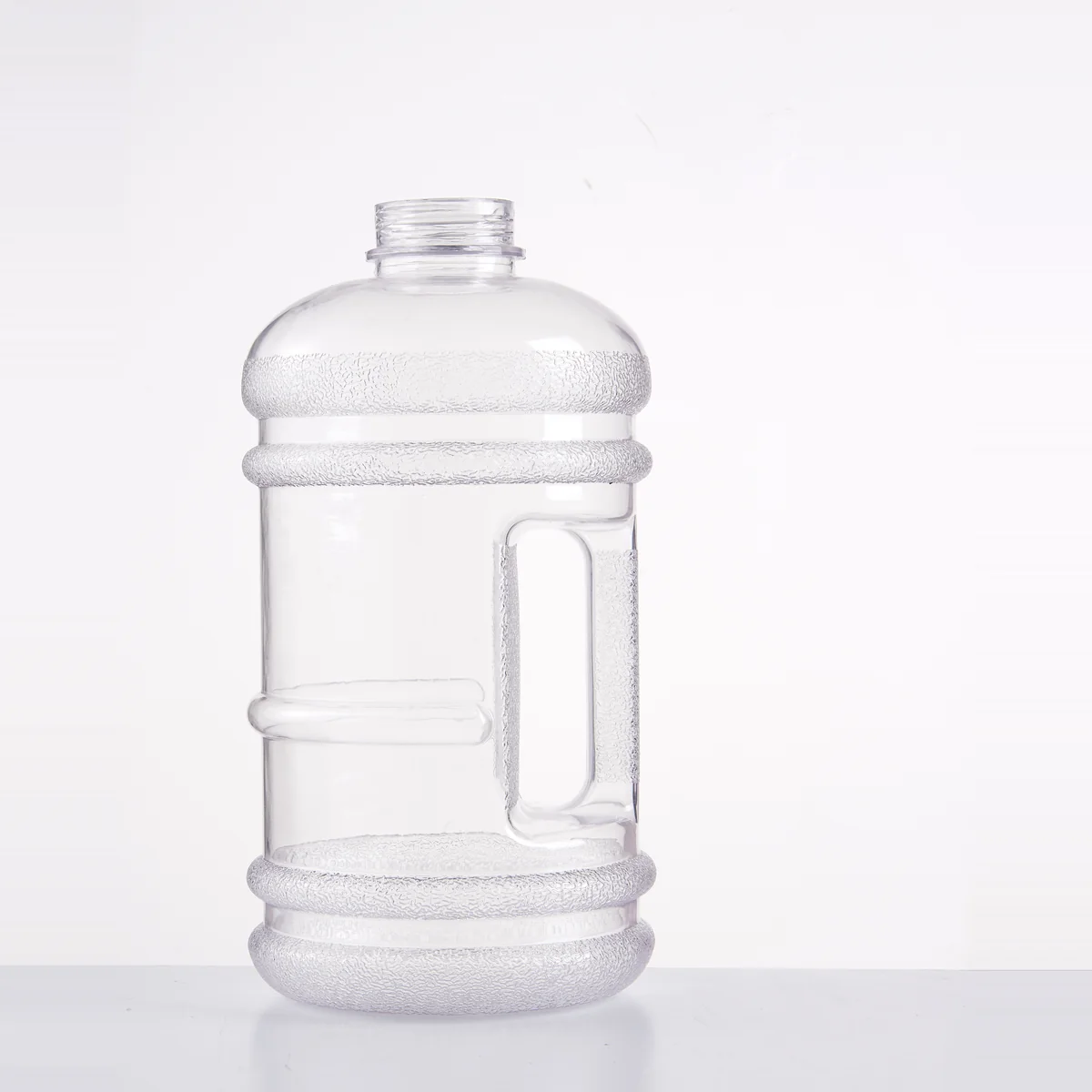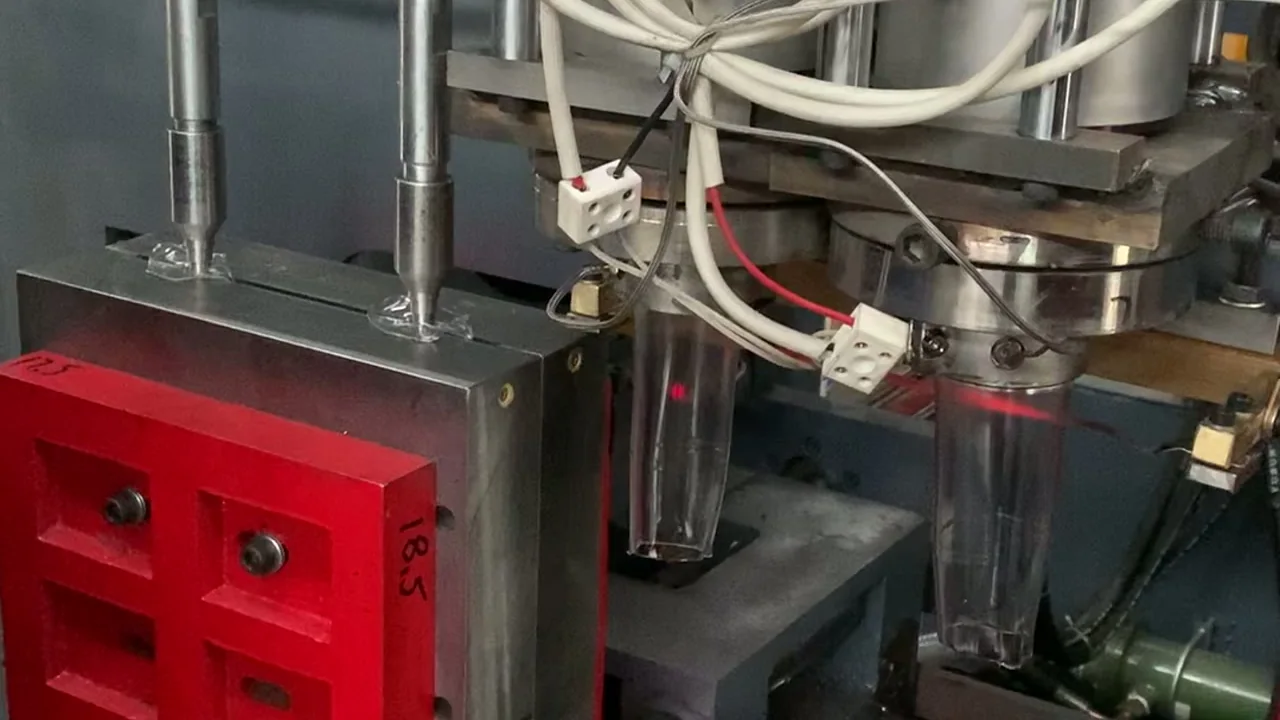
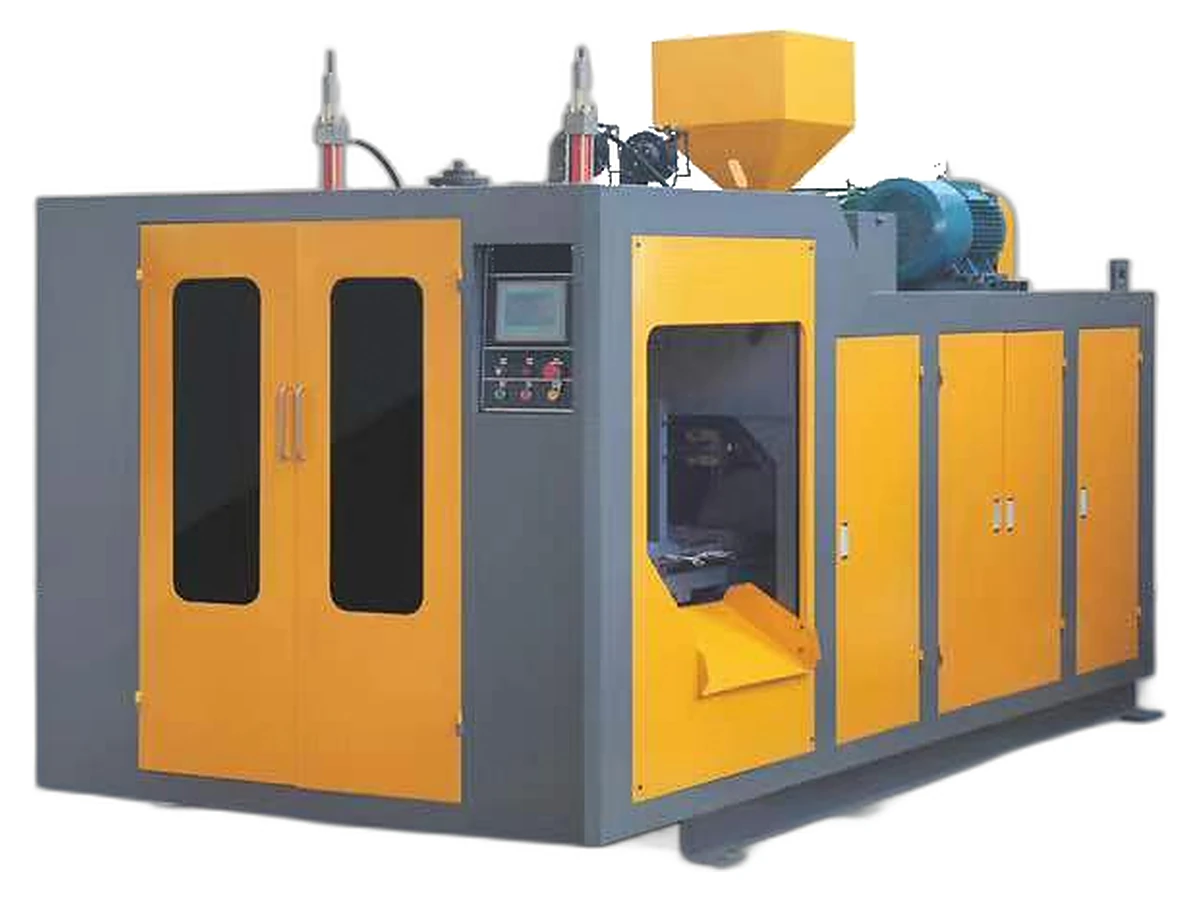
Consider a 500 mL clear PETG jar on a two-cavity mold. One quotation may be the machine only; the other may add a polished mold, mold temperature control, dryer, chiller, compressor and commissioning. Until the scope matches, the lower price is not the lower project cost. For a clear jar, price starts with the clarity requirement, not the machine model.
The short answer: a market range, not an E-SHION price
The market range for a PETG clear-container extrusion blow molding machine is roughly USD 60,000–120,000. That figure is a market reference, not an E-SHION quotation. Mold, mold polish, temperature control, drying and auxiliaries add cost; the final price depends on model, mold, cavity layout, material, drive/control and destination. Confirm the final number in the quotation.
E-SHION's PETG double-station configuration covers 0.1–15 L and 1–4 cavities, with project-specific layers. The series does not publish a numbered model table for clamp force or output, so both are confirmed against the actual jar and mold drawing.
Start with the PETG double-station configuration, then read the PETG blow molding guide for the material and process background. For the general 5–30 L price bands, see the blow molding machine price guide.
Where the money goes in a PETG project
A comparable PETG quotation should separate six cost lines. If a supplier gives one lump sum, ask for the breakdown.
- Machine: PETG double-station platform, 0.1–15 L, 1–4 cavities, configured around the jar drawing; drive/control and layer structure change the price.
- Mold: usually quoted separately from the machine. A simple two-cavity bottle mold is roughly USD 2,000–5,000; larger multi-cavity tools roughly USD 15,000–35,000, commonly 20–60 days after drawing approval.
- Mold polish and surface: clear PETG can show polish direction, venting marks and neck-insert finish; this is a clarity decision, not a cosmetic extra.
- Drying and temperature control: resin drying and controlled mold temperature; size the dryer to actual resin consumption, not the trial batch.
- Auxiliaries: compressor, chiller, grinder and conveyor are usually separate and can take a meaningful share of the budget.
- Freight, installation and commissioning: destination, voltage and site readiness change the landed cost.
Why two PETG quotations differ
Even for the same jar, the number moves with cavity count, polish specification, temperature-control scope, drying, drive/control and destination. More cavities do not automatically mean a lower cost per part: extruder plasticizing capacity, cooling and take-out set the ceiling. Output is cavities × good parts per cavity per cycle × cycles per hour, and cycles per hour is 3600 ÷ measured cycle time.
The table is a scope checklist with market references, not an E-SHION price list. Put two offers on the same scope before comparing totals: machine configuration, mold cavity count and polish, dryer and temperature-control scope, auxiliary list, and what freight and commissioning include. A quotation that cannot be broken down this way is hard to compare and hard to change later.
| Cost line | Market reference | What to confirm |
|---|---|---|
| PETG extrusion blow molding machine | Roughly USD 60,000–120,000; excludes mold, mold polish, drying, temperature control, auxiliaries, freight and commissioning | Configuration written against the jar drawing |
| Blow mold | About USD 2,000–5,000 for a simple two-cavity mold; USD 15,000–35,000 for larger multi-cavity tools | Cavity count, mold drawing and agreed lead time |
| Mold polish | Quoted with the mold; adds cost on clear PETG | Polish spec and sample under agreed light |
| Drying and mold temperature control | Quoted in the project; adds cost | Resin data sheet and actual consumption |
| Auxiliaries | Separate; meaningful share of budget | Written included-scope list |
| Freight, installation, commissioning | Varies by destination | What is included in the offer |
Swipe the table to see all columns →
Each row must be checked against the jar drawing and the actual mold. Cavity count deserves its own check: the PETG configuration covers 1–4 cavities, but each added cavity raises mold cost and demands more extruder capacity and cooling consistency. Price the cavity count against the output you can actually sell, not the highest number on the specification sheet.
Prove clarity on a sample jar before you lock the price
A PETG price is only meaningful once clarity is defined. Haze, flow lines and polishing marks that may go unnoticed on an opaque HDPE bottle can be visible rejects on a clear jar. Agree the inspection light, background and viewing distance, then run a sample with production resin and the final mold.
The trial record should cover the chain: resin drying and dew point, melt temperature and residence time, die centering and die-gap profile, mold temperature and cooling uniformity, mold polish and take-out handling. There is no universal mold temperature to copy; the setpoint belongs in the trial record.
Keep a golden sample and the trial settings, and plan production from the cycle time measured on that sample. The same record is the baseline when a resin lot changes or the mold is serviced. If a supplier will not discuss a trial before the price, the price carries a clarity risk you cannot see.
The process detail behind that trial is covered in the PETG clear jar production article. Send drawings through the contact page when they are ready.
What to send for a PETG quotation
A firm PETG price starts with the jar, not the word PETG. Send:
- Jar or bottle drawing (2D/3D): dimensions, neck finish, wall-thickness range, handle or shape details.
- PETG grade and data sheet, plus color or haze target.
- Target output, cavity preference and shift pattern.
- Clarity acceptance criteria and an accept/reject sample if available.
- Mold status: new mold, or existing mold drawing with dimensions, weight and mounting details.
- Destination, voltage, and available air, cooling water and floor space.
- Scope: machine only, machine plus mold, or a line with drying, temperature control, auxiliaries, installation and training.
Send the drawing and data sheet to doris@e-shionmachine.com or WhatsApp +86 151 6778 9726. E-SHION MACHINERY, Taizhou, Zhejiang, China. With the drawing and clarity target, the PETG configuration, mold polish and temperature-control requirements can be confirmed, and the six cost lines above can be quoted separately. Also ask for the spare-parts list, written scope and response terms, so the price is compared as a service package, not only as a machine number. The final price depends on model, mold, cavity layout, material, drive/control and destination; confirm it in the quotation.
Source: E-SHION product data. Specifications are subject to change without notice; customization is available.
This guide is written for production and procurement decisions. It uses published figures where available and avoids unverified performance claims.