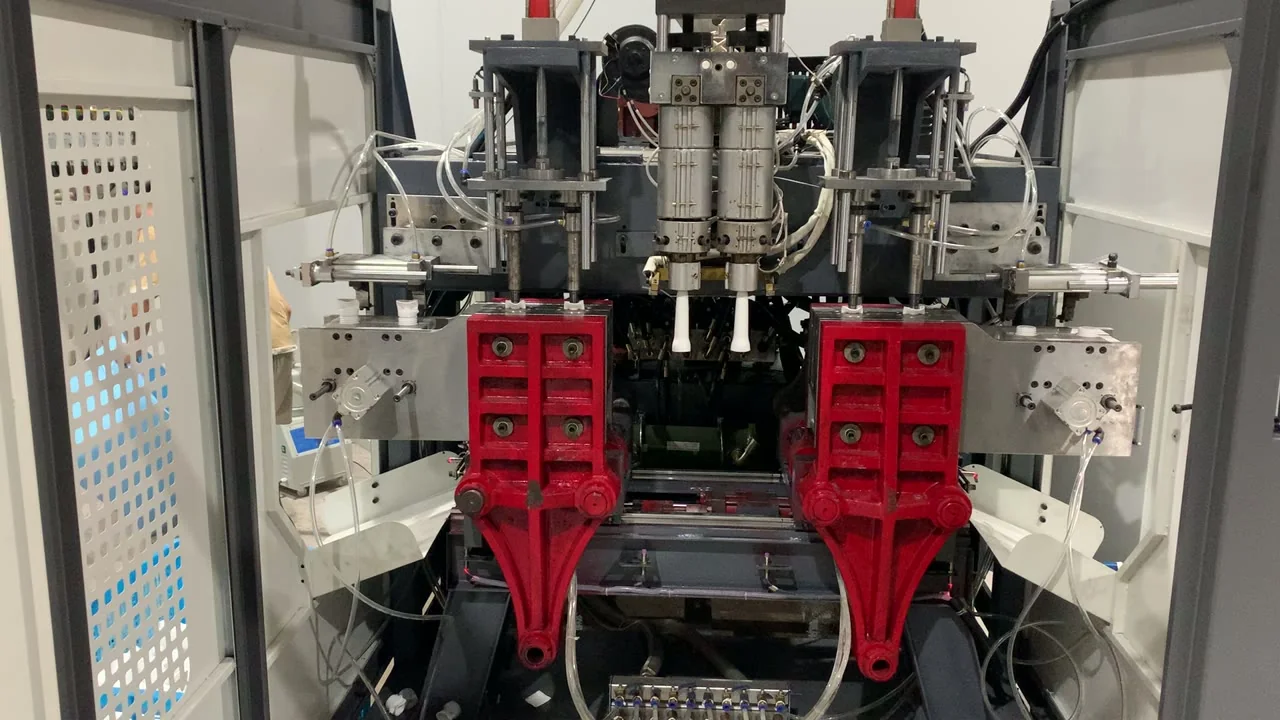
Your last PCR delivery ran good bottles. This one produces a different parison, drifts into the wall-thickness alarm and leaves a weak pinch-off. Nothing in the purchase order predicted it, because the order named a grade rather than a window. That gap is what a PCR supply contract has to close — before the next truck arrives.
What a PCR contract must settle before price
A workable PCR contract fixes five things: the volume band you will actually take, how price moves when the agreed reference moves, the specification window every lot must sit inside, what happens when a lot falls outside it, and how each lot is traced back to source. Everything else is detail.
Virgin resin from one plant normally holds its grade between deliveries. PCR does not: it starts as bales and flakes from different collection areas, passes through washing and pelletizing runs, and reaches you as pellets whose melt flow and density can move from lot to lot. Moisture, colour and odour move with it, and contamination shows up as black specks or metal. This is not a fault in recycling; it is the nature of the feed. The contract exists to keep that variation inside a range your mould and your machine can absorb.
Five clauses, in the order they usually fail
Most disputes trace back to a clause that was never written, or written as a single number. Take them in this order.
- Volume band. State a monthly minimum and maximum and how the supplier confirms capacity before peak season. One annual tonnage is not a delivery plan; a supplier that over-produced should not push the surplus into your silo.
- Price mechanism. Name the reference and the formula, the review period, and what happens when the reference moves outside an agreed band. 'Market price' on its own is not a mechanism. The right reference differs by market, so confirm the choice and the wording with your own commercial and legal review.
- Specification window. Write ranges, not nominals: density, MFI at a stated test method and temperature, maximum moisture, colour and odour acceptance, and limits for metal, foreign matter and black specks. Every value needs its test method, otherwise two labs will read the same lot differently.
- Rejection and returns. Say what counts as a rejected lot, who pays freight, how many retests are allowed, whether the remedy is replacement or credit, and how a rejected lot is quarantined so it cannot be booked back in. Silence here is where the cost lands on you.
- Traceability. Every bag or octabin carries a lot number linked to source type, origin and the bale-to-pellet chain. The recycled-content claim and the supplier certificate attach to the lot, not to the year. You will need this for your own quality file and for customer questions.
The incoming inspection sheet that makes the clauses real
A clause is only as strong as the test behind it. Sample every lot on arrival, before it is loaded into the silo, and record the result against the lot number and the clause it belongs to. The sheet below is the minimum; add the tests your product needs.
| Check | What to record | If it falls outside the window |
|---|---|---|
| Density | Value at the agreed test method; compare with the specification window | Quarantine the lot; ask for the supplier's retained sample and a retest |
| MFI | Value at the stated temperature and load; flag lot-to-lot drift, not only pass or fail | Hold the lot; re-baseline settings or reject with data |
| Moisture | Measured before processing, with the drying actually applied | Dry to the agreed limit, retest and log the deviation |
| Colour | Visual check against the agreed standard under fixed light | Segregate; decide by the colour requirement of the product |
| Odour | Panel check against the retained reference sample | Hold for an end-product trial; odour is difficult to reverse |
| Metal and foreign matter | Sieve and magnet check, plus a visual check on a moulded sample | Reject; it is both a safety risk and a mould-damage risk |
| Certificate | Present, lot number matching, recycled-content claim stated | Do not release without it; a certificate is a document, not a test result |
Swipe the table to see all columns →
Four lots before a PCR source is released
One good lot proves very little. Drift shows up across lots, across seasons and across a supplier's pelletizing runs, so release a new PCR source only after four consecutive lots have passed the full incoming sheet. Lots one to four run as production trials, with quality holding the release; if any lot falls outside the window, the count restarts. Only then does the source go on the approved list.
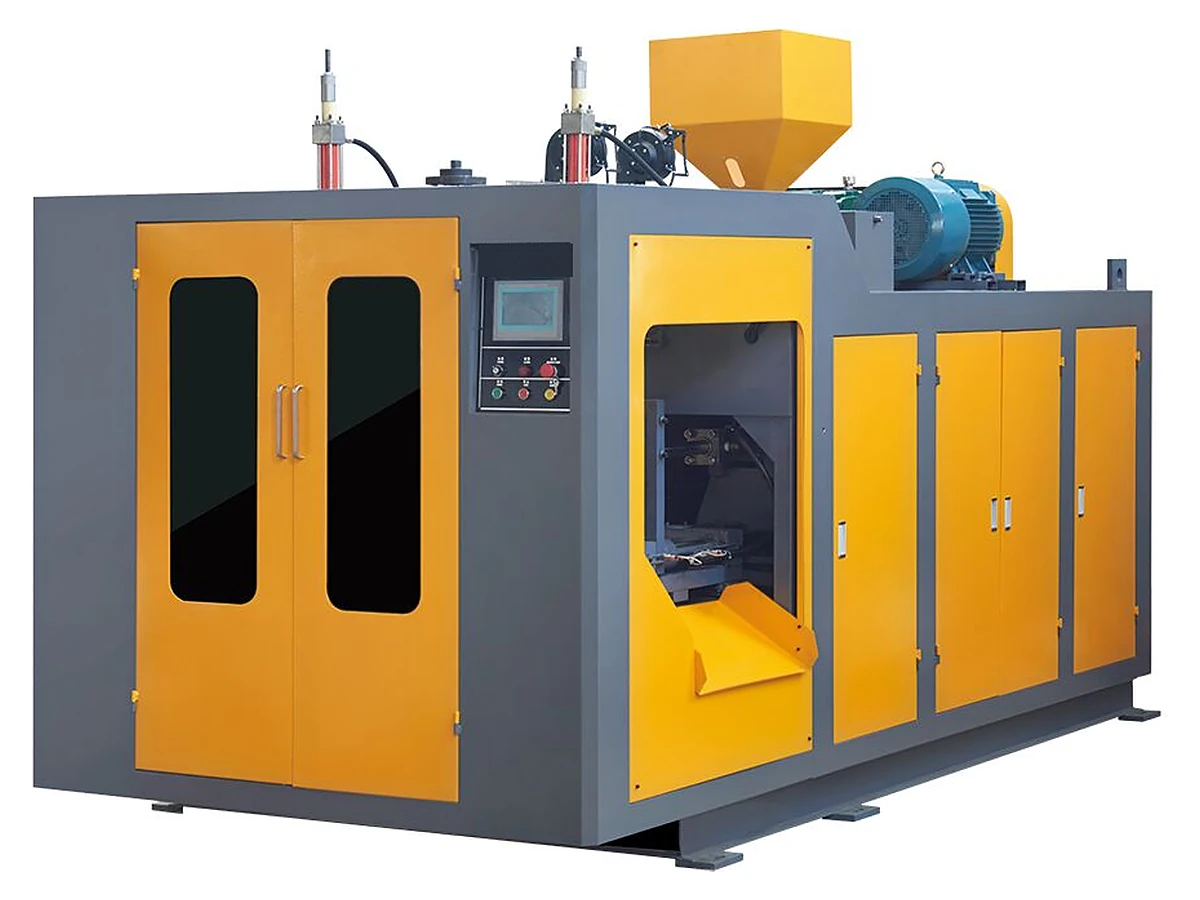
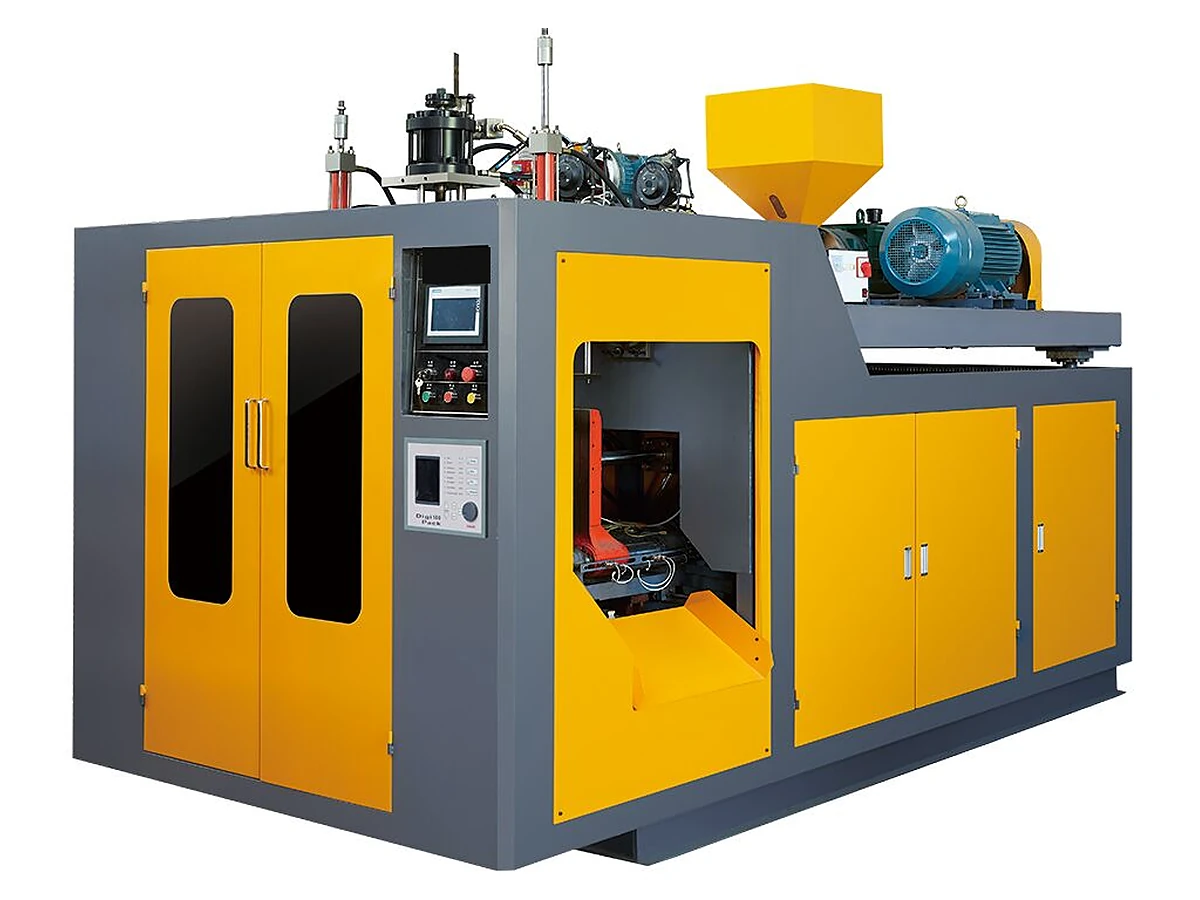
Each approved lot is also tied to a machine setting sheet. On an ES-10LS or ES-10LD running 10 L HDPE containers, record barrel temperatures, screw speed, parison programme, blow and cooling times, and the measured cycle time for that lot. When a new lot sits near the edge of the MFI or density window, re-baseline the settings with production and quality and approve a new sheet — do not let operators chase the parison by feel at shift start.
The same discipline applies when you scale output. A double-station machine such as the ES-10LD can raise output, but the extruder plasticizing capacity is the ceiling, and a PCR lot that runs comfortably at one rate may need a different temperature profile at a higher one. Keep the lot number on the production record so a container problem can be traced back to the material, the setting sheet and the machine.
What to send for a quotation
If you are specifying a machine around a PCR feed, send these details and we will quote the model, screw, drive and mould that fit:
- Container drawing: volume, weight, wall-thickness target and neck finish
- Material and PCR share: HDPE or another resin, and the percentage you plan to run
- Expected monthly output, and the lot size you can store and test
- Your incoming test methods, or the methods you want written into the contract
- Destination, power supply, and any existing machine or mould you plan to reuse
Machine side: compare thesingle-station 0–16 L seriesand thedouble-station 0–16 L series; theextrusion blow molding process guideshows where parison control fits. If you regrind your own scrap as well, readinline regrind systemsbefore fixing the PCR percentage, and checkhandle designif the container has an integral handle. To discuss a specific lot,contact us.
Source: E-SHION product data. Specifications are subject to change without notice; customization is available.
This guide is written for production and procurement decisions. It uses published figures where available and avoids unverified performance claims.