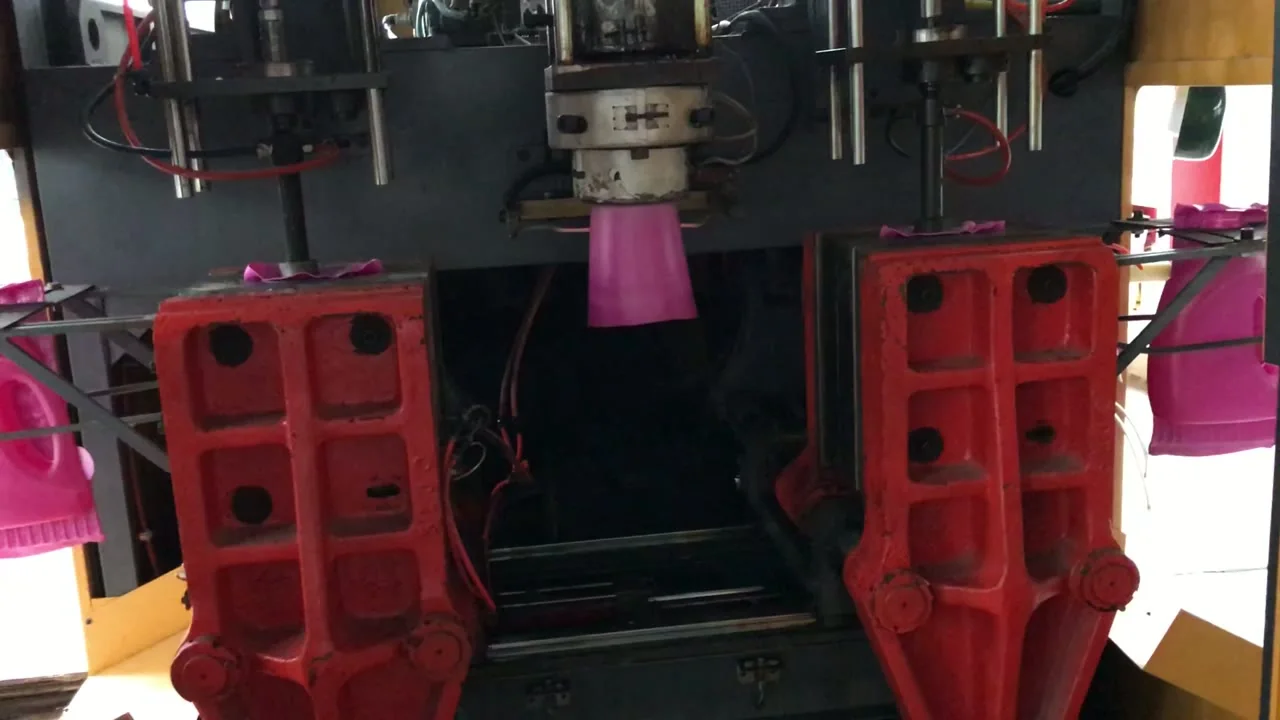
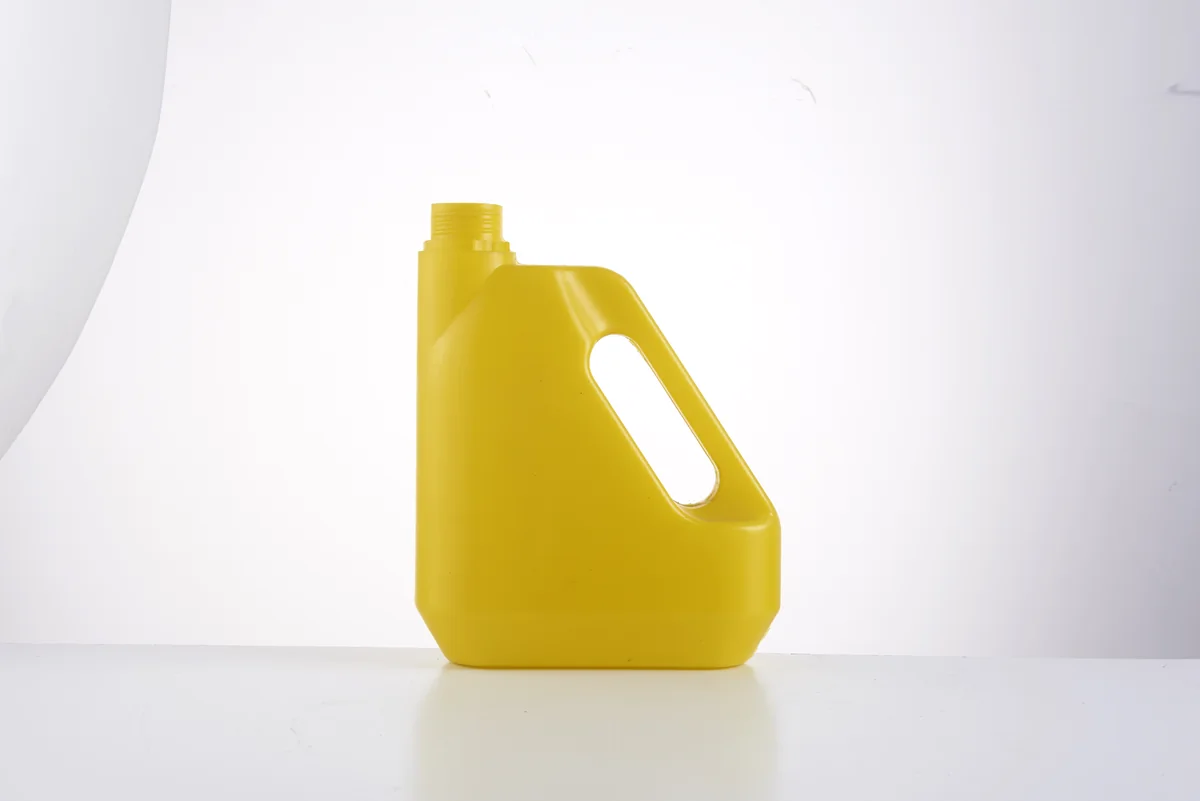
A new blow molding line rarely reaches rated output on the day the commissioning engineer leaves. The machine runs, the first container looks right, and the buyer is still months away from the output, scrap rate and OEE the project was approved on. That gap between a good first part and a stable line is the ramp-up, and most early cost sits there: scrap, overtime, missed deliveries and arguments about whose fault a defect is.
How long does a new blow molding line take to reach rated output?
Plan on about 12 weeks, not one number: first good part in week 1, stable single-mold output in week 4, rated cycle in week 8, and rated OEE with scrap under target by week 12. Each gate needs a recorded metric and a named owner; mold, resin and crew experience decide whether the calendar holds.
That sequence is a planning framework, not a promise. A simple single-cavity bottle can move faster; a new multi-cavity tool, an unfamiliar resin and a new crew can take longer. What matters is that every gate has a metric and an owner, so “behind schedule” becomes a specific loss with a specific fix.
The gates are ordered by dependency. You cannot stabilize output before the first good part is repeatable, and OEE means little before the cycle time is stable. Skipping a gate hides the real constraint and sends the team to the wrong department.
What each gate must prove
Run each gate as a short review with production, process, quality and maintenance from the buyer's side, plus the commissioning or mold engineer from the supplier's side. Record the result on one page.
- Week 1 — first good part. One container meets the drawing on weight, wall sections, neck dimensions, pinch-off and flash. The first-off report is signed, the recipe is saved and locked, and the machine is handed to the buyer's process engineer.
- Week 4 — stable single-mold production. Output holds at the single-mold rate, cycle time is measured over a full shift rather than quoted, and scrap is counted per shift by defect type. The line is not yet chasing rated output.
- Week 8 — rated cycle. Measured cycle time matches the mold trial on the same tool. Output reaches the model band, for example 100–120 kg/h on an ES-30L or ES-5LD, and energy draw is read from a meter, not a nameplate.
- Week 12 — rated OEE. OEE, scrap, cycle and downtime are reported against the targets agreed at commissioning. If OEE is short, the loss is attributed to machine, mold, resin or planning before any speed change.
For a 5 L jerrycan or bottle project, the5 L jerrycan production line layoutand the5 L blow molding machine price guideadd the upstream and budget context.
The ramp-up scorecard
Keep this one page visible on the line. Model output and energy bands are baselines to confirm with the quotation, the mold drawing and a trial on your resin, not guarantees.
| Gate | What is proven | Metric to record | Owner |
|---|---|---|---|
| Week 1 | First good part | Weight, wall sections, neck and flash against the drawing; recipe saved | Buyer process engineer + supplier commissioning engineer |
| Week 4 | Stable single-mold production | Shift output at the single-mold rate; measured cycle; scrap by defect type | Production manager |
| Week 8 | Rated cycle | Measured cycle against mold trial; output band (ES-30L 100–120 kg/h, ES-5LD 100–120 kg/h); actual kW | Process engineer + mold supplier |
| Week 12 | Rated OEE | OEE, scrap against target, downtime by cause; actual draw (ES-30L 30–40 kW, ES-5LD 28–36 kW) | Plant manager |
Swipe the table to see all columns →
Who fixes what: machine, mold or resin
Most ramp-up arguments come from mixing three fault domains. A machine fault shows up as unstable clamp force, a drifting parison, a heater zone that will not hold or a hydraulic response that changes with oil temperature. A mold fault shows up as a thin wall section in the same place every cycle, a neck that is oval in the same orientation, or flash at one corner of the pinch-off. A resin fault appears across cavities and shifts: bubbles, odour, inconsistent parison sag, or a lot that behaves differently from the last one.
The test is repetition. If the defect follows the cavity, suspect the mold. If it follows the machine regardless of the mold, suspect the machine. If it follows a resin lot or the dryer, suspect material and drying. Write the result on the scorecard, because the fix and its cost sit with different parties.
A common example: a line reaches week-4 output but misses the week-8 cycle. That is usually not a clamp-force shortage; it is cooling, parison control or an unstable cycle. Raising speed at that point adds wall-thickness variation rather than output.
When a gate is missed: the corrective list
A missed gate is normal. Answering it with a speed increase is not. Work down this list in order and record every change:
- Freeze the recipe and measure the cycle with a stopwatch over at least 30 consecutive cycles, not from the HMI display.
- Check the parison: die gap, die centering, parison length and swing, and the wall-thickness profile at the same section every time.
- Check the resin: lot number, MFI, moisture and drying time, and whether the regrind ratio changed.
- Check clamp force against mold projection area and blowing pressure, not container volume alone.
- Check cooling: mold temperature stability, water flow and the real contact time in the mold.
- Re-run the first-off checks on weight, wall sections and neck before releasing the next shift.
What to send for a quotation
Ramp-up planning starts before the machine is chosen. Send these and the model, mold and gate targets can be checked together:
- Container drawing with weight, wall sections, neck finish and allowable flash.
- Resin grade, MFI, virgin/regrind ratio and any multi-layer structure.
- Cavity layout, target output per hour and shift pattern.
- Mold drawing or mold status: new, existing or transferred.
- Utility data: voltage, compressed air, chilling water and floor space.
- Target dates for first good part, stable output and rated OEE.
- Destination country and the import documents you need.
Questions on a specific container?Send the drawing and target outputand we will reply with the model and gate plan.
Source: E-SHION product data. Specifications are subject to change without notice; customization is available.
This guide is written for production and procurement decisions. It uses published figures where available and avoids unverified performance claims.