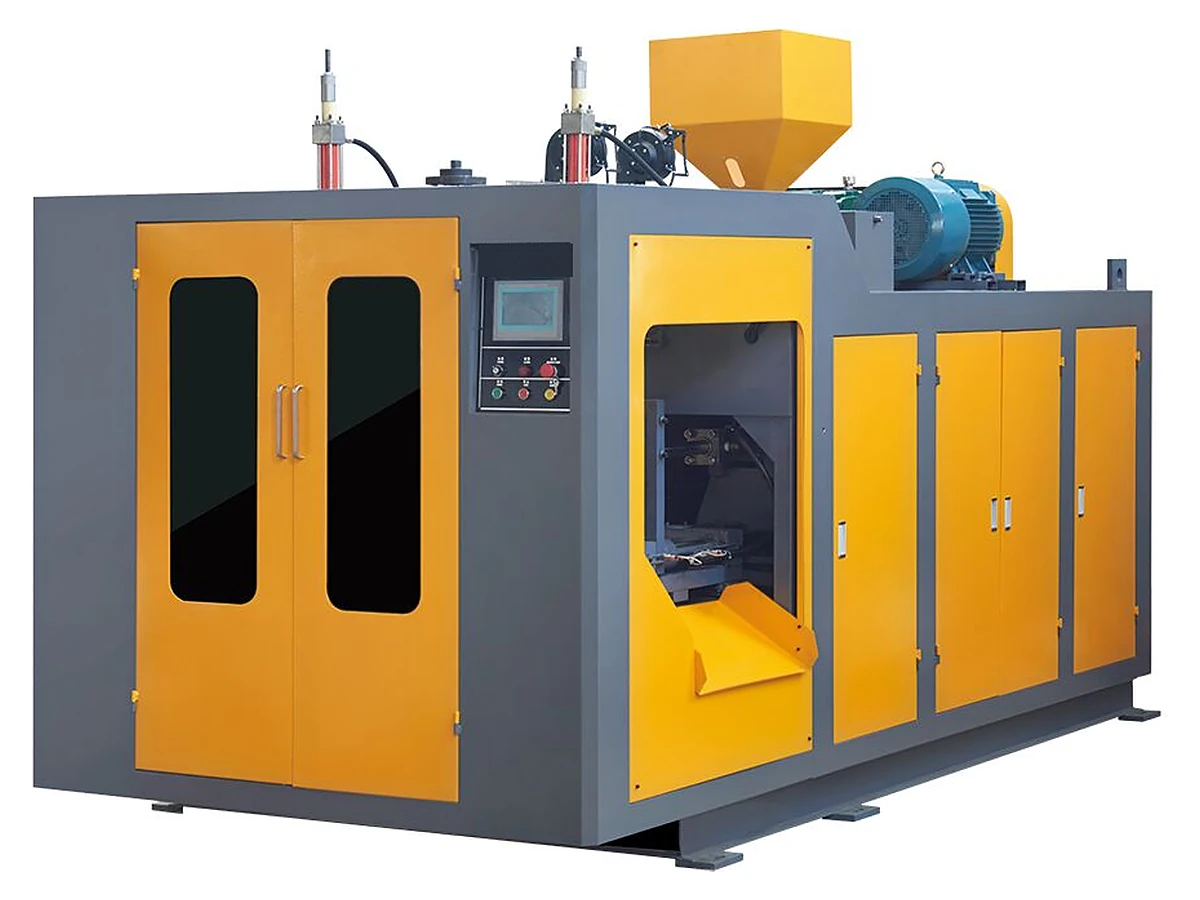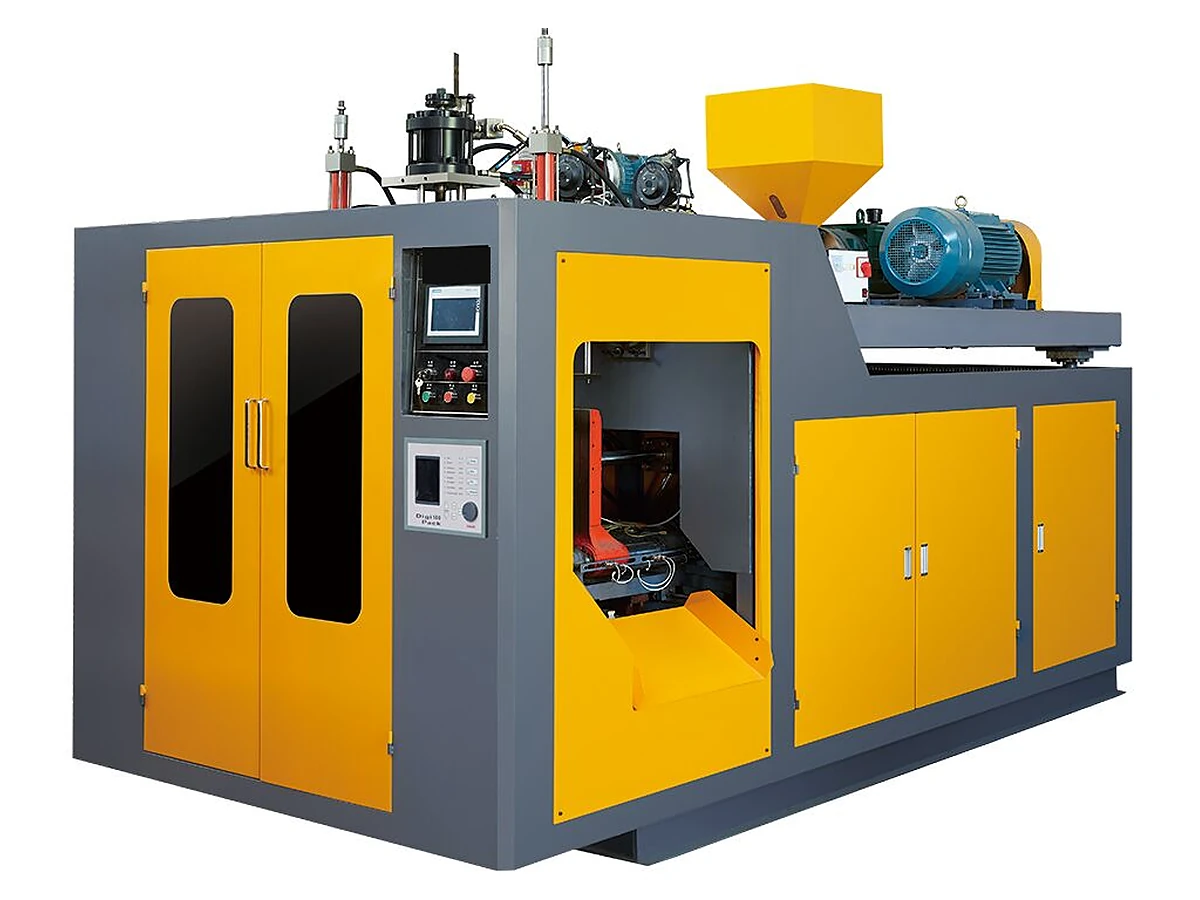
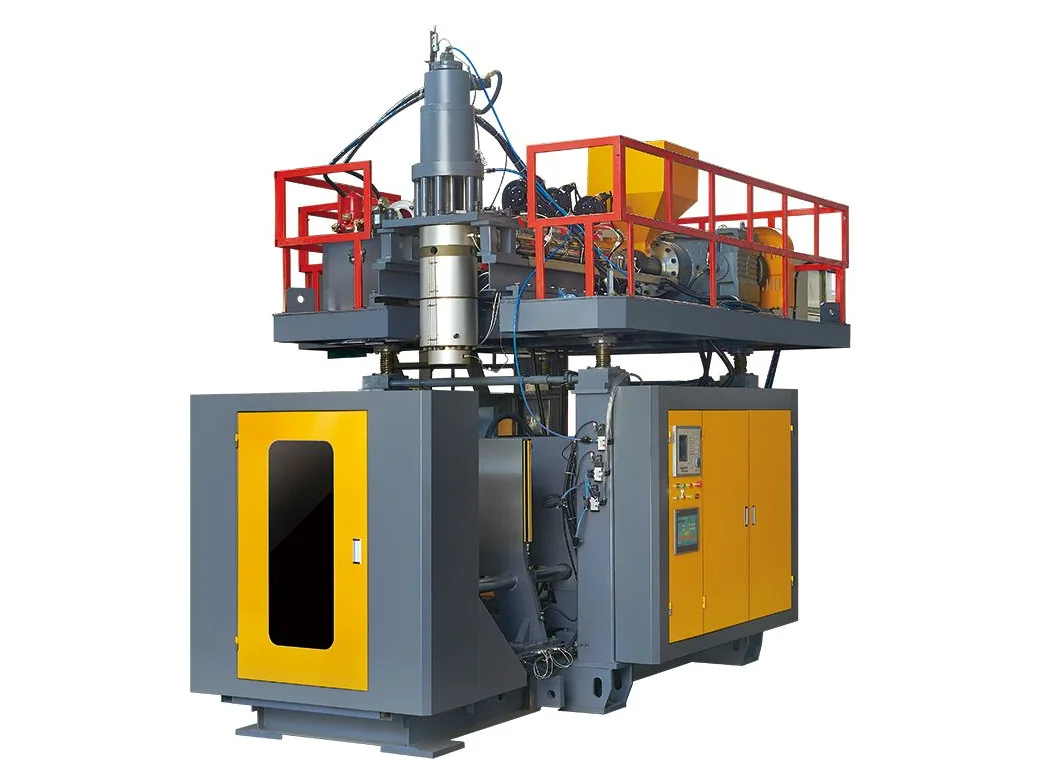
Two quotes for what looks like the same 10 L blow molding machine can sit far apart, and the gap is rarely the clamp force or screw diameter on page one. It is in the control cabinet: one offer names a controller model with a distributor in your country, the other a private-label board with no spare-part route. Six months on, only one of those differences costs money.
Which components need a brand clause?
The test is not price and not fame. Ask of each part: if it fails on a Tuesday morning, what stops - the machine, the maintenance budget, or nothing? That question sorts the bill of materials into three tiers, and only the first deserves to hold up a contract.
Tier 1: the parts that stop the machine
Three families sit here. The PLC and HMI run the sequence, the temperature zones and the parison programme. The servo drive and motor index the carriage and repeat the clamp position. The hydraulic pump and valves turn clamp force and blow pressure into motion. Lose any of them and the line waits for a replacement, which is why the brand matters in year three.
- PLC and HMI: brand, series, model, I/O count, and whether the software is licensed to you.
- Servo drive and motor: brand, series, power rating, encoder type, parameter backup at handover.
- Hydraulic pump and valves: brand, displacement, pressure rating, valve model numbers.
Here is the distinction buyers miss. An unbranded PLC is rarely a performance risk: it runs the sequence the programmer wrote. It is a spare-parts and support risk. A private-label board may have no published model number, no firmware history and no distributor outside the builder, so a failure becomes their lead time.
Tier 2 and Tier 3: maintenance cost, then cosmetics
Tier 2 parts fail on a schedule, so the questions are unit price, local stock and a complete specification. Hydraulic and cylinder seals, heater bands, thermocouples, the reducer and contactors belong here. A heater band is close to a commodity; a thermocouple is not. A type K and a type J probe are not interchangeable, and the wrong one reads a plausible but wrong temperature.
Tier 3 is cabinet paint, cover panels, labels and handles. Buyers linger on these because they are visible. They affect neither output nor spare-part lead time, and the negotiation hour is better spent on the lead-time column.
The component annex, in one table
The annex is one page attached to the contract, not a promise in an email. Four columns are enough: the group, why it is listed, what must be written, and the spare-part lead time you expect. Most buyers leave that last column blank.
| Component group | Why it is listed | What to write | Spare-part lead time to ask for |
|---|---|---|---|
| PLC and HMI | Stops the machine; holds parison profile and temperature zones | Brand, series, model, I/O count | Module lead time; software included? |
| Servo drive and motor | Stops the machine; repeats carriage and clamp position | Brand, series, power, encoder type | Drive lead time; parameter backup |
| Hydraulic pump and valves | Stops the machine; sets clamp force and blow response | Brand, displacement, pressure rating, valve models | Pump lead time; seal-kit part number |
| Reducer | Wear item; torque, noise, backlash | Brand, model, ratio, service factor | Lead time; oil grade |
| Heaters and thermocouples | Maintenance cost; temperature control | Wattage and size; thermocouple type K or J | Local price and stock |
| Pneumatic cylinders | Maintenance cost; take-off and door movement | Brand, bore, stroke, valve model | Seal-kit availability |
| Electrical components | Maintenance cost; contactors, breakers, safety circuit | Brand, series, ratings, safety relay type | Lead time; conformity documents |
| Seals and O-rings | Maintenance cost; leakage and pressure loss | Material, size, supplier | Seal list with part numbers |
Swipe the table to see all columns →
Two wording rules make the annex enforceable. First, international brand is not a specification; brand plus series plus model is. One maker can sell an economy line and an industrial line under the same logo. Second, an or-equivalent clause should require written approval before shipment, naming the substitute's brand, model and lead time.
What a 10 L line looks like with the annex filled in
Take a single-station ES-10LS: 110 kN clamp, 450 x 480 mm platen, 70-75 mm screw, 80-100 kg/h output, 38-48 kW installed, 6.5 t. On this size a four-cavity 1 L HDPE bottle is a normal job, and the PLC holds the blow delay, the parison profile and the take-off timing. If that controller is a model your team can program and your distributor stocks I/O for, a board failure is a morning; if not, it is a shipment.
The same annex travels with any model. Whether you compare asingle-station machinewith adouble-station machine, the tier-1 list does not change. At enquiry stage, fold it into theRFQ checklistand read it against themaximum container sizeyou need.
What to send for a quotation
Send the container first, then the component preferences. We will quote the tier-1 items as separate lines with a lead time each, so offers can be compared on the same basis.
- Container drawing or sample: volume, neck finish, weight and wall target.
- Material and layer structure, including any regrind layer.
- Cavity count and the output per hour you need.
- The tier-1 components you will not compromise on, and the brand your team already uses.
- Destination country, voltage and frequency, and the manual language.
- Whether a spare-part kit ships with the machine, and your longest acceptable lead time.
Source: E-SHION product data. Specifications are subject to change without notice; customization is available.
This guide is written for production and procurement decisions. It uses published figures where available and avoids unverified performance claims.